

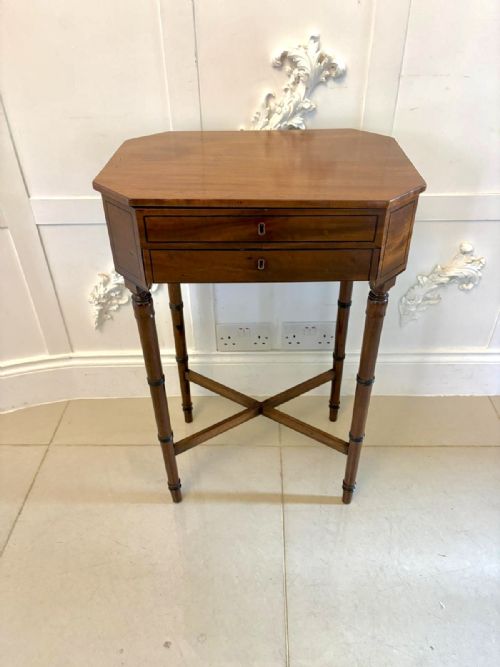


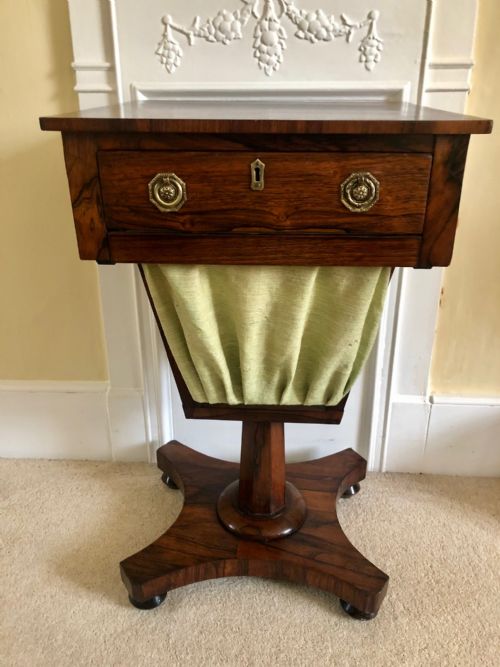


Dark Wood Sewing Basket
These dark wood sewing baskets and tables are practical parlour pieces that keep needlework tidy while adding period warmth to a room.
Dark Wood Sewing Basket
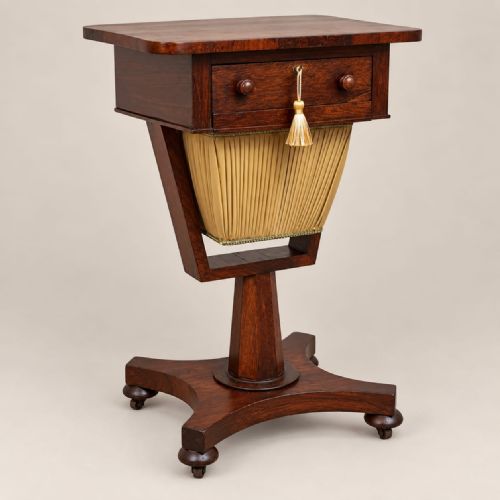
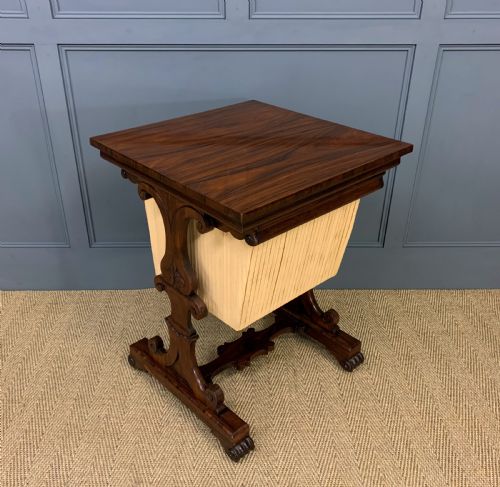
A dark wood sewing basket or work table combines storage with a surface for small tasks. The search term leads you to functional furniture designed to hold threads, needles and fabric.
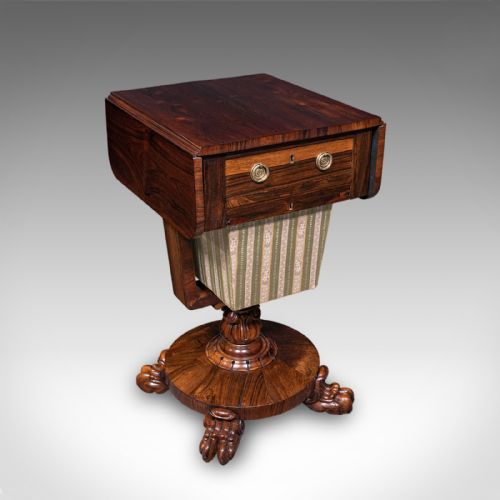
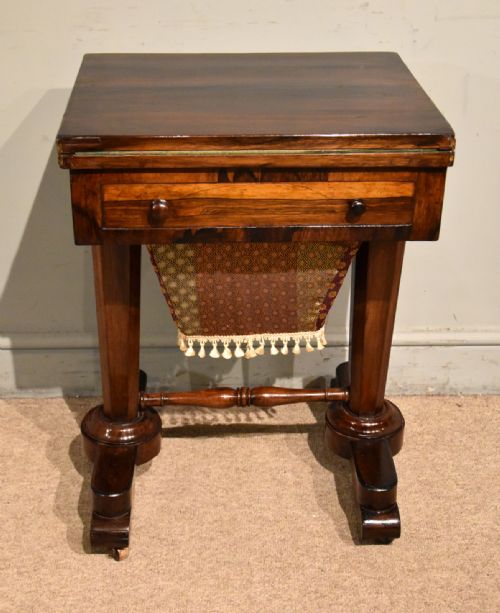
Most examples found here date from the 19th Century, encompassing Victorian, Regency, William IV and Georgian periods. These pieces often feature drop leaves or foldover tops alongside their fitted compartments.
Makers utilised rich timbers such as rosewood and mahogany, sometimes combining them with satinwood or boxwood stringing. The form doubles as a lamp table or side table in modern rooms.
How they were made
Cabinetmakers constructed these pieces primarily from solid and veneered rosewood and mahogany. These dark timbers provided a stable, handsome carcass capable of taking a fine polished finish.
Intricate detailing involved contrasting veneers and stringing in satinwood and boxwood. Brass inlay and hardware added structural contrast and decorative weight to the timber framework.
Interiors frequently incorporated silk or fabric linings to protect delicate contents. Drop-leaf mechanisms and foldover surfaces required precise joinery to function smoothly alongside the sewing compartments.
Dark Wood Sewing Basket Retail Price Guide 2026
Typical asking prices for dark wood sewing basket among the pieces listed under this phrase on Sellingantiques today, from the lower quarter to the upper quarter. They describe what is for sale here now, not the wider market.
Object forms on this page range from dedicated sewing boxes and tables to multifunctional games tables, lamp tables and occasional side tables.
What varies in quality
The refinement of the timber selection largely determines the grade of a piece. Finer examples display carefully matched rosewood grain and crisp boxwood or satinwood stringing rather than plain surfaces.
The complexity of the interior fittings dictates the standard of craftsmanship. Tables with well-organised compartments, intact fabric sections and integrated brass details sit higher in the range than simpler utility boxes.
The Dark Wood Sewing Basket Glossary
- Work Table
- A small freestanding table designed specifically for needlework and domestic crafts. It usually incorporates a fabric bag or wooden compartment beneath the top.
- Rosewood
- A dense, dark timber featuring pronounced grain patterns and deep colouration. It was a favoured material for high-status furniture during the Regency and Victorian eras.
- Drop Leaf
- A hinged flap on the side of a table that can be raised to extend the surface area. This mechanism allows the furniture to save space when not in use.
- Stringing
- Thin inlay lines of a contrasting light wood, such as boxwood or satinwood, set into the dark timber surface. It defines edges and panels on finer cabinets.
- Foldover Top
- A hinged tabletop that opens out to double the surface area, frequently concealing a games board or storage well underneath.
Dark Wood Sewing Basket: Frequently Asked Questions
How were work tables used historically?
Ladies utilised them for needlework, embroidery and correspondence in the sitting room. The top served as a steady surface for lamps or books while work stayed tucked below.
Drop leaves and foldover lids allowed the furniture to adapt quickly between practical crafting and social use.
Where do I put one today?
They fit naturally beside a sofa or armchair as a compact side table. The internal compartments remain useful for storing modern odds and ends out of sight.
Their dark timber tones anchor neutral interior schemes while adding historical character to a corner.
How do I tell the periods apart?
Georgian and Regency pieces lean towards architectural restraint with mahogany and subtle brass accents. William IV and Victorian examples often display heavier rosewood construction and bolder carving.
Inlay materials and leg shapes also shift from slender tapering supports to more robust turned pillars across these decades.