




French Work Box
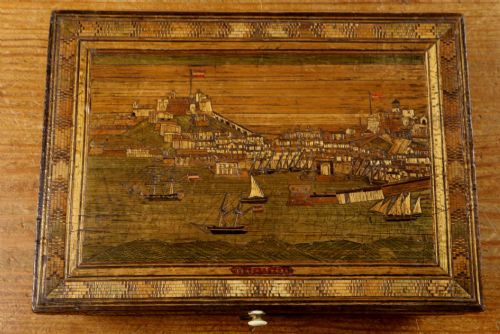
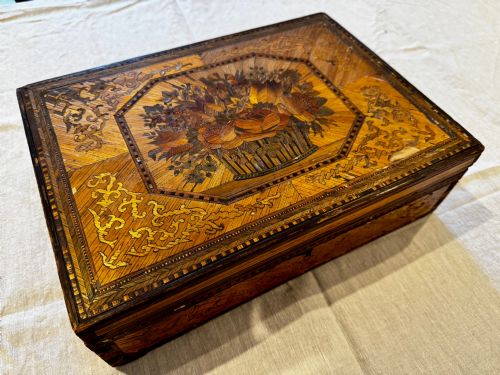
A french antique work box is an ornate domestic chest designed for needlework and correspondence, combining fine cabinetmaking with intimate utility.
French Work Box
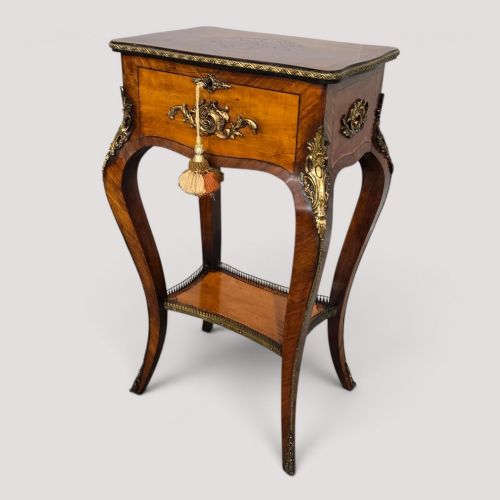
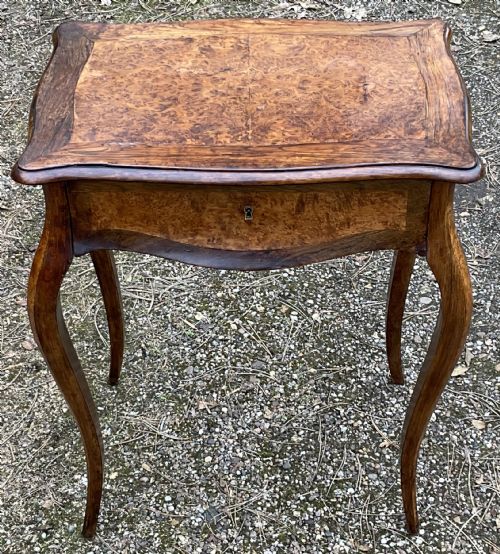
The aesthetic leans heavily toward nineteenth-century revival movements, incorporating Napoleon III styling, brass inlay, and tortoiseshell veneers alongside provincial oak and elm constructions. Buyers encounter both compact lidded caddies and compartmentalised tables equipped with internal trays and compartments.
These pieces served as functional furniture for elite pursuits, keeping domestic crafts organised within elegant salons and boudoirs. Surviving examples demonstrate the intricate woodworking traditions associated with French and Victorian cabinetmakers.
Materials and Construction Methods
Cabinetmakers utilised dense hardwoods such as walnut, rosewood, and ebonised wood as structural carcases, frequently applying burr veneers to create richly figured exterior surfaces. Decorative contrast was achieved through the integration of tortoiseshell, brass inlays, and ormolu mounts.
Internal compartments required precise joinery to house delicate sewing tools, lidded cannisters, and removable trays. Hardware such as wrought iron hasps, brass hinges, and functional keys secured the contents of these portable and freestanding chests.
French Work Box Retail Price Guide 2026
Typical asking prices for french work box among the pieces listed under this phrase on Sellingantiques today, from the lower quarter to the upper quarter. They describe what is for sale here now, not the wider market.
Evaluating Quality and Craftsmanship
The tier of a french antique work box depends largely on the precision of its decorative inlays, such as tortoiseshell and brass boullework, and the selection of figured timber veneers. Superior examples maintain crisp casting in their ormolu mounts and seamless joinery across complex curved surfaces.
Internal configuration significantly influences merit, with original fitted trays, silk-lined compartments, and working locks commanding greater interest. The integrity of the secondary woods and the stability of the carcase determine how well the piece survives structural shifts over centuries.
Lund Of Cornhill·L Epee
The French Work Box Glossary
- Boullework
- An elaborate form of marquetry consisting of tortoiseshell and brass inlaid in contrasting patterns. This technique was widely employed on luxury French furniture and decorative boxes during the nineteenth century.
- Ormolu
- Gilded bronze mounts applied to furniture and boxes for decorative accent. The term derives from the French for milled gold.
- Tea Caddy
- A small lidded box originally designed for storing loose tea leaves. Many surviving examples share similar compartmented interiors and locking mechanisms with sewing boxes.
- Coffer
- A sturdy wooden chest traditionally used for storage and transport. Earlier provincial examples utilise robust timbers and iron hardware.
French Work Box: Frequently Asked Questions
What is a french antique work box used for?
These boxes were designed specifically to house needlework supplies, threads, pins, and personal writing materials. Ladies utilised them during the eighteenth and nineteenth centuries to keep their sewing projects organised in the parlor.
Today, collectors repurpose them as stylish storage for modern sewing notions, jewellery, or desktop accessories. Their compartmentalized interiors make them practical for organising small daily items.
How do I date a nineteenth century work box?
Dating relies on examining the secondary woods, hinge styles, and veneer types characteristic of specific decades. Pieces influenced by the Napoleon III revival often feature elaborate brass boullework on ebonised carcases.
Provincial items constructed from solid oak or elm without heavy veneering frequently point toward earlier traditional craftsmanship. Comparing internal lining remnants and lock mechanisms helps narrow the production window.
Are these boxes durable for daily use?
While structurally robust, antique tortoiseshell and veneered surfaces require gentle handling to prevent scratching or lifting. Placing them away from direct sunlight and extreme humidity preserves the delicate wood and brass elements.
Functioning locks and sturdy carrying handles on certain models allow for secure relocation around the home. Regular dusting with a dry cloth keeps the polished wood and metal mounts in stable condition.
What is the difference between a work box and a tea caddy?
Work boxes feature internal trays and partitions designed to hold spools, thimbles, and fabrics rather than dried leaves. Their lids frequently house mirrors or velvet-lined pockets tailored for sewing implements.
Tea caddies focus on internal lidded canisters for leaf storage and occasionally incorporate central glass bowls for sugar. Despite their distinct original contents, cabinetmakers often applied nearly identical decorative veneers to both forms.