





Brass Mounted Work Box
A brass mounted work box is a finely constructed container designed for needlework or correspondence, offering both practical storage and elegant display.
Brass Mounted Work Box
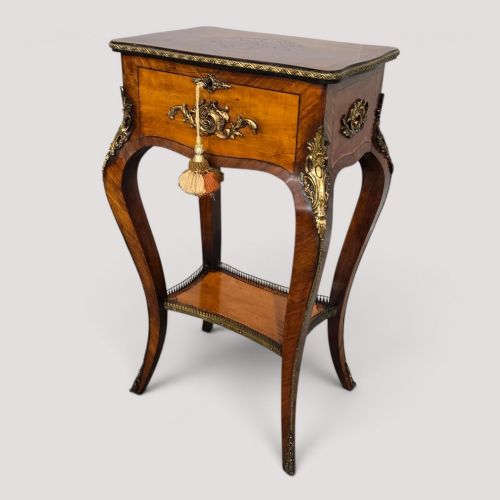
When you search for a brass mounted work box, you are looking at small wooden chests and caskets intended for sewing, jewellery, or writing accessories. These pieces span the Regency, Victorian, and Napoleon III periods, often featuring decorative metal edges, corners, or escutcheons.
The version you are most likely to meet on this page is a rosewood, walnut, or amboyna box from the nineteenth century. These containers frequently house internal compartments for threads, needles, and small personal treasures.
How they were made
Cabinet makers utilised dense hardwoods such as rosewood, burr wood, and satinwood as the primary structural bodies. These woods provided a stable foundation capable of taking a high polish.
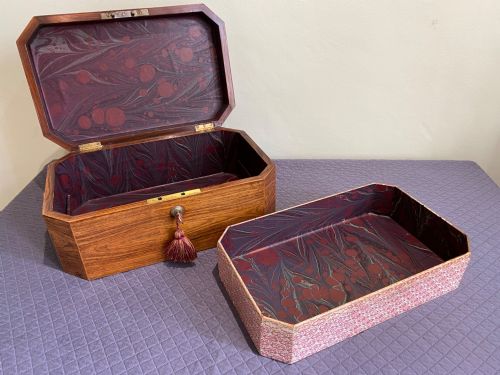
Metalworkers applied brass for mounts, bindings, feet, and inlay, securing the pieces to the wooden surfaces with small pins or screws. Interiors were often lined with fabrics, marbled paper, or fitted with leather compartments.
Brass Mounted Work Box Retail Price Guide 2026
Typical asking prices for brass mounted work box among the pieces listed under this phrase on Sellingantiques today, from the lower quarter to the upper quarter. They describe what is for sale here now, not the wider market.
Materials recorded across these items include rosewood, walnut, tortoiseshell, amboyna, brass, and leather.
What varies in quality
The distinction between standard examples and superior pieces rests on the choice of timber and the precision of the metalwork. Finely figured grains and neatly fitted brass mounts demonstrate greater skill during construction.
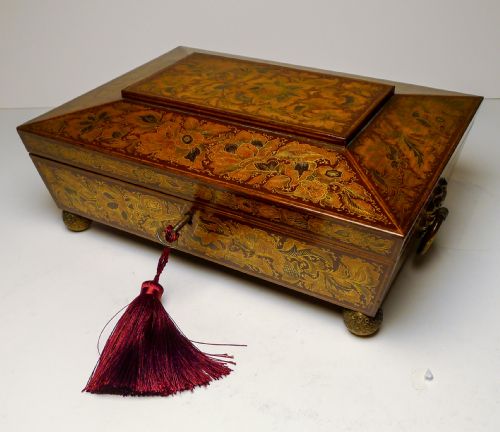
Internal complexity also separates the ranges, with superior boxes offering intricate lift-out trays, penwork decoration, or specialised tortoiseshell and glass fittings rather than plain wooden compartments.
The Brass Mounted Work Box Glossary
- Escutcheon
- A flat plate surrounding a keyhole, often made of brass to protect the wood from wear. This decorative element provides a focal point on the lid or front of the box.
- Penwork
- A surface decoration applied using fine ink drawings on wood, common in Regency pieces. Artists used this technique to create intricate geometric or pictorial patterns.
- Claw and ball feet
- Carved supports shaped like a talon grasping a spherical object, occasionally seen on early nineteenth century caskets. This detail elevates the box off the surface.
Brass Mounted Work Box: Frequently Asked Questions
What is a brass mounted work box?
A brass mounted work box is a small decorative container used historically for sewing implements, needlework, or personal valuables. They combine sturdy wooden carcases with protective and ornamental brass fittings.
These pieces date primarily from the nineteenth century and reflect the craftsmanship of periods such as the Regency and Victorian eras.
How were these boxes used?
Owners kept them on tables in drawing rooms or boudoirs to hold threads, needles, and small sewing tools. They also served as secure repositories for jewellery and letters.
The fitted interiors helped organise delicate items and kept them close at hand during leisure hours.
How do I care for a wooden box?
Keep the wood away from direct sunlight and extreme temperature shifts to prevent the timber from splitting or warping. Dust gently with a dry cloth and avoid harsh liquid polishes.
Maintaining a stable indoor climate protects both the external wood and the internal fabric linings.
How do I identify Regency pieces?
Regency boxes often feature cleaner classical lines, penwork decoration, or specific hardware like claw and ball feet. The choice of timber frequently includes rosewood or painted surfaces.
Comparing the hardware and overall proportions to dated examples helps confirm the period of manufacture.