



Dark Wood Revolving Stool
A dark wood revolving stool is a sturdy and functional seat designed for musicians and pianists, offering height adjustment and smooth turning action.
Dark Wood Revolving Stool
When you search for a dark wood revolving stool, you find adjustable seating designed primarily for piano players, harpist musicians, and dressing tables. These practical pieces span from the Georgian and Regency eras through the Victorian period and into early twentieth-century industrial workshops.
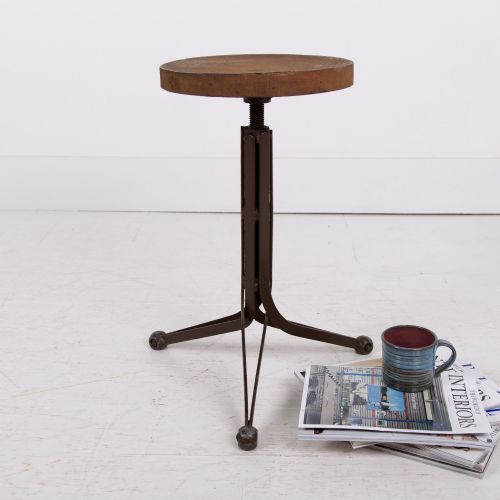
The version you are most likely to meet on this page is the Victorian mahogany or rosewood piano stool featuring a swivel top and screw mechanism for height adjustment. Alongside these domestic examples appear industrial workshop stools utilising dark timber and metal components from the nineteen-thirties.
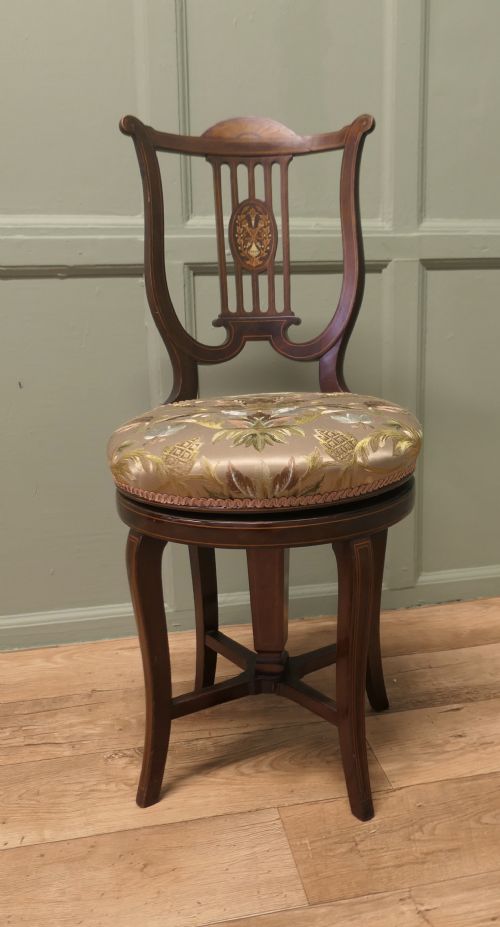
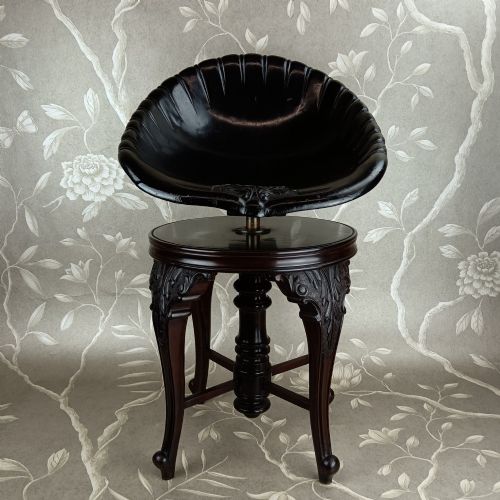
Makers and workshops of the nineteenth century produced various forms including lyre-back music chairs, grotto stools, and simple circular swivel seats. Regional variations extend to Anglo-Burmese colonial pieces utilising dense exotic hardwoods like padouk.
Materials and construction methods
Cabinet makers constructed these seats using solid timbers such as mahogany, rosewood, walnut, and padouk, often turned and carved by hand. Brass fittings and steel screws provided the mechanical internal components required for the height-adjusting swivel action.
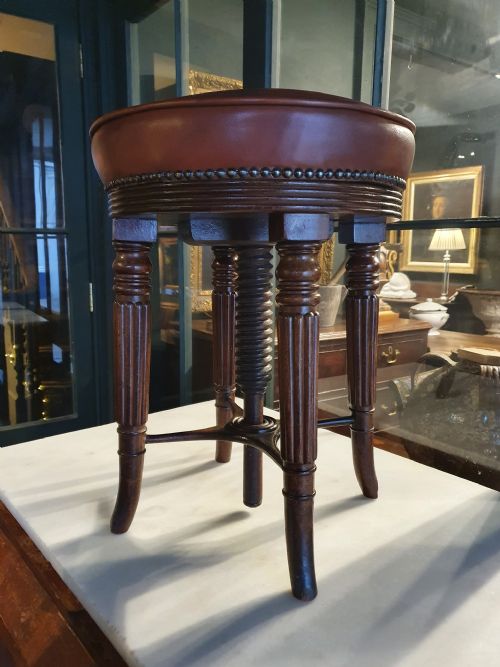
Upholstered tops upholstered in velvet, fabric, or leather were mounted onto the revolving timber frames. Joinery techniques combined traditional woodturning with sturdy framing to support the twisting motion demanded by daily use at the keyboard.
The listings span from the Georgian and Regency periods through the Victorian era to early twentieth-century industrial workshop pieces.
Distinguishing craftsmanship and finish
The standard of carving and the selection of timber dictate the distinction between ordinary utility seating and fine cabinet work. Finer examples display crisply carved walnut or mahogany details, superior timber grain, and robust mechanical threads that operate smoothly without binding.
Maker attribution elevates certain pieces, particularly when associated with established cabinet makers and workshops of the nineteenth century. The integrity of the revolving mechanism and the retention of original upholstery or timber surfaces also influence the overall character.
Jennens and Bettridge·Gillows·James Shoolbred·H Brooks and Co
The Dark Wood Revolving Stool Glossary
- Revolving stool
- A seat featuring a top that rotates fully on a central pivot or threaded screw spindle. This mechanism allowed musicians to adjust their height and turn easily towards sheet music.
- Rise and fall
- A mechanism enabling the seat height to be adjusted up or down by rotating the top. It typically relies on a central wooden or metal screw thread concealed within the pedestal.
- Lyre back
- A chair back shaped in the symmetrical outline of an ancient Greek lyre instrument. This decorative motif appears frequently on nineteenth-century music chairs.
- Grotto stool
- A heavily carved seat featuring rustic or shell-like motifs inspired by natural nineteenth-century design styles. These decorative items bring unusual sculptural forms to domestic interiors.
- Swivel top
- A rotating upper section connected to the base by a central pin or pivot. It allows the seated person to turn smoothly in any direction.
Dark Wood Revolving Stool: Frequently Asked Questions
How do I adjust the height on these stools?
Most of these pieces feature a central screw mechanism hidden beneath the seat top. Turning the seat clockwise or anti-clockwise raises or lowers the height.
Ensure the mechanism is clean and lightly lubricated if the movement feels stiff over time.
Were these seats only used for pianos?
While piano playing was the primary purpose for many music stools, they also served harpists, cellists, and people sitting at dressing tables. Industrial workshop versions served entirely different practical tasks.
Their adjustable height made them versatile seating choices across domestic and working environments.
How do I care for the dark wood finish?
Dust the timber regularly with a soft, dry cloth to prevent the buildup of abrasive particles. Avoid placing the stool in direct sunlight or near heat sources to protect the polish.
Apply a traditional beeswax polish occasionally to nourish the antique wood surface.
How do I distinguish Victorian from Regency examples?
Regency pieces often display cleaner classical lines, simpler reeded legs, and lighter proportions reflecting early nineteenth-century neoclassical tastes. Victorian examples frequently incorporate heavier carved walnut or rosewood details and more elaborate undercarriages.
Examining the construction joints and turning styles helps determine the likely period of manufacture.