



Dark Wood Parlour Cabinet
A dark wood parlour cabinet brings domestic warmth and rich grain to a room, offering display space and enclosed storage in equal measure.
Dark Wood Parlour Cabinet
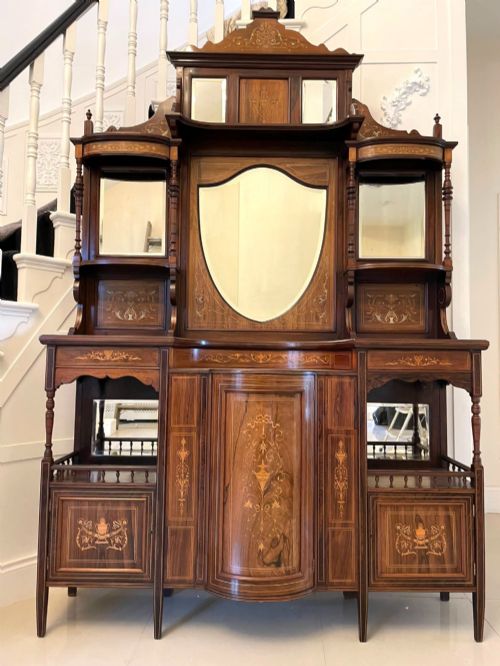
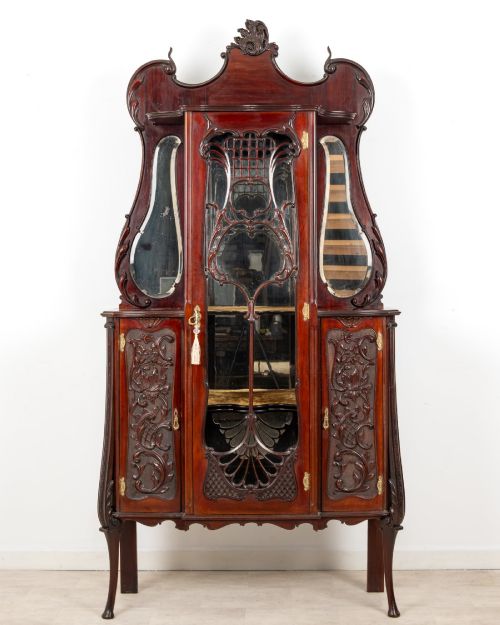
A dark wood parlour cabinet serves as a sophisticated focal point for a formal reception room, designed to display prized possessions or store household items discreetly. These pieces emerge predominantly from the Victorian, Late Victorian, and Edwardian eras, reflecting the domestic tastes of the nineteenth and early twentieth centuries.
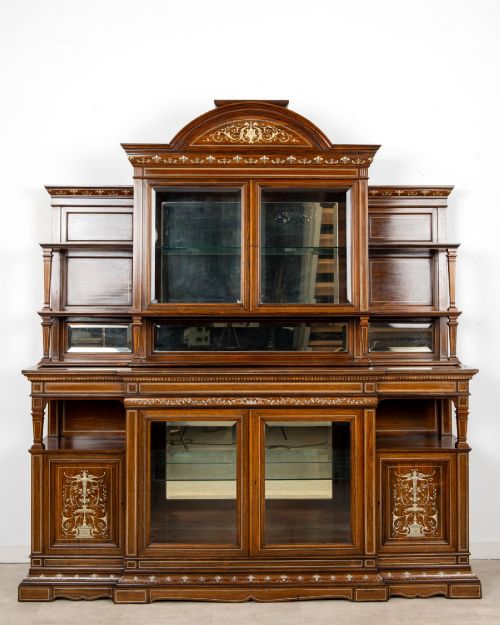
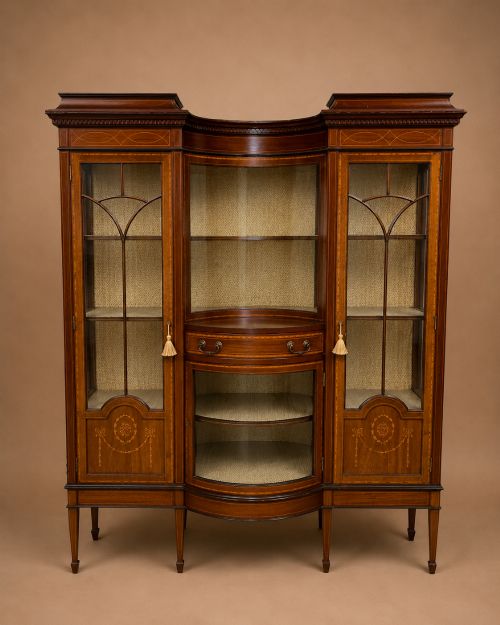
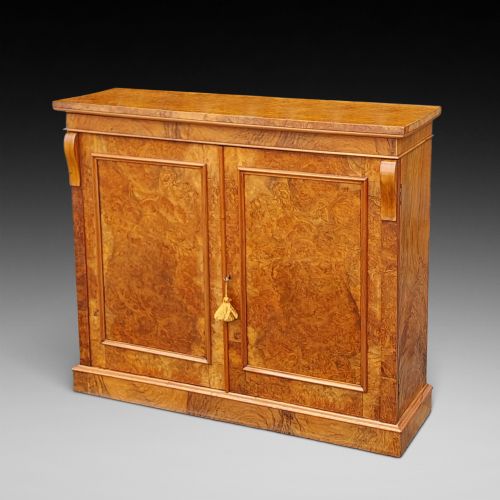
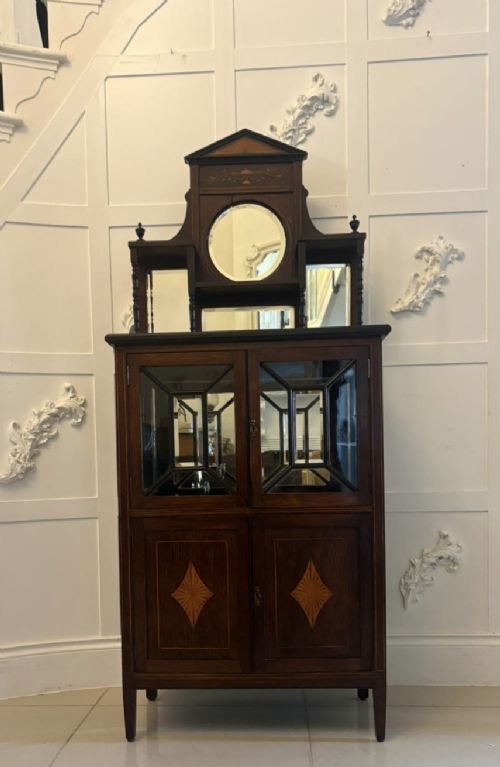
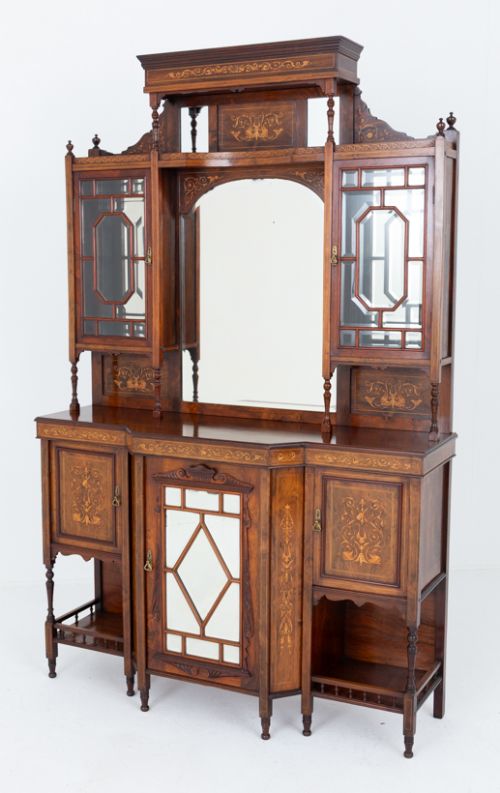
The most common variations on this page include rosewood and mahogany display cabinets, side cabinets, and mirror back parlour cabinets. Makers utilised rich timbers such as burr walnut, satinwood, and ebonised woods, often incorporating glazed doors or open shelving.
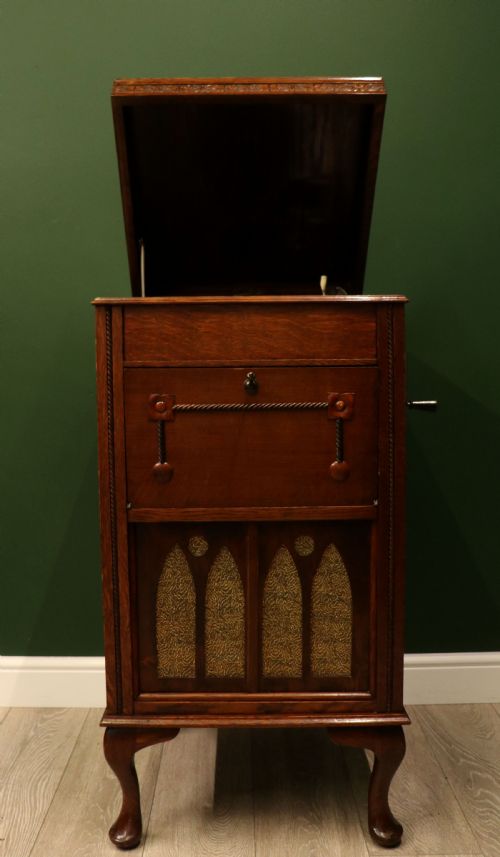
Beyond standard display and side pieces, the selection encompasses specialised forms including music cabinets, games boxes, and upright parlour gramophones. These functional variations demonstrate how cabinet makers adapted domestic furniture to changing forms of home entertainment.
Materials and Construction
Cabinet makers built these pieces using dense hardwoods like mahogany and rosewood as a sturdy structural base, frequently applying intricate marquetry, satinwood, and brass details by hand. Selected timbers were polished to a deep lustre that highlighted the natural grain and colour variations.
Glazing and mirror glass featured heavily in display and mirror back models, requiring precise joinery to house delicate panes securely within wooden frames. Carved elements and inlaid veneers demonstrated advanced woodworking competence during the Victorian and Edwardian periods.
Object forms span standard display cabinets, sideboards, music cabinets, and early parlour gramophones.
Assessing Quality and Craftsmanship
Quality rests in the depth of timber selection, such as figured rosewood or burr walnut, paired with crispness in hand-cut marquetry and inlay work. Superior examples demonstrate refined proportions and meticulous joinery that remain stable over decades.
The sophistication of secondary materials, including bevelled mirror glass, quality brass hardware, and well-executed carving, elevates a piece from standard utility to exceptional craftsmanship. Attribution to known makers further distinguishes the finest examples in this category.
Collinson and Lock·Gillows·U Phone of Leeds
The Dark Wood Parlour Cabinet Glossary
- Marquetry
- Decorative patterns formed by inserting pieces of contrasting wood veneer into a solid wooden background. This technique created elaborate floral or geometric motifs across the cabinet doors and panels.
- Credenza
- A low-standing side cabinet or sideboard originally used for serving food or displaying plate. In later parlour contexts, it evolved into an elegant storage and display unit.
- Serpentine
- A furniture front characterised by a gentle convex curve flanked by two concave curves. This shaping required high skill from the cabinet maker.
- Salon Cabinet
- A lighter, more decorative cabinet intended for a formal drawing room or parlour rather than a heavy dining room setting. These often featured open shelves and mirrored backs.
- Ebonised
- Wood treated with a dark stain or finish to imitate expensive ebony. The process was popular in nineteenth-century cabinet making for dramatic contrast.
Dark Wood Parlour Cabinet: Frequently Asked Questions
Where should I place a parlour cabinet?
These cabinets suit reception rooms, drawing rooms, or spacious hallways where their display surfaces and polished timber can be appreciated.
Keep them away from direct sunlight and rapid temperature changes to protect the wood and veneer.
How do I care for antique rosewood?
Dust the timber regularly with a soft, dry cloth and apply a quality beeswax sparingly to nourish the grain.
Avoid modern liquid polishes containing silicone, which can build up and dull the historic finish over time.
What is a mirror back cabinet?
A mirror back cabinet incorporates a reflective glass panel behind the upper display shelves to bounce light around the room.
This design brightened dark Victorian interiors and made displayed porcelain or glassware appear more prominent.
How do I distinguish Victorian from Edwardian styles?
Victorian pieces tend to use darker, heavier timbers with rich carving, deep polish, and intricate marquetry details.
Edwardian cabinets often feature lighter satinwood inlays, airier proportions, and a more refined Sheraton Revival influence.