


Dark Wood Needlework Table
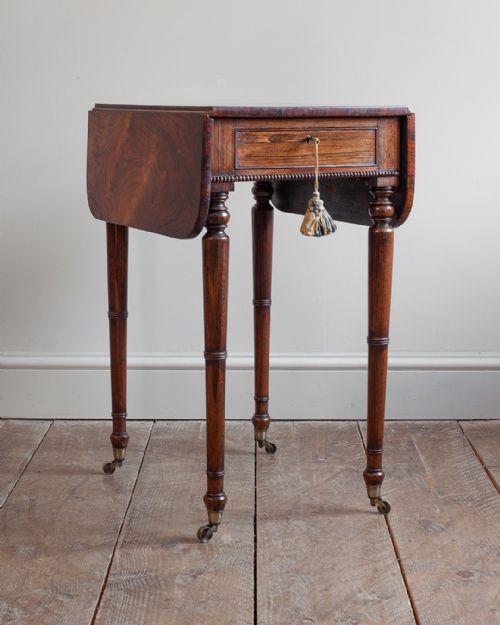
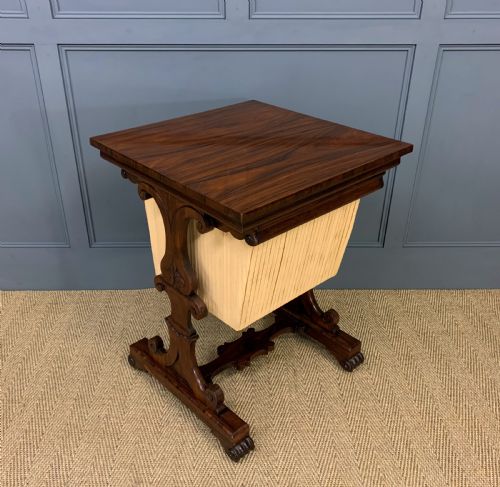
A dark wood needlework table combines domestic utility with refined cabinetmaking, providing a dedicated space for sewing alongside a polished surface for the parlour.
Dark Wood Needlework Table
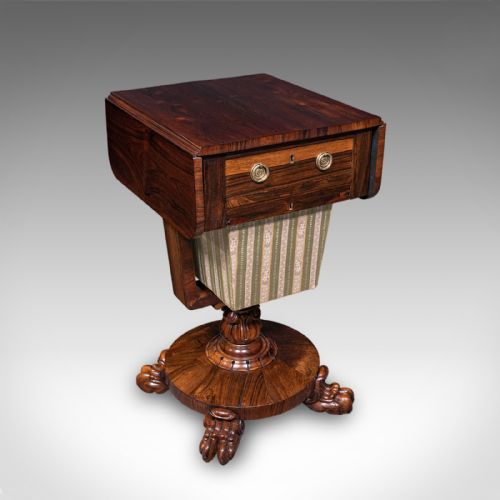
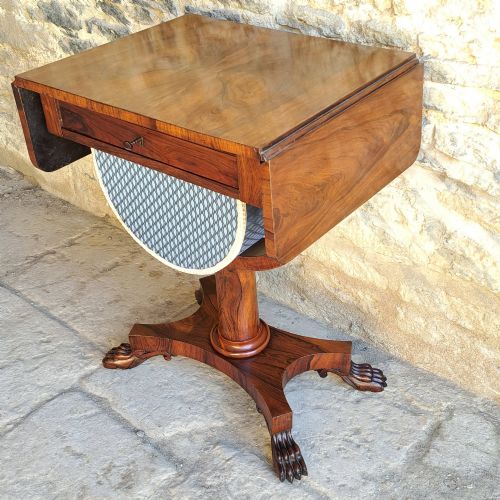
A dark wood needlework table primarily takes the form of a freestanding sewing or work table, often equipped with drop leaves and internal compartments for crafting materials. You will frequently encounter examples from the Regency, William IV, and Victorian periods executed in rich timbers.
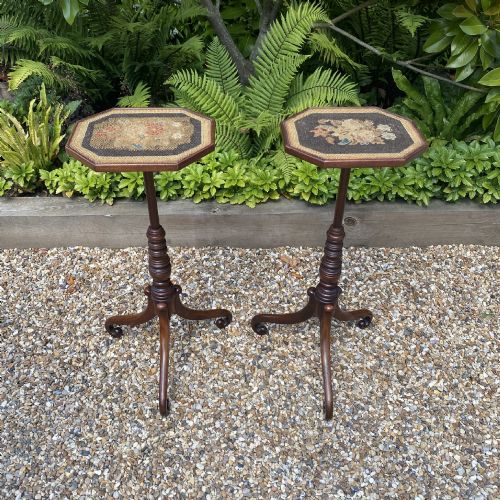
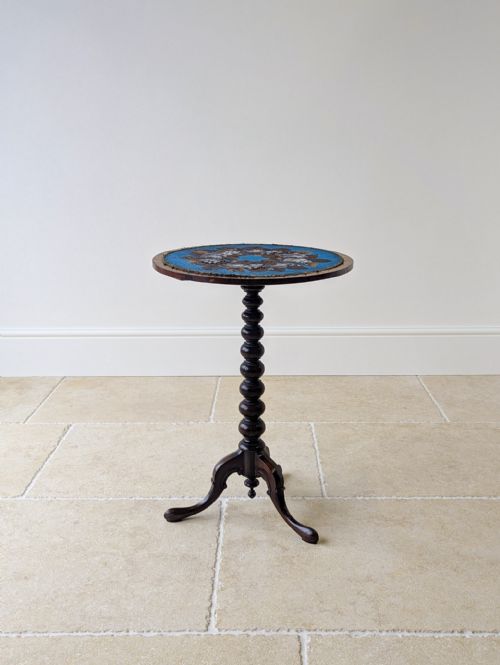
The selection ranges from compact Georgian designs to elaborate mid-19th-century trumpet tables fitted with inlaid marquetry. Alongside conventional sewing stands, related occasional forms like wine tables and side tables appear within the broader category.
Many of these tables double as games or reading surfaces, integrating folding tops or slide-out bags for textiles. The regional variations span English workshops alongside Irish examples and Anglo-Indian carved pieces.
How they were made
Cabinetmakers utilised dense tropical hardwoods such as rosewood and mahogany as the primary structural and visual foundations for these tables. These timbers were selected for their deep grain patterns and ability to take a high polish on drop leaves and pedestal bases.
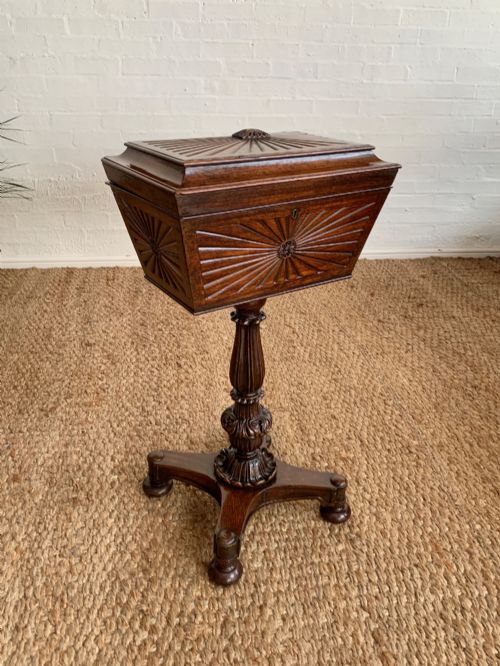
Decorative surface techniques include delicate boxwood stringing, brass inlay, and sunburst carving executed by hand. Interior compartments often feature silk, fabric, or beadwork linings designed to house sewing implements securely.
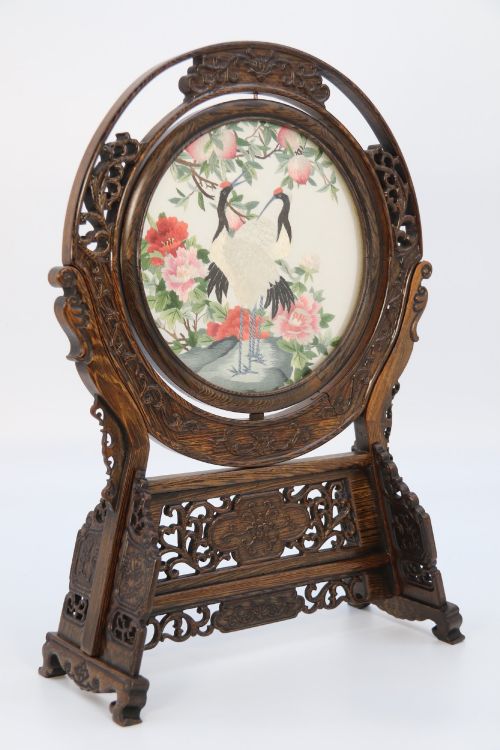
Listings feature 19th-century periods including Regency, William IV, Victorian, and Edwardian eras, alongside Chinese Republic Period items.
What varies in quality
The standard of execution is defined by the crispness of the timber carving and the precision of any marquetry inlay or brass detailing. Finer examples display seamless grain matching across drop leaves and robust structural joinery in the pedestal or tripod base.
The sophistication of the internal fitments - such as fitted compartments, rotating display stands, or intricate beadwork - distinguishes standard utility pieces from exceptional parlour furniture. The integrity of the original fabric linings and silk components also influences the overall execution.
The Dark Wood Needlework Table Glossary
- Work table
- A specialised piece of furniture designed for sewing and needlework, typically featuring internal compartments or a fabric bag suspended beneath.
- Drop leaf
- A hinged flap on the side of a table that can be raised to extend the surface area or lowered when space is constrained.
- Marquetry
- The art of applying pieces of veneer to a structure to form decorative patterns, often utilising contrasting woods like boxwood.
- Tripod base
- A support structure comprising three legs radiating from a central pillar, commonly found on 19th-century occasional and wine tables.
- Caddy top
- A hinged lid design resembling a tea caddy, frequently incorporated into the upper compartment of sewing tables for secure storage.
Dark Wood Needlework Table: Frequently Asked Questions
What is a dark wood needlework table used for?
These tables were designed for domestic sewing, embroidery, and crafting, providing internal compartments to organise threads, needles, and fabric.
Beyond needlework, their finished surfaces and drop leaves allowed them to function as occasional tables, writing desks, or small games tables in the parlour.
How do I identify a Regency period needlework table?
Regency examples typically feature architectural elements, classical proportions, and dark mahogany or rosewood timbers with minimal but effective brass or inlaid decoration.
They often incorporate pedestal bases with carved paw feet or robust tripod supports reflecting the neoclassical taste of the early 19th century.
What is the difference between a work table and a sewing table?
In historical terms, the two descriptors are largely interchangeable, both referring to specialist furniture created for domestic needlecraft and textile storage.
Specific regional titles or contemporary listings might favour one term over the other, but both point to the same fundamental utility and compartmented interior layout.
How do I care for rosewood and mahogany furniture?
Protect these dense hardwoods from direct sunlight and extreme fluctuations in temperature or humidity to prevent the timber from warping or splitting.
Regular dusting with a soft, dry cloth is sufficient; harsh chemical polishes should be avoided to preserve the integrity of the polished finish.