


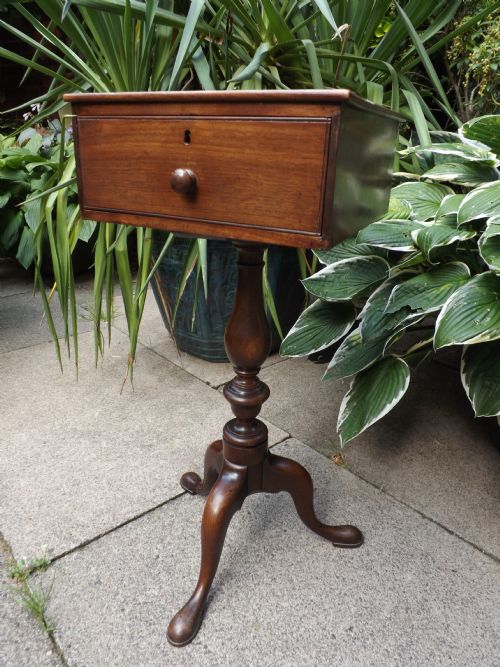

Mahogany Tripod Work Table
A mahogany tripod work table brings refined utility to a room, offering a compact surface alongside practical compartment space for sewing or writing.
Mahogany Tripod Work Table
A mahogany tripod work table is a versatile antique piece designed for domestic tasks like sewing, writing or games, supported by a central pillar on three legs. The selection spans periods from Georgian and Regency eras through to the Victorian period, alongside twentieth century interpretations.
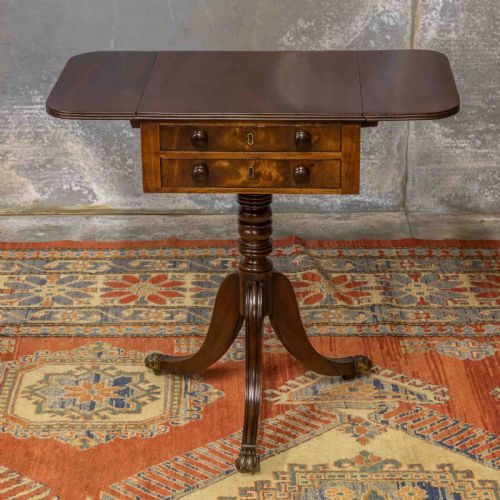
Most examples combine a timber top with an internal compartment or drawer, serving as practical occasional or side tables in modern rooms. Forms vary from rectangular and circular tops to drop flap variants and specialised workboxes on stands.
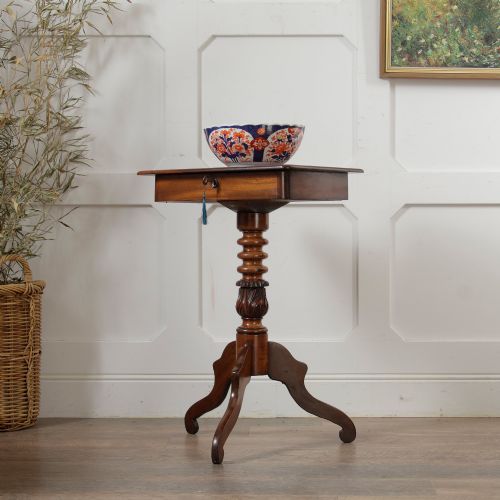
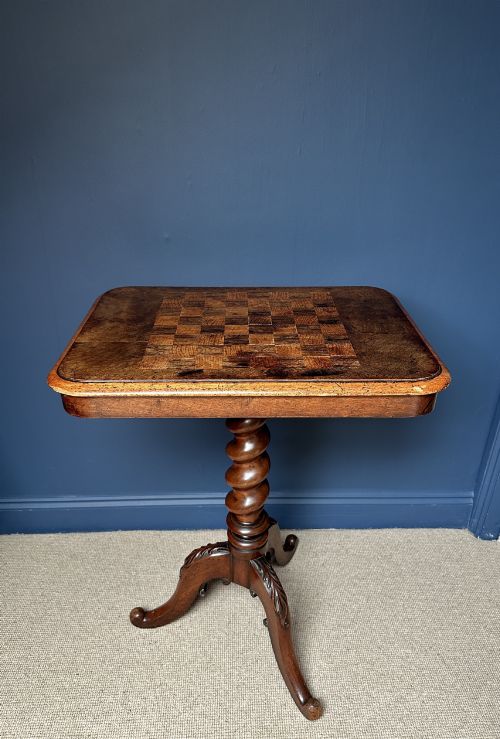
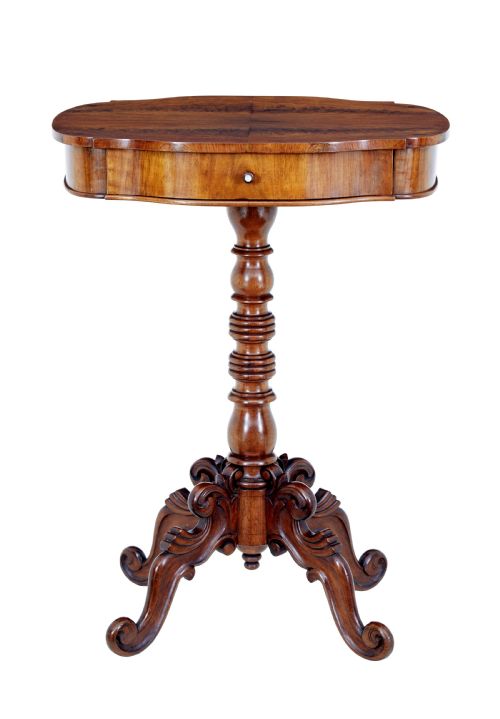
Buyers encounter diverse stylistic expressions within the category, ranging from plain George III formats to ornate Victorian bobbin turned pedestals and inlaid chess boards. These pieces function naturally as lamp tables or small desks while retaining their original character.
Materials and construction methods
Makers utilised solid mahogany and flame mahogany veneers over secondary timbers, often accentuating the grain with polished finishes. Selected examples incorporate burl walnut or inlaid timber details to create decorative contrast on the tops.
The characteristic tripod base relies on sturdy turned pedestals joining three curving legs that provide stability without a heavy footprint. Functional elements such as drawers and workboxes demonstrate precise joinery designed to conceal sewing equipment or writing materials.
One unexpected Victorian survivor doubles as a sewing station and an impromptu chess arena, complete with an inlaid board.
Assessing quality in construction and timber
Superior examples display exceptional figuring in the mahogany grain, particularly on flame mahogany surfaces where the natural pattern creates depth and movement. Finer pieces also feature crisp carving on the pedestal or legs rather than simpler turned elements.
The integrity of the internal compartments and the smoothness of drawer operations indicate the standard of original craftsmanship. Good proportions and stable tripod bases separate exceptional architectural specimens from standard utilitarian items.
The Mahogany Tripod Work Table Glossary
- Tripod base
- A support structure featuring a central column resting on three radiating feet. This design allows the table to stand firmly on uneven floors.
- Flame mahogany
- A veneer cut from the branch junction of the mahogany tree, showing a distinctive flickering flame pattern. Cabinet makers valued this timber for highly decorative table tops.
- Drop flap
- A hinged leaf on the side of a table top that lifts to extend the surface area. It drops down when not in use to save space.
- Workbox on stand
- A portable or fitted compartment for sewing equipment mounted permanently on a pedestal base. These containers housed threads, needles and tools.
- Bobbin turned
- A style of woodturning resembling a string of rounded bobbins or spools. This decorative technique appears frequently on nineteenth-century pedestals.
Mahogany Tripod Work Table: Frequently Asked Questions
What is a mahogany tripod work table used for?
These tables were originally designed for domestic pastimes such as needlework, writing or playing chess, housing tools and accessories within integrated drawers or boxes.
Today, they function effectively as compact side tables, lamp stands or decorative occasional pieces in living spaces.
How do I date a mahogany tripod work table?
Dating relies on examining the timber species, construction techniques, and stylistic markers such as leg profiles and pedestal turning.
Georgian and Regency pieces tend to show restrained classical proportions, whereas Victorian examples often incorporate bolder turning or inlaid details.
Are all these tables fitted with sewing compartments?
Not every table includes internal storage, as the category encompasses related forms like occasional tables, side tables and games boards.
Some feature fitted boxes or drop leaves specifically for crafts, while others serve purely as display or writing surfaces.
How do I care for a mahogany antique table?
Keep the timber away from direct heat sources and strong sunlight to prevent the mahogany veneer from drying out or fading.
Apply traditional beeswax periodically to nourish the polished surface and maintain its natural lustre.