



Pedestal Sewing Box Table
A pedestal sewing box table combines a neat compartment for needlework with a steady display surface.
Pedestal Sewing Box Table
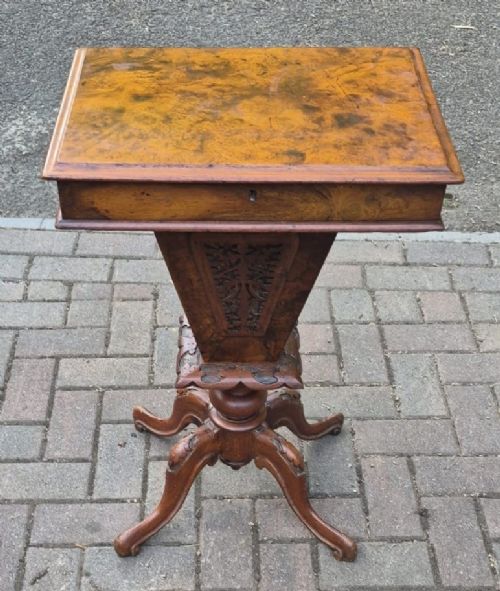
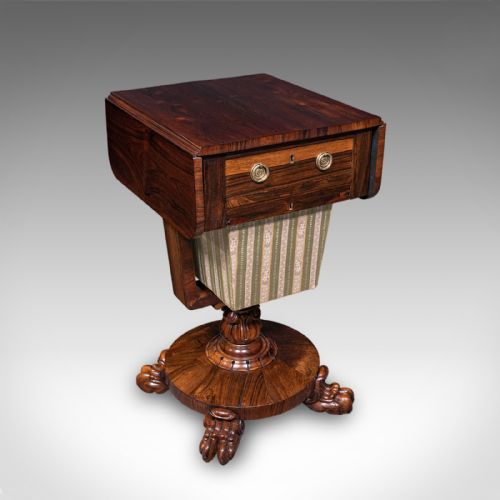
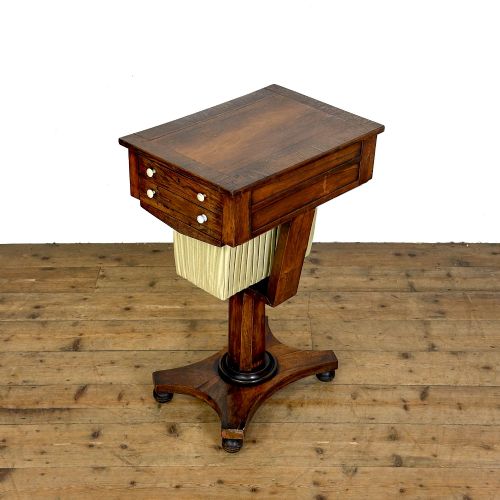
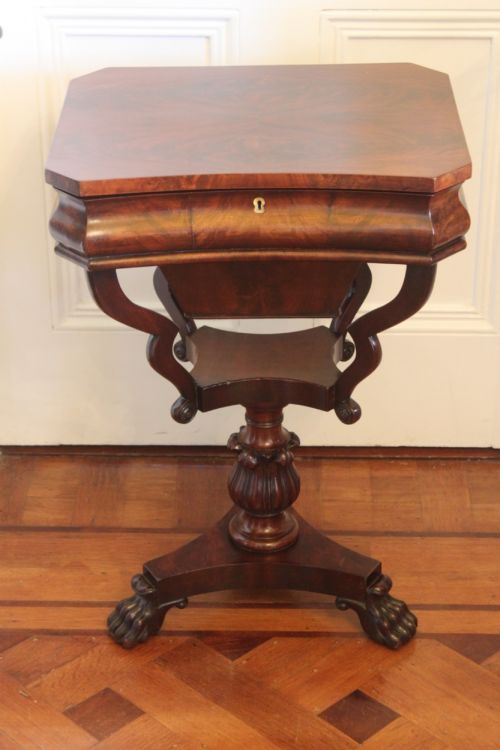
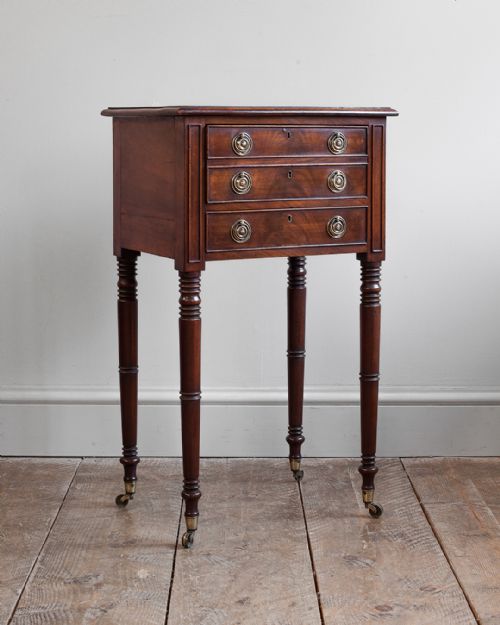
A pedestal sewing box table serves as a functional piece of household furniture designed specifically for holding sewing materials, threads, and small textile tools while doubling as a small side or lamp table. These versatile items appear frequently in nineteenth-century designs, encompassing periods such as the Georgian, Regency, William IV, and Victorian eras.
The most common examples encountered on this page feature rich timbers such as mahogany, rosewood, and burr walnut, often supported by a central pillar or pedestal base rather than four standard legs. Many incorporate drop-leaf surfaces, inlaid wood details, or internal compartments specifically configured for needles, bobbins, and fabric scraps.
How they were made
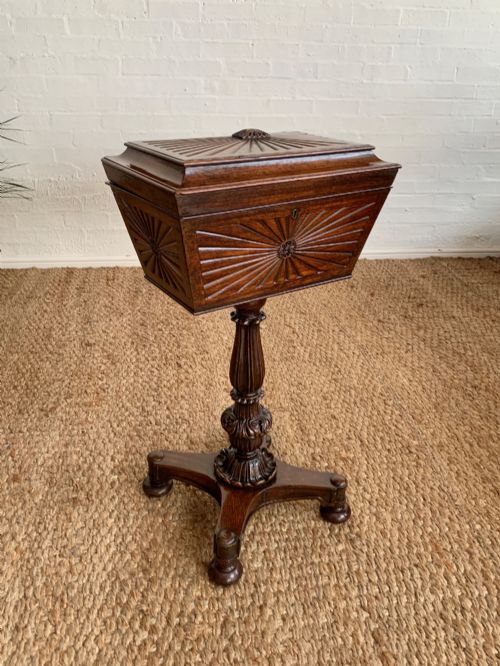
Cabinet makers constructed these sewing tables using dense tropical hardwoods like mahogany and rosewood, alongside decorative veneers including burr walnut and flame mahogany. These timbers provided a stable foundation for intricate marquetry, wood inlay, and detailed carving around the pedestal columns.
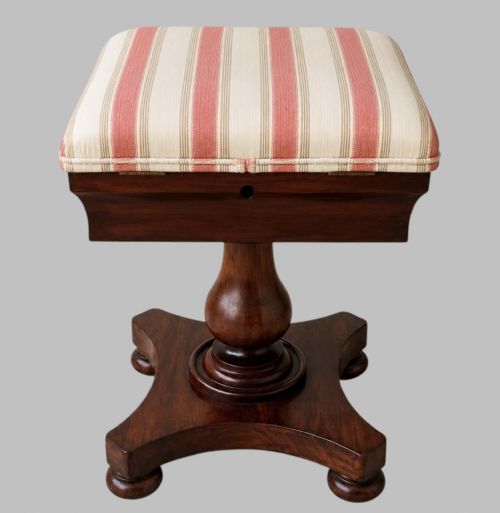
Internal components relied on fine joinery to create fitted boxes and sliding trays beneath the main surface, sometimes lined with fabric. Structural stability was achieved through sturdy central pillars anchored to platform bases or carved feet, often fitted with brass hardware.
Listings span the nineteenth century, including Georgian, Regency, William IV, and Victorian periods, constructed mainly in mahogany, rosewood, and walnut.
What varies in quality
The choice of timber grain dictates much of the visual merit, with highly figured flame mahogany or burr walnut marking the upper tier of production. Subtle differences in carving execution on the pedestal and the precision of the wood inlay distinguish finer workshop output from standard commercial pieces.
Internal organisation also reveals variations in craftsmanship, where well-planned sliding compartments and intact fitted interior trays reflect superior original design. The integration of drop leaves and sturdy hinge mechanisms without sagging demonstrates the skill involved in the original construction.
The Pedestal Sewing Box Table Glossary
- Pedestal base
- A single central column supporting the main body of the table, typically rising from a platform or clustered feet. This structural layout allowed sitters easy access to the work box without interference from corner legs.
- Work table
- A multi-functional nineteenth-century furniture form incorporating storage for sewing and needlework inside a box or suspended fabric bag below the top. These items served ladies in the parlour for hobby crafts and correspondence.
- Drop-leaf
- A hinged flap on either side of the table top that raises to extend the usable surface area and lowers when space is limited. It provides flexibility in smaller rooms.
- Marquetry
- Decorative patterns formed by fitting together thin veneers of various coloured woods and materials onto the surface of the piece. This technique highlights the decorative ambition of the maker.
- Teapoy
- A small cabinet or box mounted on a pedestal, traditionally used for storing tea but sharing similar form and construction methods with sewing boxes of the period.
Pedestal Sewing Box Table: Frequently Asked Questions
What is a pedestal sewing box table used for?
These tables served primarily as practical work stations for ladies undertaking needlework, embroidery, and mending in the nineteenth-century parlour. The internal compartments kept bobbins, threads, and tools organised close to hand.
Simultaneously, the flat upper surface functioned as a convenient spot for a lamp, small decorative items, or writing materials when sewing was put away.
How can I tell a Regency sewing table from a Victorian one?
Regency examples often display cleaner classical lines, utilising flame mahogany or rosewood with restrained brass inlay and architectural pedestal forms reflecting early nineteenth-century taste. The proportions tend to remain crisp and balanced.
Victorian pieces frequently introduce heavier proportions, more exuberant carved walnut details, and elaborate burr veneers or marquetry, pointing to mid-to-late nineteenth-century manufacturing trends.
Where should I place a sewing table in a modern room?
A sewing table fits naturally beside a sofa or reading chair where its compact footprint and surface area can hold a small lamp or book. The internal box also offers discreet storage for modern clutter like remote controls or charging cables.
Because many examples feature finished cabinet work on all sides as freestanding items, they float comfortably in open spaces rather than needing placement strictly against a wall.
What woods are typical for these tables?
Mahogany forms the backbone of the earlier Regency and Georgian pieces, often selected for its deep reddish tone and straight grain or dramatic flame figure. Rosewood also appears frequently with its distinct dark grain pattern.
Later Victorian versions lean heavily toward walnut, specifically burr walnut, which provides a highly textured, knotty pattern that showcases the decorative ambitions of the maker.