






Rosewood Pouch Table
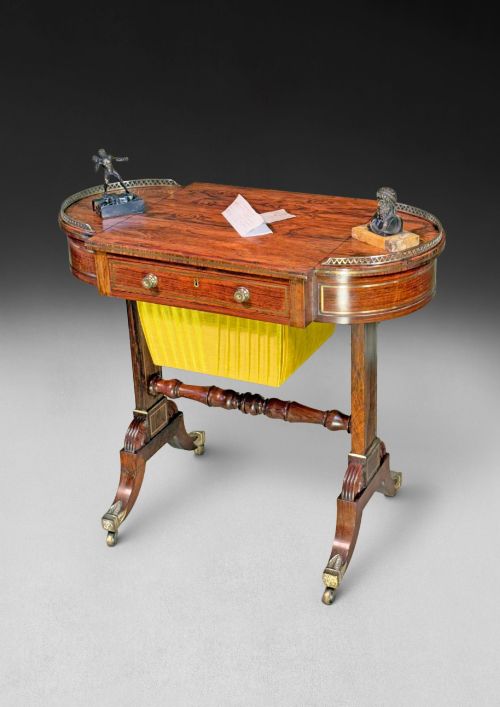
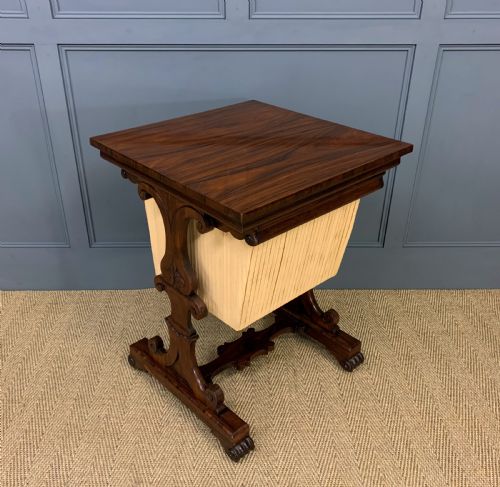
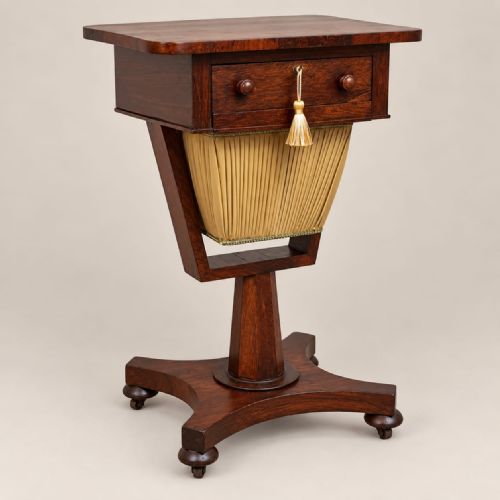
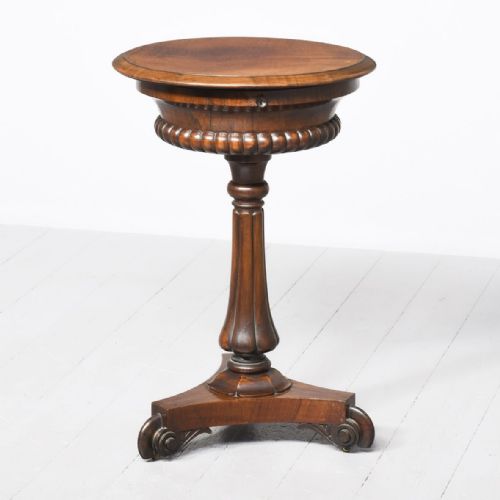
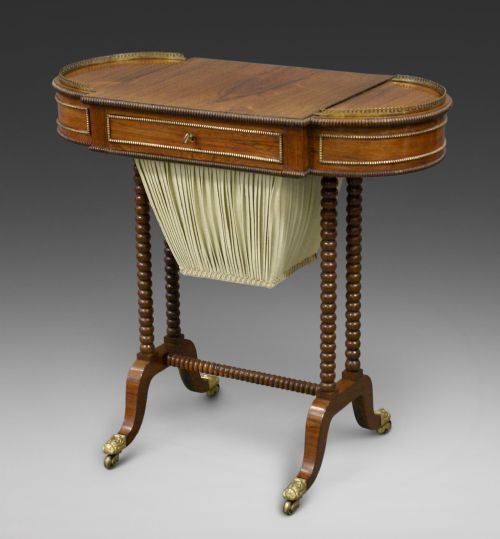
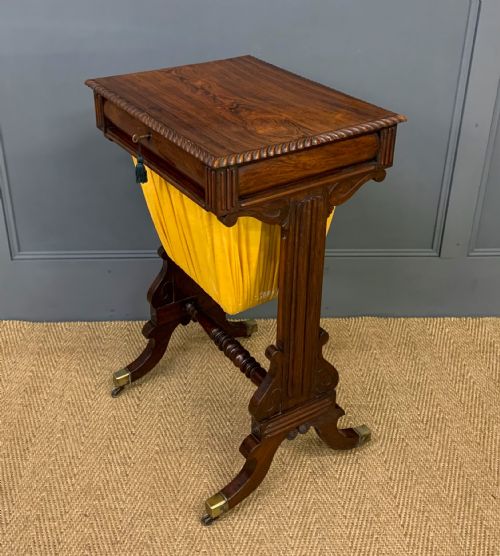
A rosewood pouch table brings ingenious early nineteenth-century design to a sitting room, offering a neat surface above a suspended fabric bag for needlework.
Rosewood Pouch Table
A rosewood pouch table combines a compact display surface with a hanging textile receptacle designed for sewing and needlework supplies. These pieces emerge principally from the Regency, William IV, and Victorian eras, spanning from the late eighteenth century into the nineteenth century.
The form functions equally as a work table, sewing table, occasional table, or lamp table. Most examples follow classical lines from the Regency and William IV periods, incorporating fitted drawers and internal compartments alongside the characteristic hanging bag.
Makers of the period construct these items to serve dual purposes in domestic parlours and drawing rooms. The survivor on the floor typically presents a rich dark timber top supported by pillar pedestals or slender legs above a fabric compartment.
How they were made
Cabinetmakers select dense rosewood for its deep grain and capacity to take a fine polish, frequently pairing the dark timber with contrasting brass inlay. Artisans construct the carcass using traditional joinery methods before mounting the suspended pouch beneath.
The hanging bag relies on textiles such as silk, fabric, and other fine materials gathered onto a wooden or metal frame. Workshops finish the woodwork with hand-rubbed polishes while securing decorative bronze mounts and brass fittings to the exterior.
Rosewood Pouch Table Retail Price Guide 2026
Typical asking prices for rosewood pouch table among the pieces listed under this phrase on Sellingantiques today, from the lower quarter to the upper quarter. They describe what is for sale here now, not the wider market.
Current listings demonstrate rosewood construction across the Regency, William IV, and Victorian periods, alongside earlier Sheraton examples.
What varies in quality
The refinement of the brass inlay and the crispness of the rosewood carving determine the distinction between standard production and superior craftsmanship. Makers who employ intricate brass marquetry and select highly figured timber elevate the status of the piece significantly.
Proportion and internal complexity dictate value within the range, particularly where drawers contain original compartments for spools and thimbles. Tables featuring well-preserved silk or fabric pouches retain greater integrity than those altered by later reupholstery.
John MaClean
The Rosewood Pouch Table Glossary
- Pouch table
- A small occasional table featuring a suspended fabric bag beneath the top, specifically designed to hold sewing materials and needlework. This form serves multiple duties as a work table or lamp table in nineteenth-century interiors.
- Regency
- An English design style spanning the early nineteenth century characterised by classical restraint, architectural motifs, and classical proportions. Furniture from this period frequently utilises rosewood and brass inlay.
- William IV
- A British stylistic phase bridging the late Regency and early Victorian eras, marked by robust proportions and substantial pillar supports. Pieces from this time maintain heavy rosewood construction.
- Work table
- A multi-functional domestic piece equipped with drawers and compartments for domestic crafts and needlework. These items appear across the Regency and Victorian periods.
- Sheraton
- A late eighteenth-century neoclassical furniture style named after designer Thomas Sheraton, known for elegant geometry and refined cabinetwork. Pieces from this era often display lighter proportions.
Rosewood Pouch Table: Frequently Asked Questions
What is a rosewood pouch table used for?
These tables function primarily as movable stands for needlework, offering a solid top surface for lamps or books alongside a fabric bag underneath for storing yarn and sewing tools. Regency and Victorian households utilised them in drawing rooms where domestic crafts took place.
The hanging pouch kept active projects close at hand while maintaining a tidy appearance in formal reception rooms. Today, collectors continue to use them as bedside stands or lamp tables.
How do I identify a Regency period table?
Regency pieces display classical architectural influences, crisp brass inlay, and dark rosewood veneers supported by pillar pedestals or sabre legs. Cabinetmakers working in this era drew inspiration from ancient Roman and Greek forms.
The presence of finely cut brass lines and restrained geometric decoration helps distinguish Regency examples from later Victorian iterations.
What materials are used in these tables?
The primary structural material is rosewood, selected for its dark grain and durability, frequently accented with brass inlay and bronze mounts. Interiors often conceal secondary timbers like mahogany or pine within the drawer construction.
The suspended pouch incorporates textiles such as silk and woven fabric gathered onto a supporting frame beneath the main box.
How do I care for antique rosewood furniture?
Protect antique rosewood from direct sunlight and dramatic changes in humidity to prevent the timber from splitting and the veneer from lifting. Regular dusting with a dry cloth maintains the finish without requiring heavy polishes.
Delicate fabric pouches require gentle handling and protection from sharp objects to preserve the original textiles where they survive intact.