


Dark Wood Kang Table
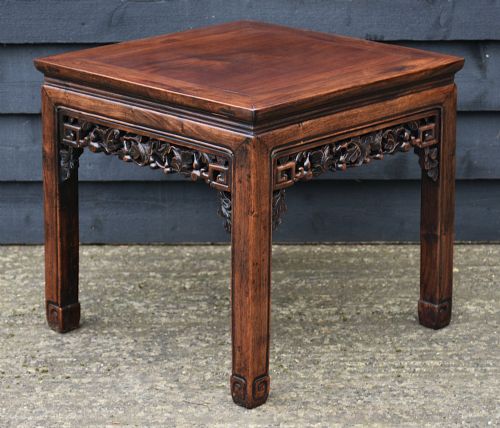
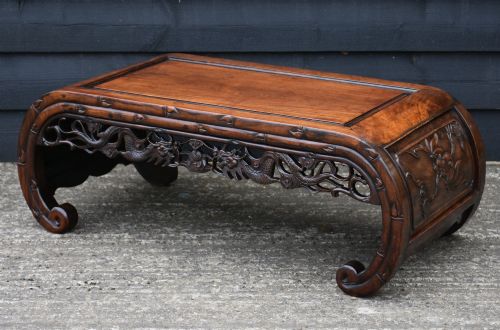
These dark wood kang table examples bring traditional Chinese form and rich timber into a modern room.
Dark Wood Kang Table
A dark wood kang table offers a low-slung surface originally designed for seating on raised platforms in Chinese homes. Today, buyers seek them out as coffee tables or side tables that sit close to the floor.
The pieces appearing here span from the late nineteenth century into the early twentieth century, carrying descriptions such as opium table, coffee table, and low table. They frequently reflect regional Chinese traditions or Qing Dynasty aesthetics.
Most examples found on this page are constructed from dense timbers with characteristic low proportions. They suit contemporary spaces where a low profile helps anchor a seating arrangement.
How they were made
Cabinetmakers built these low tables using dense hardwoods, including rosewood, elm, and hongmu. These timbers provided the strength required for furniture subjected to daily use on platforms and floors.
Surfaces often feature figured grain patterns, while certain pieces incorporate carved dragon details. Traditional joinery techniques held the frames together without relying on modern fixings.
Some nineteenth-century tables come with dragons hiding in the woodwork, ready to guard your afternoon cup of tea.
What varies in quality
The distinction between standard examples and finer pieces lies in the selection of the timber and the depth of the carving. Highly figured rosewood and carefully detailed dragon motifs elevate a piece above simpler rustic elm versions.
Proportion and execution also define the better items in this category. Clean lines and balanced construction show the hand of a skilled maker working within traditional Chinese furniture forms.
The Dark Wood Kang Table Glossary
- Kang table
- A low table traditionally placed upon a heated brick bed, known as a kang, in northern Chinese homes. They were used for dining, writing, and serving tea.
- Opium table
- A common alternative descriptor for a low Chinese table, originating from their historical use in domestic settings. These tables share the same low stature as kang tables.
- Hongmu
- A translation meaning red wood, applied to a category of dense and heavy tropical hardwoods used in traditional Chinese furniture. It develops a deep patina over time.
- Elm
- A domestic timber utilised for regional Chinese furniture, offering a pronounced grain pattern. It appears in both rustic country pieces and more finished low tables.
Dark Wood Kang Table: Frequently Asked Questions
How were kang tables used?
These low tables served households as central surfaces for eating, drinking tea, and socialising while sitting upon mats or platforms.
Today, their compact height makes them natural choices for modern living rooms as coffee tables.
What is hongmu?
Hongmu refers to dense tropical hardwoods valued in traditional Chinese cabinetmaking for their weight and rich colour.
Furniture made from this material often displays a dark tone and a smooth, hard surface.
How do I style a low table?
A low kang table works well paired with low-profile seating or floor cushions to maintain the traditional sense of scale.
Keep objects on the surface simple to let the timber grain and carved details remain visible.
Are elm and rosewood different?
Elm is a lighter, heavily grained timber frequently seen in regional Chinese rustic pieces.
Rosewood and hongmu are heavier, denser hardwoods often reserved for finer, more formally carved tables.