



Dark Wood Gueridon
These dark wood gueridon tables are striking circular occasional pieces designed to hold lamps, drinks or ornaments.
Dark Wood Gueridon
A dark wood gueridon is a compact circular table designed for occasional use, frequently featuring a prominent central pedestal support. When searching for dark wood gueridon, buyers encounter French and English examples spanning from the eighteenth century through the Victorian era.
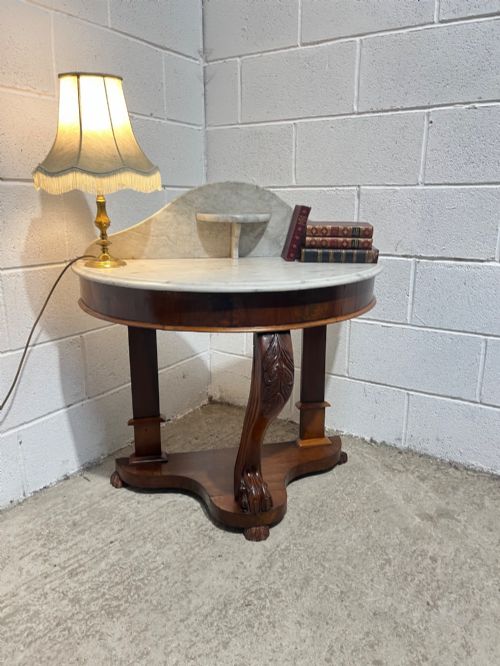
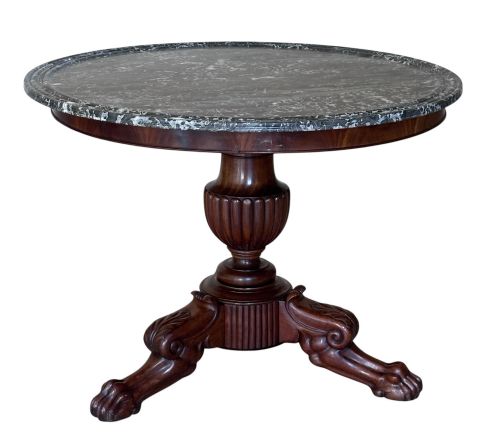
The pieces on this page appear in various forms including centre tables, lamp tables, and wine tables. Many incorporate inset marble tops and bronze or ormolu mounts reflecting French Empire and Victorian styles.
Origins range across continental Europe and Britain, with mahogany, oak, and walnut providing the dark timber foundation. These tables suit domestic spaces requiring a functional surface with classical proportions.
How they were made
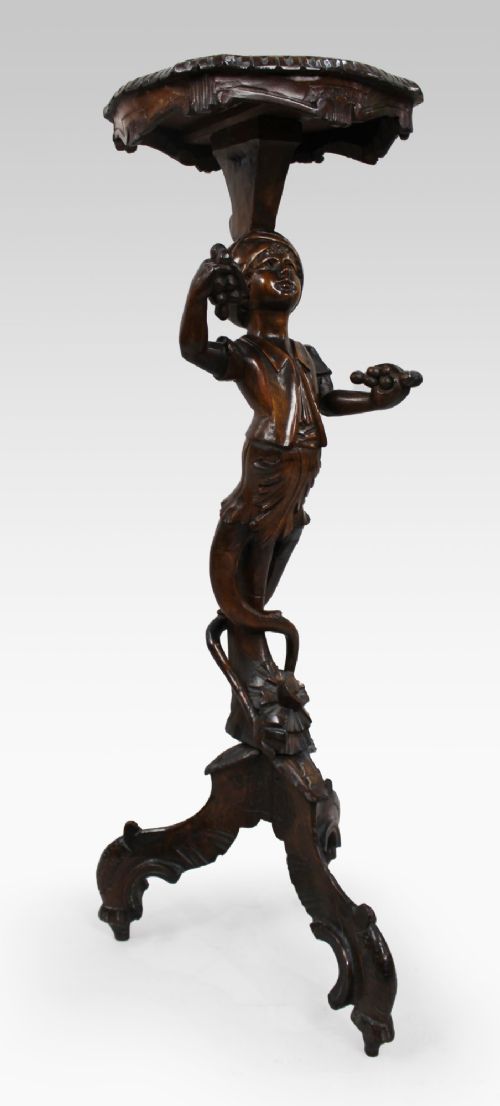
Cabinetmakers constructed these tables using dense dark timbers such as mahogany, coromandel, and walnut, often shaping them into octagonal or circular tops. Carved figures and swan supports appear on specific pedestals, demonstrating advanced woodworking techniques.
Many examples integrate contrasting materials, mounting marble slabs into the timber tops and applying cast ormolu and gilded brass details. These decorative elements require precise metalworking to fit the wooden frames accurately.
Some nineteenth-century tables rely on crouching wooden figures to hold up the world, or at least the tea.
What varies in quality
The distinction between standard and superior pieces rests on the choice of timber and the execution of carved details. Richly figured mahogany or coromandel combined with finely cast ormolu mounts indicates a higher grade of craftsmanship.
Structural integrity depends on the stability of the central pedestal and the secure fit of inset marble tops. Tables retaining original brass mounts and crisp carved figures command greater attention from collectors.
The Dark Wood Gueridon Glossary
- Gueridon
- A small French table, typically round and supported by a single central pillar or column. The form originated in the seventeenth century and evolved through various classical revivals.
- Ormolu
- Gilded bronze ornamentation applied to furniture and decorative objects. This technique was widely utilised in French Empire and Victorian pieces to highlight structural edges and mounts.
- Console table
- A table designed to stand against a wall, frequently secured with brackets. These pieces often feature marble tops and decorative architectural supports.
- Specimen marble
- A decorative top composed of various coloured marbles arranged in geometric patterns or pictures. This technique appears on nineteenth-century centre and lamp tables.
Dark Wood Gueridon: Frequently Asked Questions
What is a dark wood gueridon used for?
These tables function well as lamp stands, occasional surfaces for drinks, or decorative centerpieces in a reception room.
Their compact circular design allows them to fit easily beside seating or in smaller corners.
How do I identify a French Empire style table?
French Empire pieces typically feature dark mahogany timbers complemented by gilt bronze or ormolu mounts and classical motifs.
They often incorporate sturdy central pedestals and occasionally display figural supports or marble tops.
Are these tables suitable for everyday use?
Most nineteenth-century examples are robust enough for daily placement in a living space or hallway.
Care should be taken with polished wooden surfaces and inset marble tops to prevent moisture marks and scratches.
How can I tell the period of a gueridon?
Dating relies on examining the timber species, the style of the pedestal base, and the presence of decorative mounts.
Eighteenth-century examples often display simpler, hand-carved wooden forms while nineteenth-century pieces frequently integrate marble and cast brass.