
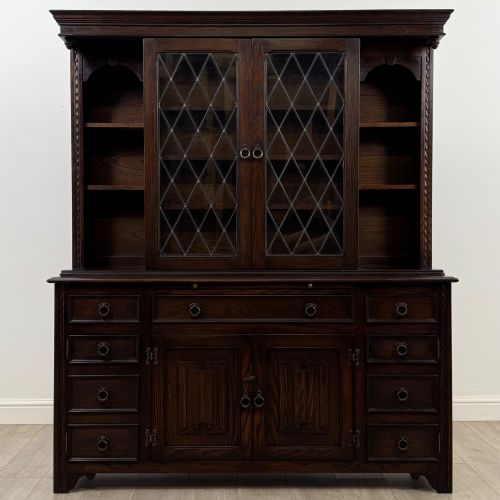
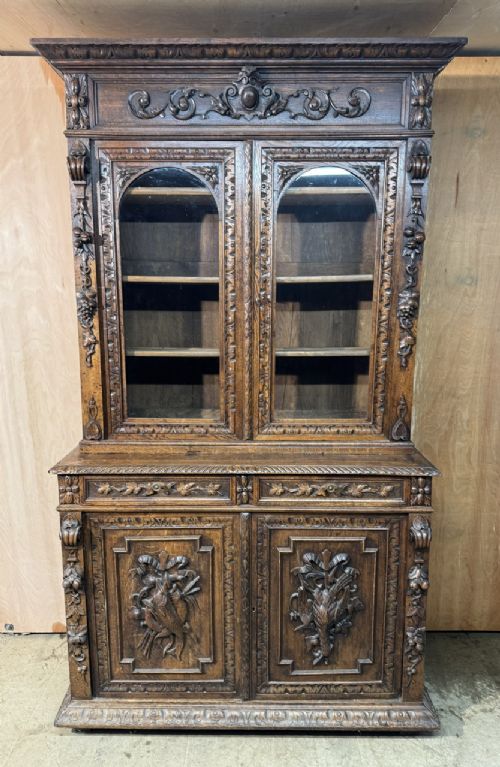
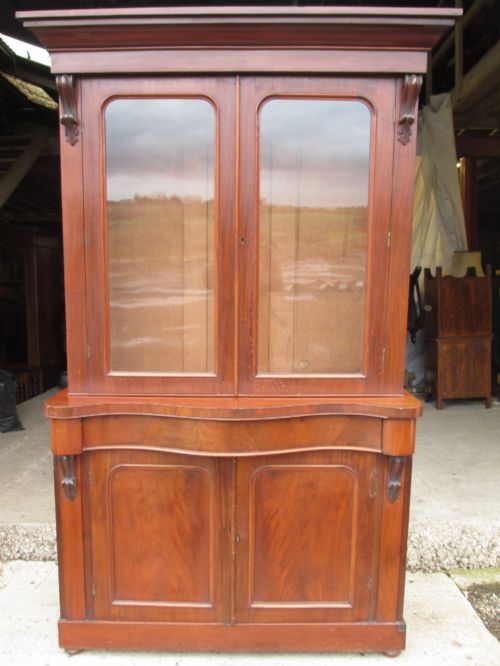
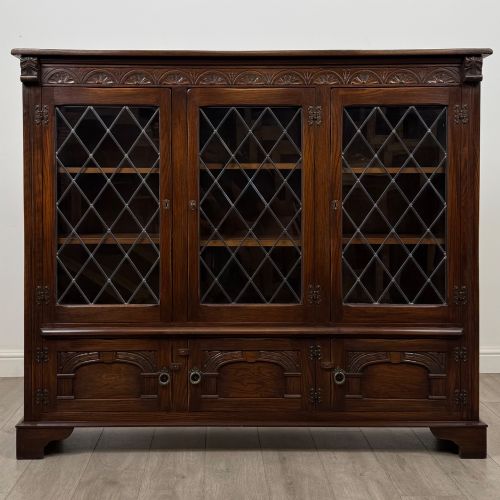
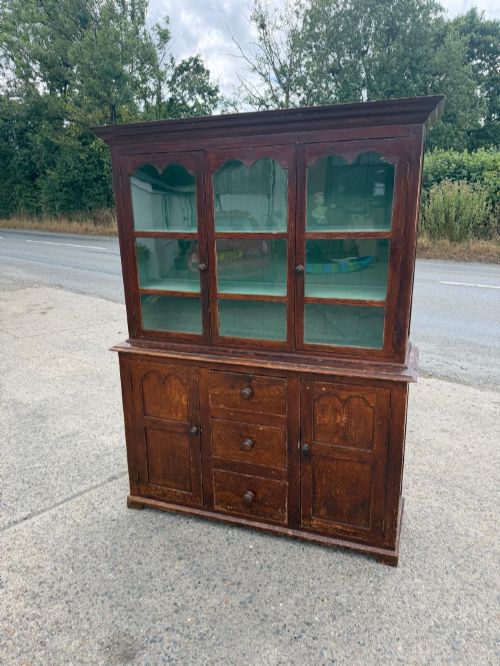
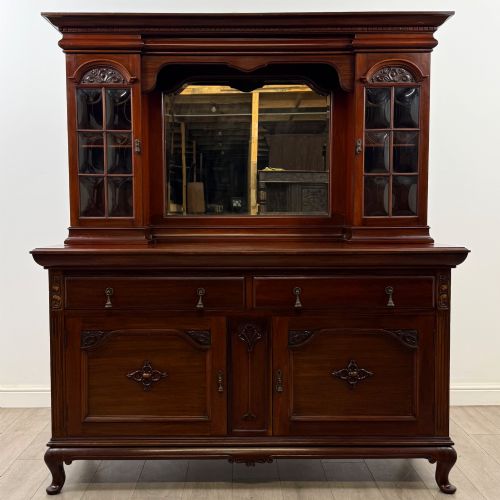


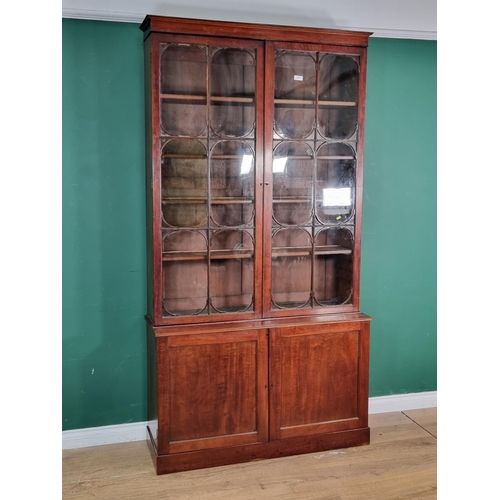


Dark Wood Glazed Dresser
A dark wood glazed dresser brings architectural presence and visible storage into a room, uniting timber and glass to display what lies inside.
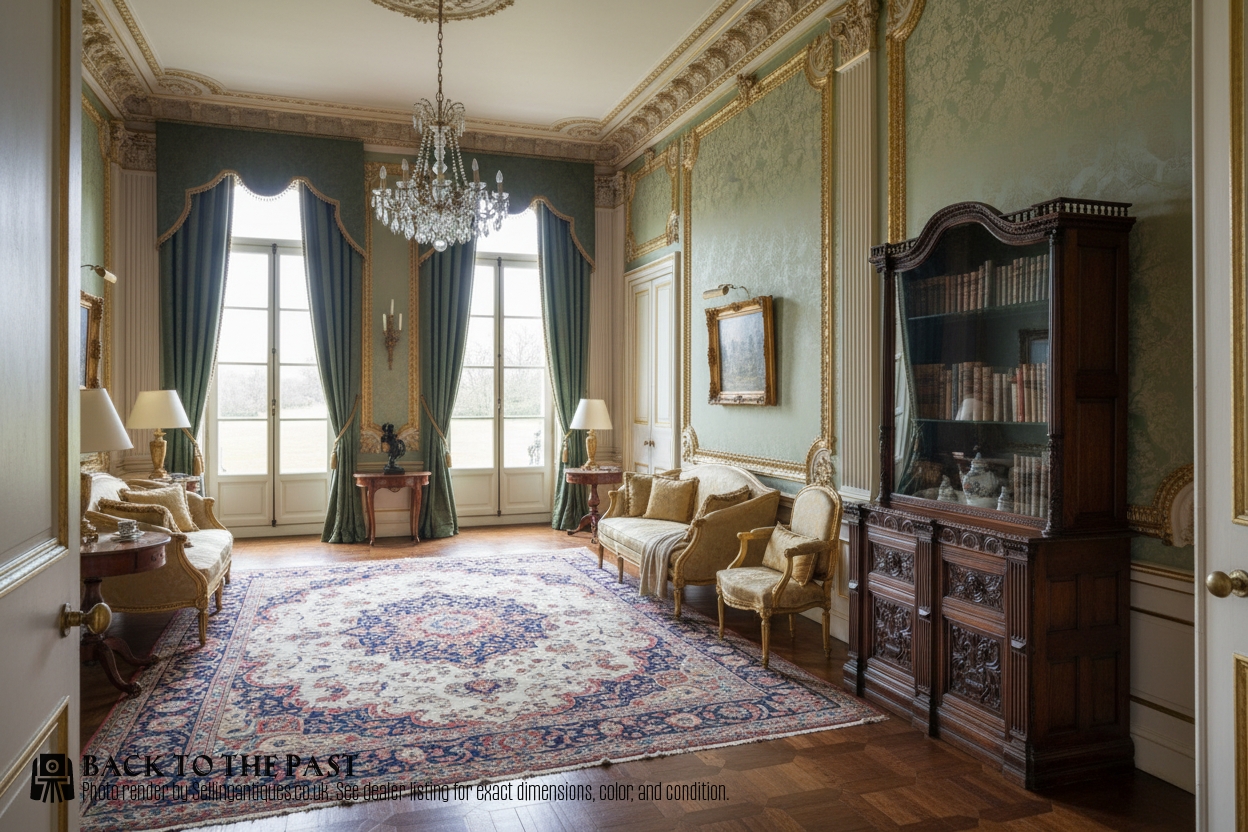
Dark Wood Glazed Dresser
When you search for a dark wood glazed dresser, you are looking for substantial storage furniture combining timber cabinetry with transparent panelling. These pieces function equally well as display cabinets, bookcases, and side cabinets depending on their internal configuration.
The versions you are most likely to meet on this page span the 18th century, Victorian, and Edwardian periods, constructed in rich timbers such as oak, mahogany, and rosewood. Styles range from plain English country pieces and Arts and Crafts designs to heavily carved Jacobean Revival, Tudor Revival, and French Renaissance Revival forms.
Many items present a two-part construction, featuring a glazed upper section for display positioned above a solid wooden cupboard base, commode, or sideboard. Cornish oak examples and French provincial vitrines sit alongside grander library bookcases and mirror-back cabinets.
Materials and Construction
Makers utilised dense timbers including oak, mahogany, and rosewood, often choosing quartersawn oak to reveal distinctive grain figures and medullary rays. Carved ornamentation, panel mouldings, and occasional brass hardware define the structural surfaces.
Glazing relies on glass panels held securely with lead or wooden glazing bars, whilst internal shelving accommodates books and display objects. Mirror glass is integrated into specific Edwardian backboards to reflect light through the cabinet interior.
Object forms include library bookcases, two-piece commodes, mirror-back cabinets, and Arts and Crafts sideboards.
What Defines Quality
The hierarchy of quality rests primarily in the selection of timber and the crispness of hand-carved detail. Superior pieces exhibit carefully matched grain patterns, solid timber carcases, and refined architectural proportions rather than mechanical uniformity.
Joinery execution dictates longevity, visible in the snug fit of glazed doors and the smooth operation of drawers and lower cupboards. Elaborate revival styles and signed workshop pieces demonstrate a higher degree of artisan labour.
Sigmund Jaray, Wien·Howard and Sons
The Dark Wood Glazed Dresser Glossary
- Glazed
- Fitted with glass panes to enclose shelves while permitting a clear view of the contents. This method protects delicate objects from dust.
- Vitrine
- A glass-fronted display cabinet intended for the exhibition of fine ceramics and curiosities. These pieces often feature glass on multiple sides.
- Commode
- A low chest of drawers or a cabinet with doors, functioning as a storage base. In two-piece furniture, it frequently supports the upper display section.
- Mirror Back
- A polished reflective glass panel fitted to the rear interior or upper backboard of a cabinet. It amplifies light within the display space.
Dark Wood Glazed Dresser: Frequently Asked Questions
What is a dark wood glazed dresser?
A dark wood glazed dresser is a tall storage and display unit made from timbers like oak, mahogany, or rosewood, featuring glass doors on the upper portion.
These cabinets serve to house books, ceramics, and ornaments while keeping them visible and protected behind timber and glass framing.
How were these cabinets used historically?
Historically, these units functioned as libraries, dining room sideboards, and drawing-room display cabinets for valued possessions and literature.
The upper glazed sections kept prized collections free from soot and dust, while lower cupboards stored bulkier household items.
How do I distinguish Victorian pieces?
Victorian pieces often display deeper, darker wood tones, substantial proportions, and sometimes restrained mahogany or rosewood veneer work.
Later Victorian examples may incorporate revival detailing such as Jacobean or Tudor carved motifs across the cornices and doors.
How do I care for antique timber?
Maintain antique timber by keeping pieces away from direct heat sources and sudden temperature fluctuations that cause wood to split.
Apply traditional wax sparingly and polish gently with a soft cloth to preserve the natural lustre of the polished surface.