


Dark Wood Elephant Table
These dark wood elephant table pieces combine carved animal forms with practical surfaces, bringing character and distinct regional craftsmanship into a room.
Dark Wood Elephant Table
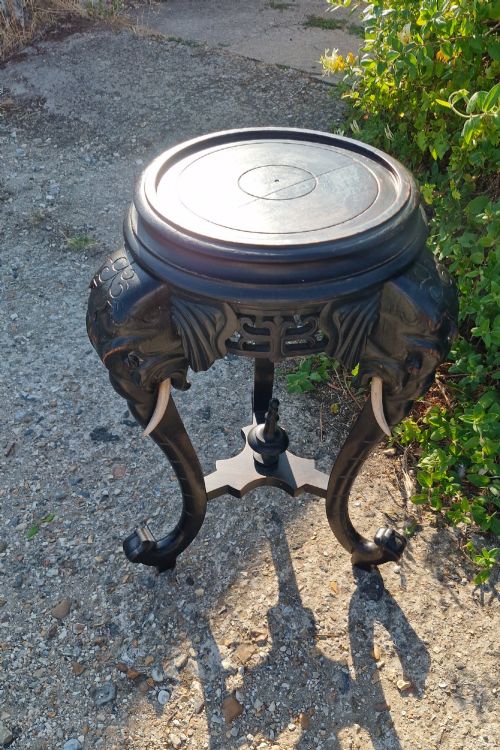
A dark wood elephant table takes various forms, most commonly appearing as small side tables, occasional tables, and coffee tables supported by carved animal figures. The versions on this page originate predominantly from nineteenth and early twentieth-century periods, spanning Victorian, Edwardian, and Qing dynasty eras.
Geographical origins range widely across Asian and colonial workshops, including Anglo-Indian, Anglo-Burmese, and Chinese traditions. Alongside standard side tables, related pieces such as plant stands, pedestals, and carved benches also surface within these categories.
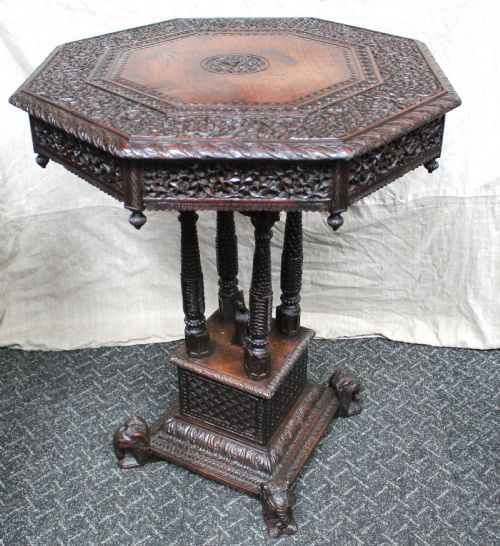
Buyers seeking a dark wood elephant table will encounter construction styles defined by regional woodworking methods and traditional ornamentation. The structural execution varies from simple occasional surfaces to heavily carved centre tables and tripod designs.
Materials and Techniques
Constructed primarily from dense tropical timbers such as teak, rosewood, and general hardwood, these tables utilise the natural weight and grain of the material to support intricate carving. Ebonised finishes and painted wooden details occasionally alter the raw surface appearance.
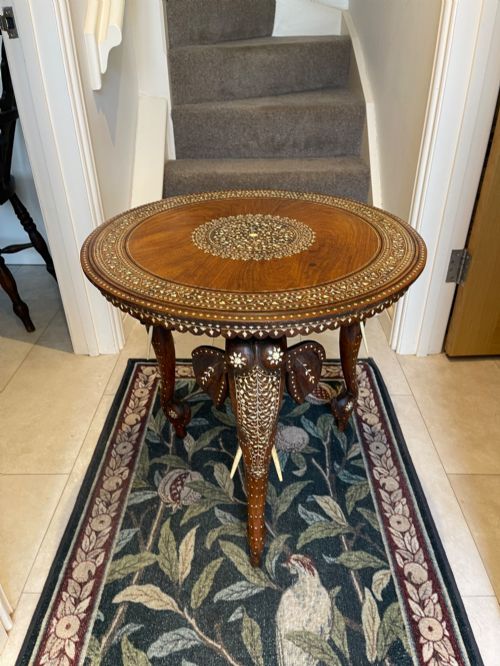
Decoration is achieved through deep hand-carving and delicate bone inlay work, particularly evident in pieces associated with specific regional centres like Hoshiarpur. Artisans shaped the timber to form the legs, tusks, and structural supports of the animal motifs.
Some tables feature painted wooden tusks alongside genuine bone inlay.
Assessment of Quality
The choice of timber significantly influences the overall standard, with solid rosewood and finely grained teak representing the higher end of manufacture. Finer pieces also feature meticulous bone inlay work that remains securely seated within the surrounding wood.
The Dark Wood Elephant Table Glossary
- Anglo-Indian
- Pertaining to furniture produced during the British Raj, combining traditional Indian carving techniques with European furniture forms. These pieces often feature dense foliate patterns alongside animal motifs.
- Hoshiarpur
- A region in Punjab known for intricate woodwork involving delicate bone or brass inlay set into dark timber surfaces. Tables from this area frequently incorporate geometric patterns alongside figurative elements.
- Teak
- A durable tropical hardwood valued for its rich colour and resistance to environmental changes. It serves as a primary structural timber for many colonial and oriental tables.
- Ebonised
- Wood treated with a dark finish to imitate the appearance of ebony. This technique was frequently utilised in Victorian workshops to create a dramatic, uniform backdrop for carvings.
- Occasional table
- A small, portable piece of furniture designed for specific, intermittent use within a room. In this context, the category includes lightweight plant stands and tripod tables.
Dark Wood Elephant Table: Frequently Asked Questions
How are these tables cleaned safely?
Dust the carved surfaces regularly with a soft, dry brush to prevent dirt from settling within the deep crevices of the wood.
Avoid using harsh chemical polishes or excessive water, applying a modest amount of quality beeswax only when the timber appears dry.
Can these tables support heavy lamps?
Most occasional tables and side tables are structurally stable enough for standard table lamps and decorative objects.
Heavier items should be avoided on smaller tripod bases or pieces with delicate leg configurations to ensure balance.
What defines an Anglo-Indian piece?
Anglo-Indian furniture bridges British domestic forms with traditional Indian woodworking and decorative arts.
These items typically display dense, carved botanical motifs combined with animal figures like elephants.
How do I identify the period?
Dating relies on examining the timber species, the tool marks left by the carver, and the overall style of construction.
Nineteenth-century examples often display heavier, denser hardwoods and hand-turned elements compared to later reproductions.