


Dark Wood Carved Casket
A dark wood carved casket brings tactile depth and history to a room, offering a tactile receptacle for keepsakes that anchors a surface.
Dark Wood Carved Casket
A dark wood carved casket encompasses a range of small storage forms including jewellery boxes, stationery boxes, humidors, and deed boxes. When you search for a dark wood carved casket, you encounter pieces designed to hold personal treasures, important papers, or small luxuries upon a desk, table, or dresser.
The objects span multiple centuries, originating from workshops in Britain, continental Europe, India, China, and the Middle East. The Victorian era and the nineteenth century provide a large share of the available examples, alongside earlier seventeenth and eighteenth-century items.
Materials and construction methods
Craftsmen shaped these caskets from dense timbers including rosewood, walnut, teak, ebony, coromandel, and oak. These heavy woods provided stable foundations for deep relief carving and chip-carved geometric patterns.
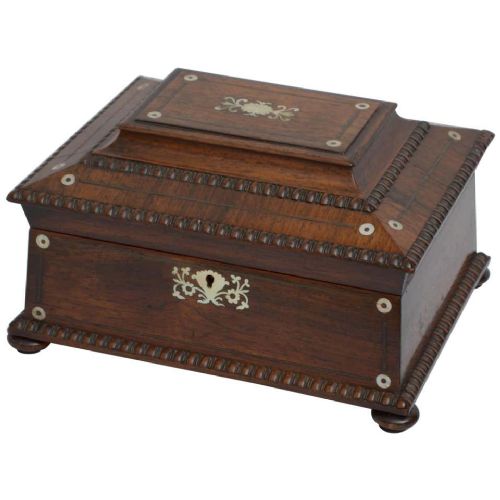
Many examples incorporate contrasting inlays of mother-of-pearl, bone, brass, and lighter woods to accentuate the dark grain of the primary material. Surface decoration ranges from naturalistic foliage and animal motifs to geometric chip carving and architectural tracery.
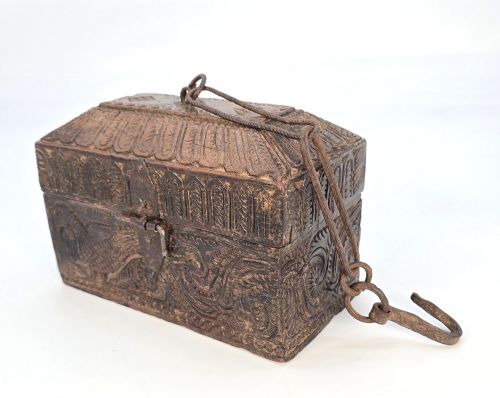
Listings feature eighteenth-century Indian carved teak and seventeenth-century Welsh oak alongside nineteenth-century European rosewood and coromandel caskets.
Factors of quality and execution
The crispness and depth of the carving separate standard workshop pieces from superior examples. Skilled carvers achieved clean, undercut details in hard timbers like ebony and boxwood without splintering the grain.
Internal fittings and hardware also indicate standard. Well-made caskets retain original brass locks, fitted compartments for writing utensils or jewellery, and precise dovetail joints that ensure the lid closes flush against the body over centuries.
The Dark Wood Carved Casket Glossary
- Black Forest
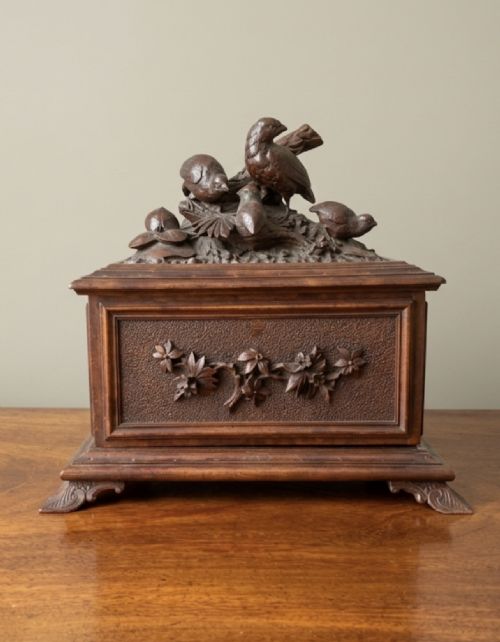
- A regional style originating from Switzerland and Germany, known for highly naturalistic carved wood depicting animals and foliage. Pieces often feature three-dimensional birds, bears, or oak leaves carved in deep relief.
- Coromandel
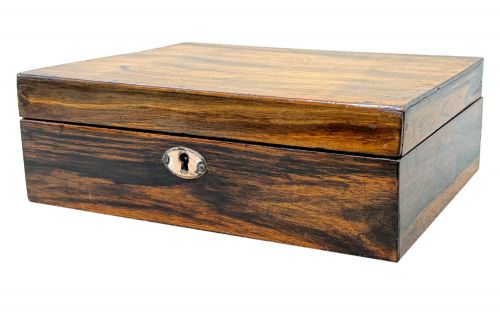
- A heavy, durable timber derived from Diospyros species, prized for its dark brown colour and striking contrasting streaks. It appears frequently on nineteenth-century luxury boxes and work tables.
- Chip carving
- A technique where craftsmen remove small chips from the surface of a piece of wood using knives or chisels to create geometric patterns. It appears on seventeenth-century Welsh oak boxes.
- Sarcophagus-shaped
- A box design featuring a sloping lid and flared base reminiscent of classical stone monuments. This profile gained popularity in Britain during the Regency and Victorian periods for sewing and jewellery boxes.
Dark Wood Carved Casket: Frequently Asked Questions
What were these boxes originally used for?
These caskets served specific domestic and administrative functions, holding letters, currency, tobacco, sewing implements, or jewellery. Owners kept them in studies, bedrooms, and parlours to secure personal valuables.
Over time, many adapted to general keepsakes as their original contents evolved, yet their internal partitions often retain clues to their primary purpose.
How do I date a dark wood casket?
Dating relies on timber selection, construction techniques, and stylistic markers such as hardware or carving motifs. Seventeenth-century boxes often display chip carving on native oak, while nineteenth-century pieces frequently use exotic woods like rosewood or coromandel.
Examining the interior linings, hinges, and lock plates also helps determine the manufacturing period.
Are these caskets made of solid wood?
Many examples utilise solid timbers, particularly those from the seventeenth and eighteenth centuries or pieces carved in high relief. Dense tropical hardwoods like ebony and teak were durable enough to stand alone without secondary foundations.
Later Victorian boxes sometimes apply veneers over a secondary wood base to showcase decorative grain patterns.
How should I care for a carved wooden box?
Maintenance involves keeping the piece away from direct heat sources and extreme humidity fluctuations to prevent the wood from splitting. Dusting gently with a soft brush helps clear debris from deep relief carvings.
Applying occasional wax appropriate for antique timber preserves the surface finish without building up heavy residue.