


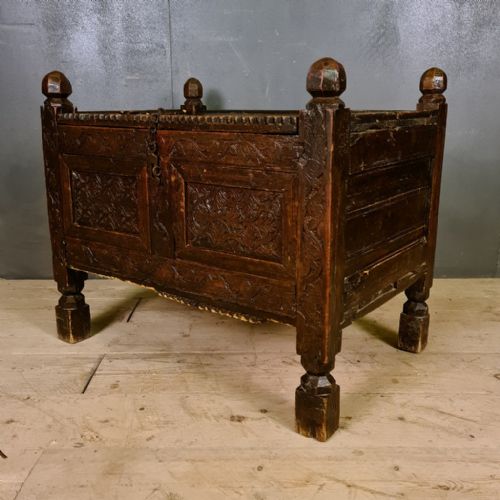

Antique Chip Carved Oak
Antique chip carved oak pieces are domestic items shaped with notch-cutting techniques, offering tactile folk art character for historic interiors.
Antique Chip Carved Oak
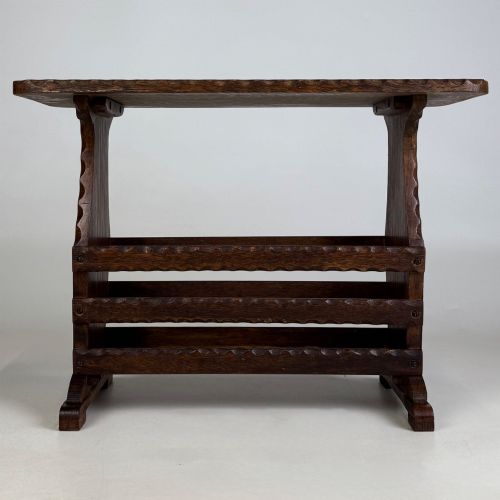
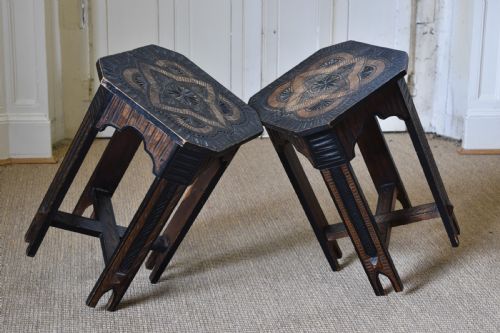
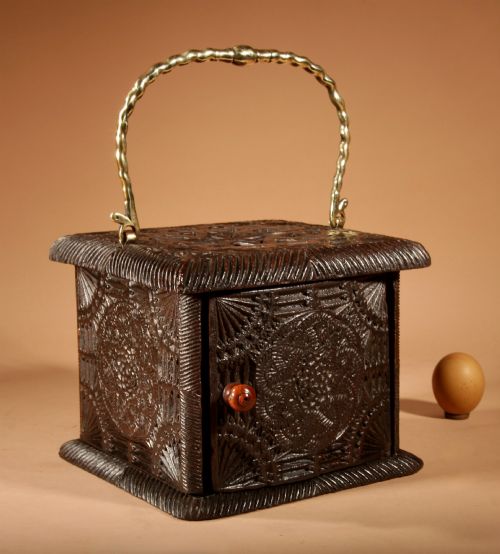
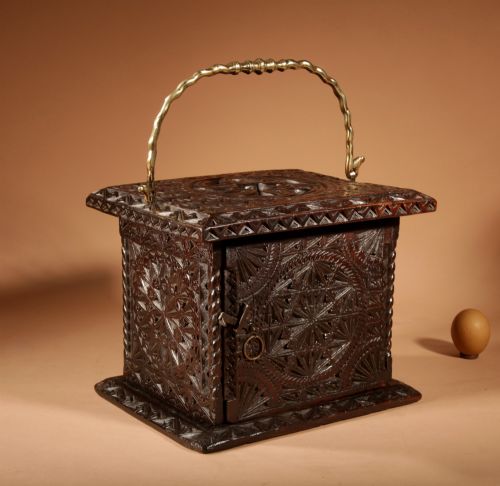
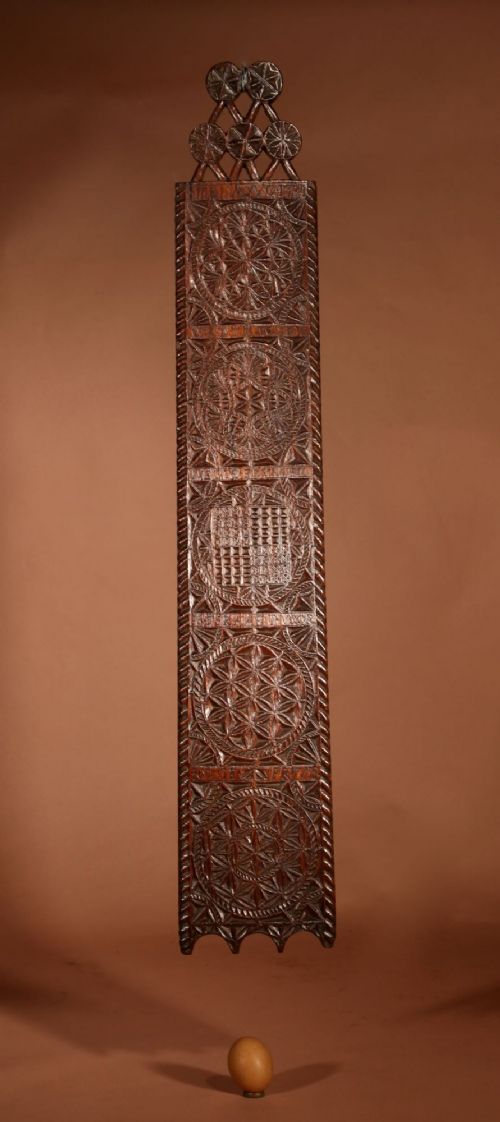
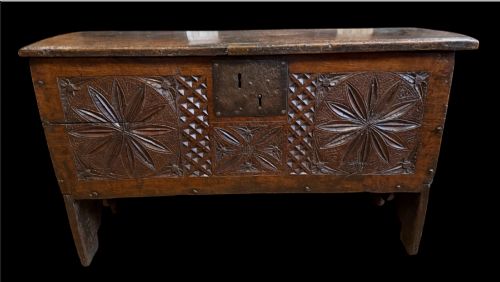
When buyers search for antique chip carved oak, they look at utilitarian wooden items transformed by geometric notch-cutting and incision. The selections on this page span several centuries, reaching back to sixteenth-century plank coffers and seventeenth-century boxes, alongside eighteenth-century Dutch Frisian mangle boards and foot stoves.
Domestic utility defines these objects, which range from small snuff boxes and book boxes to larger marriage chests, side tables, and foot warmers. Folk art traditions from Wales, Germany, and the Netherlands appear frequently alongside vernacular British pieces made from sturdy timber.
How They Were Made
Maker-carvers utilised seasoned oak and occasionally fruitwood inlay, working primarily with gouges and chisels to carve geometric patterns directly into the solid wood surface. Wrought iron and brass hardware such as hinges, handles, and internal liners frequently accompany the timber construction.
Surface treatment relies on natural waxing and historical finishes, with occasional painted highlights accentuating the recessed cuts of dates, initials, and text.
Listings feature oak alongside fruitwood inlay, walnut, brass, and wrought iron across centuries ranging from the sixteenth to the twentieth.
What Varies in Quality
Execution of the geometric carving separates routine workshop production from superior vernacular craftsmanship, where crisp lines and balanced negative space reveal a more confident hand. The survival of original dated inscriptions, legible text, and untouched surface patination enhances historical value significantly.
Structural integrity of the underlying timber, minimal replacement of hardware, and the preservation of secondary woods or internal components distinguish the finest surviving domestic items.
The Antique Chip Carved Oak Glossary
- Chip carving
- A method of removing small triangles or chips of wood from a flat surface to create geometric patterns. This incision technique forms the primary ornamentation on boards, boxes, and domestic utensils.
- Mangle board
- A flat wooden board used historically with a rolling pin to smooth linen. Dutch and Frisian examples often display dense chip carving, dates, and initials.
- Foot stove
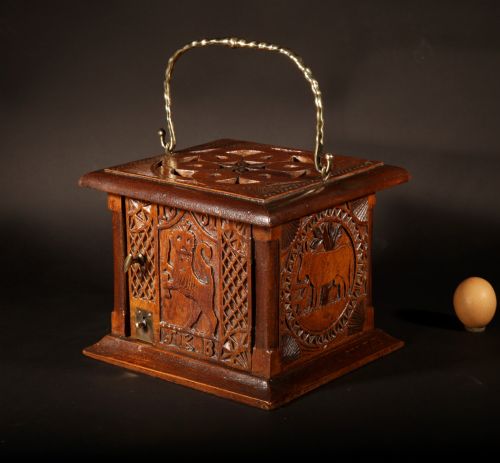
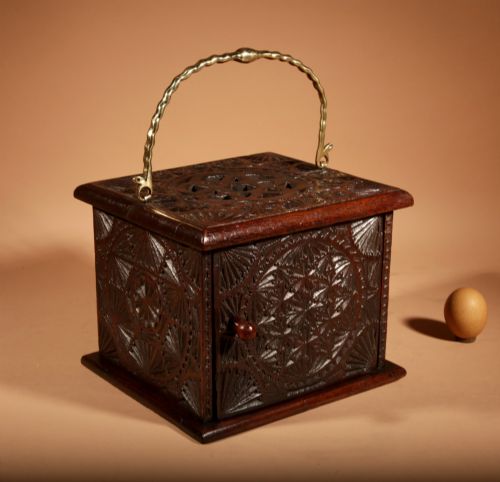
- A small perforated wooden box containing a tray for hot embers, used to warm feet in cold churches or homes. Many surviving examples feature pierced lids and intricate chip carved decoration.
- Coffer
- A heavy wooden chest used for storing valuables, linen, or documents. Early versions are constructed from thick oak planks joined with pegs and iron hardware.
Antique Chip Carved Oak: Frequently Asked Questions
What is chip carved oak?
Chip carved oak describes domestic wooden items decorated by chiselling small geometric chips out of the solid timber surface. This technique creates textured patterns of triangles, rosettes, and bands.
Items decorated this way include utilitarian objects like boxes, foot warmers, and boards made across Britain and Northern Europe from the sixteenth century onwards.
How were foot stoves used?
Foot stoves held hot embers inside a metal pan placed within a perforated wooden box, allowing people to keep warm during long periods in unheated buildings. The pierced holes in the top let heat escape while the wooden frame protected garments.
Carved versions often served as personal or family possessions, frequently marked with initials and dates.
How do I date antique oak pieces?
Dating relies on construction methods, timber characteristics, and carved stylistic clues such as inscribed dates, initials, or regional motifs. Early pieces utilise joined plank construction with hand-forged iron nails or wooden pegs.
Comparing the depth of patination and the wear patterns on the oak helps separate seventeenth-century vernacular items from later nineteenth-century revival examples.
Where were these items made?
These domestic items originated across various European regions, with distinct traditions appearing in Wales, England, Germany, and the Netherlands. Frisian makers produced notable decorated mangle boards and foot stoves.
Local folk art styles influenced the specific geometric patterns and types of timber selected by regional rural woodworkers.