


Dark Wood Cane Armchair
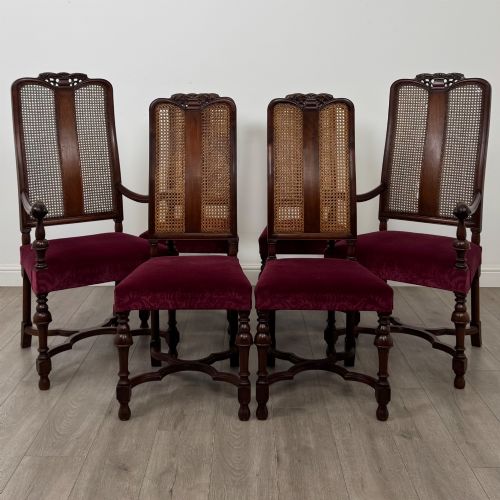
A dark wood cane armchair brings substantial timber and woven seating together across periods ranging from the seventeenth century to the twentieth.
Dark Wood Cane Armchair
A dark wood cane armchair combines a timber frame executed in mahogany, oak, walnut, or padouk with woven cane or rattan seating components. These pieces encompass various historical periods including Regency, Victorian, Edwardian, and the seventeenth century, reflecting diverse regional origins.
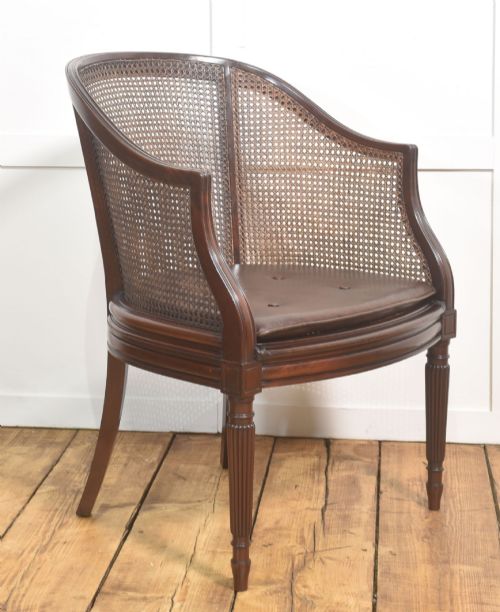
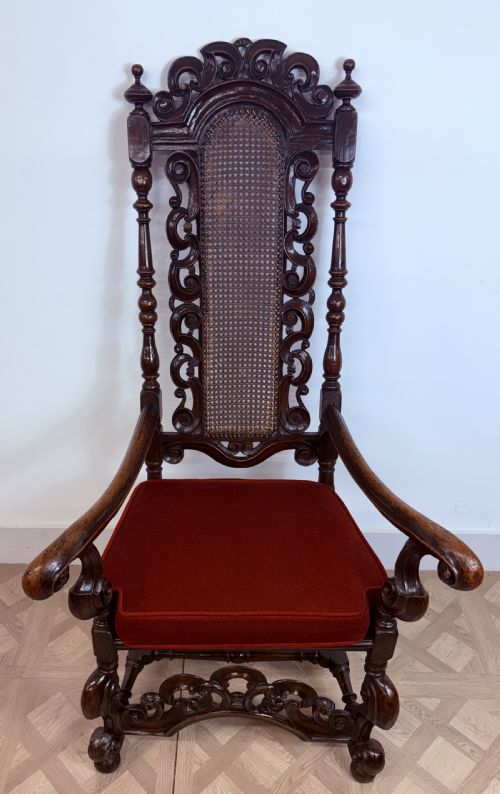
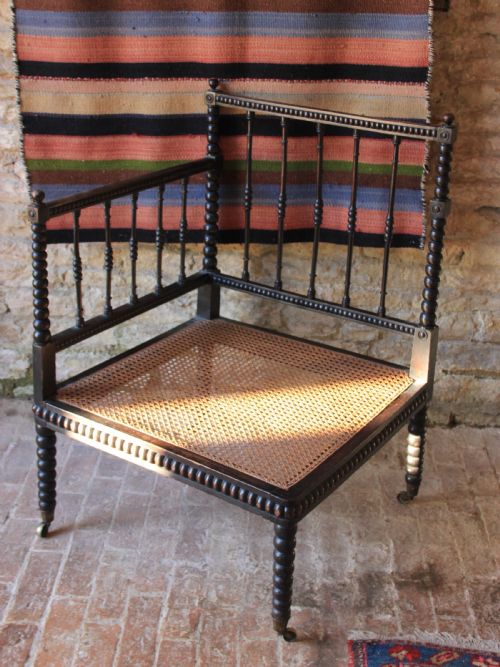
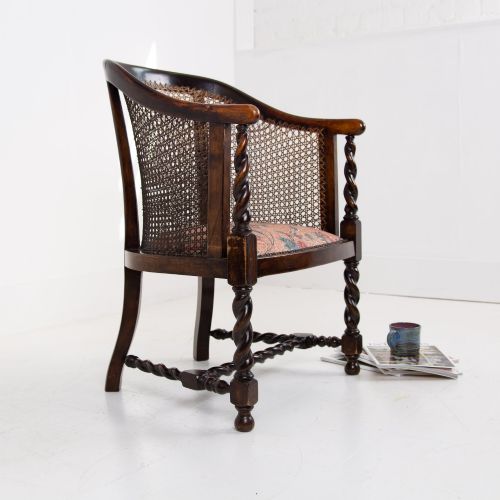
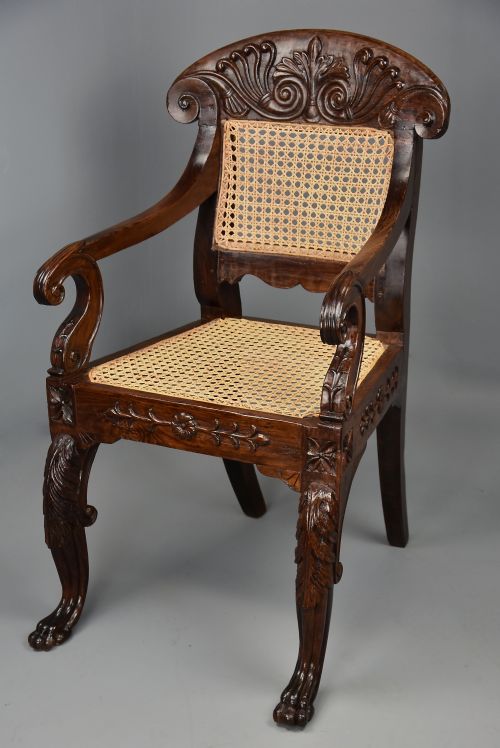
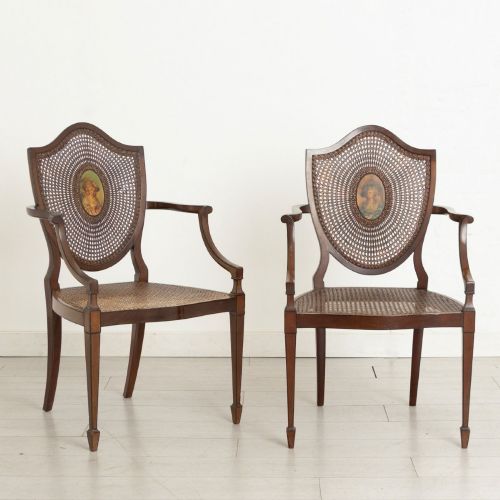
The forms span from library bergères and rocking chairs to child size seats and open armchairs influenced by Jacobean, French Neoclassical, and Anglo-Indian styles. Buyers encounter both single statement chairs and matched suites adapted for domestic reception spaces or studies.
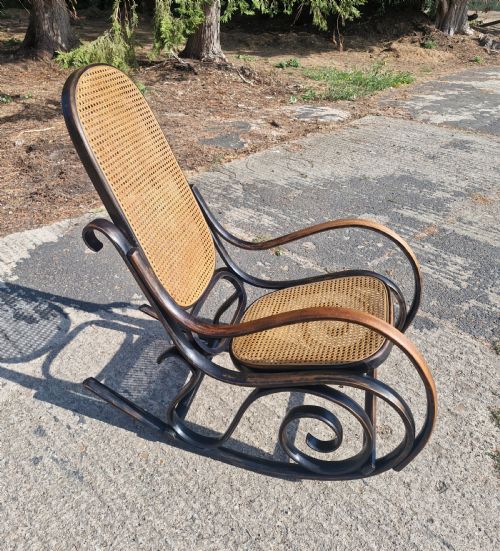
Construction methods range from steam bentwood frames to rigid joined timber with carved or painted ornamentation. The integration of woven panels provides both flexibility and ventilation to the primary seating structure.
How they were made
Makers utilised dense timbers such as mahogany, oak, and walnut alongside simulated rosewood finishes to construct the primary load bearing frames. These woods were carved, turned, or steam bent depending on the prevailing style and the structural requirements of the armrests and legs.
Caning and rattan materials were hand woven through pierced frame edges to form resilient seating and back panels. Additional decorative elements incorporated brass fittings, leather upholstery, and fabric cushions to complete the construction.
One exceptional rocking chair originates from the workshop of Thonet, demonstrating pioneering steam bending techniques that revolutionised nineteenth century seating.
What varies in quality
The standard of timber selection and the precision of the joinery distinguish different grades of these chairs. Finely figured grain patterns and crisply executed hand carving indicate superior craftsmanship compared to plain or mechanically shaped equivalents.
The integrity and tension of the woven cane work significantly influence the overall standard of the piece. Intact original weaving or expert historical re-caning demonstrates a higher degree of preservation than deteriorated or poorly repaired panels.
Thonet
The Dark Wood Cane Armchair Glossary
- Bentwood
- Wood softened through steam application and bent into curved structural components. This technique defines various nineteenth and twentieth century rocking and lounge chairs.
- Padouk
- A heavy tropical hardwood exhibiting reddish brown tones frequently utilised in Anglo-Indian and colonial furniture. It provides exceptional stability for intricate carving.
- Curule
- An ancient X shaped chair design featuring crossed legs supporting a seat. Revival versions emerged during the nineteenth century in various European styles.
- Bobbin
- Furniture turning shaped to resemble a string of spool or bobbin elements. This decorative woodwork appears on seventeenth century and nineteenth century revival seating.
Dark Wood Cane Armchair: Frequently Asked Questions
How do I care for cane seats?
Maintain woven cane by occasionally dampening the underside with warm water to restore moisture and prevent brittleness.
Avoid placing these chairs near direct heat sources or in overly dry environments which can cause the natural fibres to snap.
What is a bergere armchair?
A bergère is an enclosed upholstered armchair featuring exposed wooden framing and woven cane panels along the sides and back.
This form provides a lighter visual presence than fully padded seats while offering structured support for reading rooms and libraries.
How do I identify a Victorian cane chair?
Victorian examples frequently display revival influences such as Jacobean turning or heavy carved ornamentation applied to dark hardwoods like mahogany and oak.
Examination of the timber patination and assembly methods helps distinguish these nineteenth century pieces from later Edwardian reproductions.
Are these chairs suitable for daily use?
Most sturdy wood and cane armchairs function well for everyday seating provided the frame joints remain tight and the woven panels show sufficient tension.
Consult individual listings for specific structural notes regarding the load bearing capacity of historical cane work.