




Restoration Oak Armchair
A restoration oak armchair brings bold seventeenth-century character and sturdy timber construction into a room, offering both historic presence and enduring daily seating.
Restoration Oak Armchair
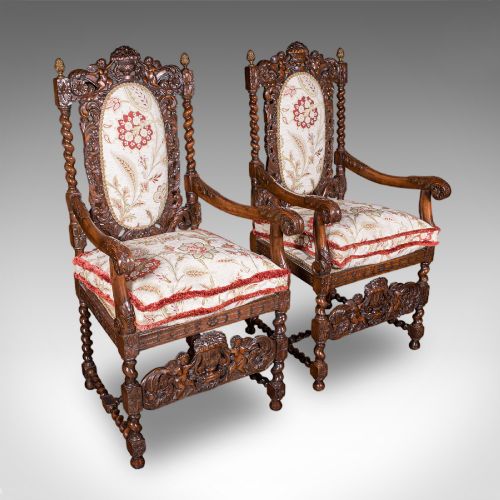
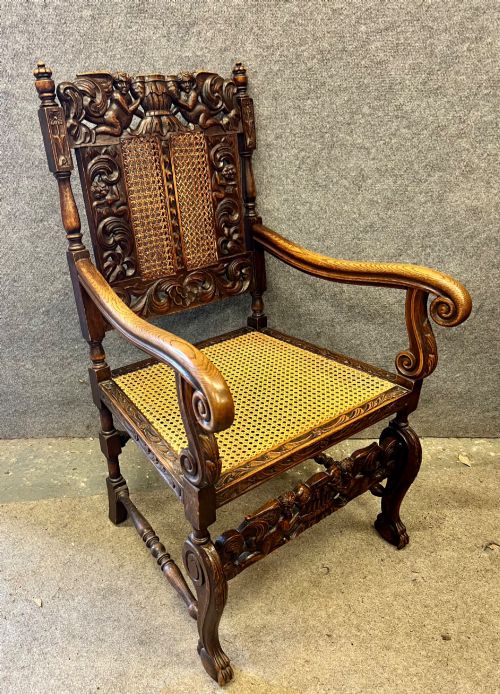
A restoration oak armchair embodies the robust seating forms of the seventeenth century, drawing on Carolean, Jacobean, and Cromwellian traditions. When searching for a restoration oak armchair, buyers encounter authentic seventeenth-century survivals alongside nineteenth-century revivals produced during the Victorian era and later in nineteen-twenty.
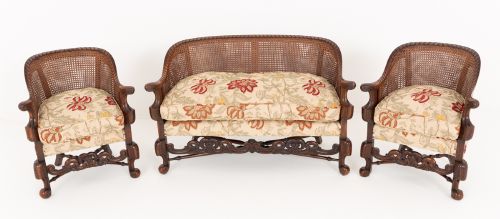
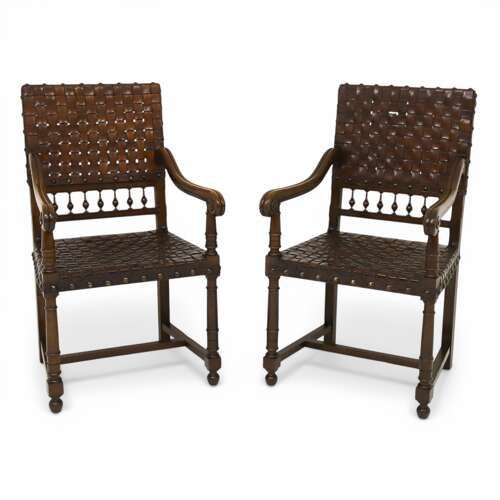
The inventory on this page ranges from simple vernacular oak armchairs to heavily carved throne chairs and matched sets of dining chairs. Formats span standard armchairs, wing back varieties, and even bergeres upholstered in leather, cane, fabric, or velvet.
How they were made
Makers built these pieces primarily from solid oak, sometimes supplementing the primary timber with walnut for specific decorative elements. Structural joins relied on traditional carpentry methods suited to heavy hardwood furniture.
Surface enrichment frequently includes intricate carved detailing, while seating areas often utilise woven cane or leather panels. Additional detailing involves brass hardware and various textiled upholstery choices like velvet and fabric.
Restoration Oak Armchair Retail Price Guide 2026
Typical asking prices for restoration oak armchair among the pieces listed under this phrase on Sellingantiques today, from the lower quarter to the upper quarter. They describe what is for sale here now, not the wider market.
Materials recorded across the inventory include solid oak, walnut, woven cane, brass, leather, fabric, and velvet.
What varies in quality
Quality rests in the crispness of the timber carving and the integrity of the structural joinery rather than mere age. Pieces from the period of original manufacture command attention for their historical authenticity, whereas revival examples vary according to the fidelity of their historical interpretation.
The choice of secondary materials, such as the fineness of cane weaving or the quality of applied leather and upholstery, shifts the overall character and refinement of the seating.
The Restoration Oak Armchair Glossary
- Carolean Style
- A seventeenth-century aesthetic revival style associated with the reign of Charles the Second, known for lavish carving and scrolls. Victorian makers frequently copied these motifs.
- Jacobean Style
- An early seventeenth-century design idiom characterised by rectilinear heavy proportions and geometric ornamentation. It often appears in revival furniture from the nineteenth century.
- Bergere
- An enclosed upholstered armchair with a wooden frame, sometimes featuring cane panels on the sides and back. This form appears within nineteenth-century revival suites.
- Woven Cane
- A seating material made from stripped rattan plant fibres woven into a mesh pattern. It provides lightweight flexibility within a sturdy wooden frame.
Restoration Oak Armchair: Frequently Asked Questions
How do I identify a true period piece?
Examine the timber shrinkage, joinery methods, and tool marks visible on the underside and interior frame components. Seventeenth-century construction techniques differ significantly from nineteenth-century revival manufacturing.
Compare the patination of the oak surfaces and the wear patterns around the armrests and footings with known examples from the era.
Are these armchairs comfortable for daily use?
Many models feature upright timber backs and firm seats designed for formal posture rather than lounging. Upholstered variants and those with wider proportions offer softer support.
Adding cushions can improve comfort while preserving the historic structure of the seat.
How should I care for historic oak furniture?
Keep timber seating away from direct heat sources and drastic humidity changes to prevent wood splitting and joint loosening. Apply traditional wax polish sparingly to nourish the oak grain.
Avoid synthetic cleaning sprays that can damage the historic surface patination over time.