



Caned Back Oak Chair
A caned back oak chair brings tactile warmth and period texture to a room, combining sturdy timber frames with open woven panels.
Caned Back Oak Chair
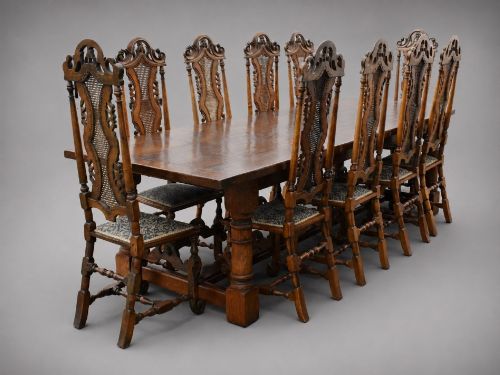
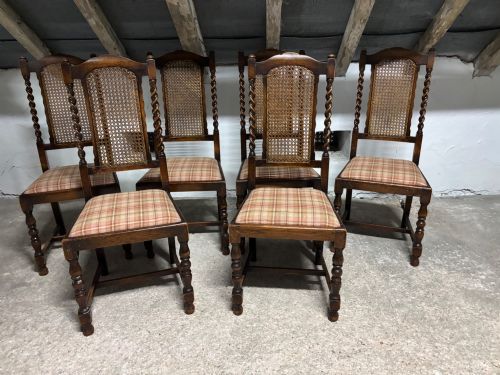
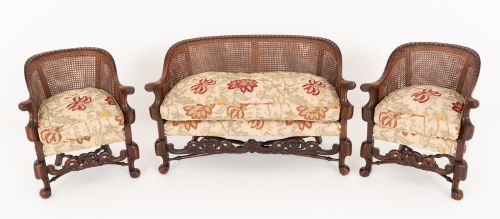
When you search for a caned back oak chair, you encounter a variety of forms designed for comfort and utility over successive centuries. The pieces available range from single armchairs and side chairs to matched dining sets, rocking chairs, and larger bergere suites.
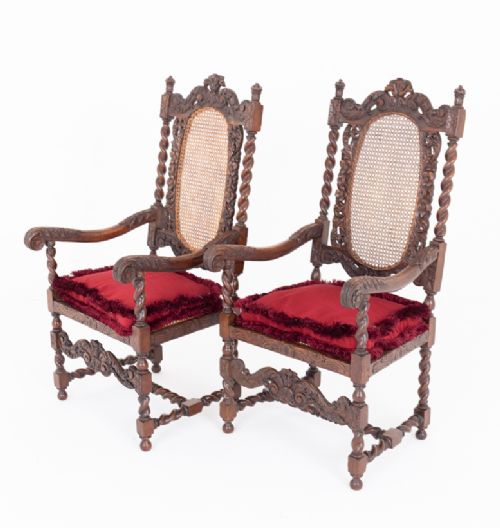
The selection on this page draws heavily from revivalist movements and country traditions, featuring styles such as Carolean, Jacobean, and Cromwellian alongside rustic and Arts and Crafts examples. You are most likely to meet nineteenth-century and early twentieth-century interpretations that echo earlier seventeenth-century aesthetics.
Makers and workshops utilised durable native timbers alongside imported details, producing seating that served grand dining rooms, fireside reading corners, and farmhouse settings alike.
Materials and Construction
The primary structural timber across these listings is solid oak, selected for its strength and grain, occasionally complemented by walnut or framed with brass and leather elements. Artisans shaped the wood using traditional turning, carving, and joinery techniques to build resilient upright frames, throne chairs, and reclining armchairs.
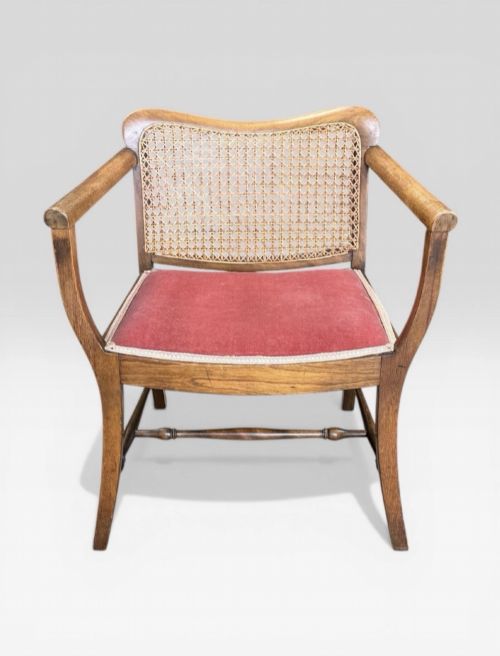
Cane and rattan panels form the defining resilient inserts for backs and seats, woven by hand to provide flexible support. Upholstery details such as velvet, fabric, and loose cushions frequently accompany the woven cane to enhance daily comfort.
Listings feature oak combined with cane, rattan, fabric, velvet, leather, and brass across nineteenth-century and early twentieth-century periods.
Assessing Craftsmanship and Condition
Quality in these chairs rests upon the depth and crispness of the hand carving on the oak framework, from robust barley twist legs to intricate crest rails. Finer pieces demonstrate tight, uniform cane weaving that maintains proper tension across the frame without sagging.
The integrity of the structural joints and the selection of well-seasoned timber distinguish superior examples from simpler utilitarian seating. A balanced proportion between the carved woodwork and the woven panels ensures both visual harmony and lasting stability.
James Shoolbred·Heals of London
The Caned Back Oak Chair Glossary
- Bergere
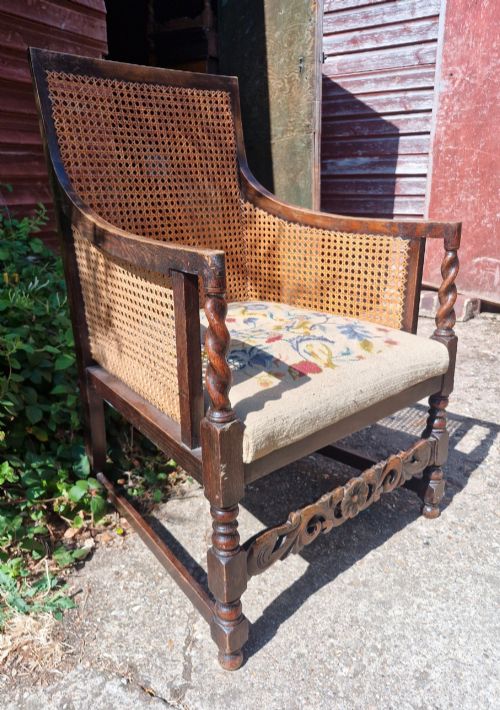
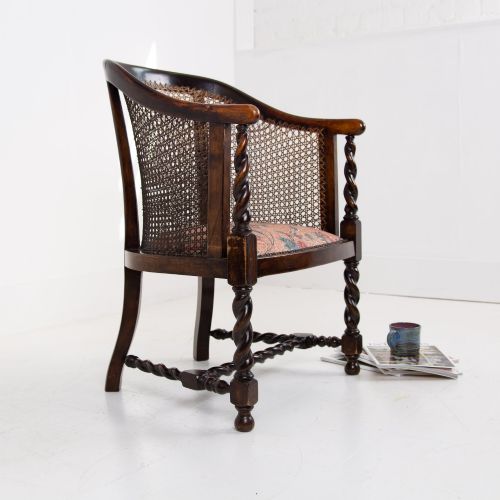
- An enclosed upholstered armchair with a wooden frame where the sides and back are frequently filled with cane or rattan. This French-inspired form offers deep, enveloping seating.
- Carolean
- A style dating from the reign of Charles II, characterised by rich wood carving, scrolling motifs, and high pierced backs. It heavily influences the revival chairs seen in later centuries.
- Cromwellian
- A starker, utilitarian style from the mid-seventeenth century featuring straight turned legs and plain leather or wooden panels. It prioritises functional geometry over ornate decoration.
- Bobbin turning
- A form of woodturning that creates a series of rounded spheres or discs resembling a string of bobbins along the chair legs or stretchers. This technique adds rhythmic texture to the frame.
- Jacobean Revival
- A nineteenth-century movement emulating the sturdy oak furniture of the early seventeenth century. It incorporates heavy mouldings, geometric panels, and upright rectangular proportions.
Caned Back Oak Chair: Frequently Asked Questions
How do I care for cane seats?
Keep cane work supple by wiping it occasionally with a damp cloth to prevent the natural fibres from drying out and snapping. Avoid placing these chairs near direct heat sources like radiators.
Weight should be distributed evenly, and adding a custom cushion helps protect the woven surface from excessive localized wear over time.
What is a bergere chair?
A bergere is an enclosed upholstered armchair characterised by solid wooden frames and woven cane panels forming the back and sides. They were designed for relaxed lounging in drawing rooms and parlours.
Many examples include a loose seat cushion upholstered in fabric or velvet to increase comfort during extended periods of sitting.
How do I date an oak chair?
Examine the construction methods, tool marks, and hardware visible beneath the seat or along the frame. Hand-cut joinery and timber oxidation point toward older origins, while machine-standardised parts suggest later nineteenth or twentieth-century production.
Stylistic revivals often borrow motifs from seventeenth-century Carolean or Jacobean periods but betray their true age through secondary woods and modern finishing techniques.
Where were these chairs used?
These pieces served multiple functions across different domestic spaces, from formal dining rooms and libraries to bedrooms and fireside reading nooks. Armchairs and rocking chairs provided comfort in private quarters, while large sets furnished grand dining tables.
Sturdier farmhouse and rustic variants suited everyday family spaces, combining practical seating with decorative carved details.