
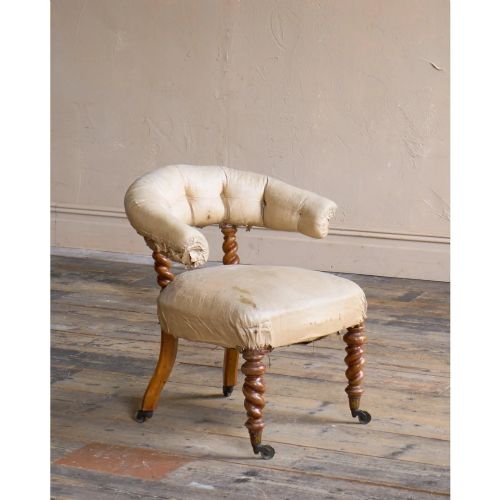
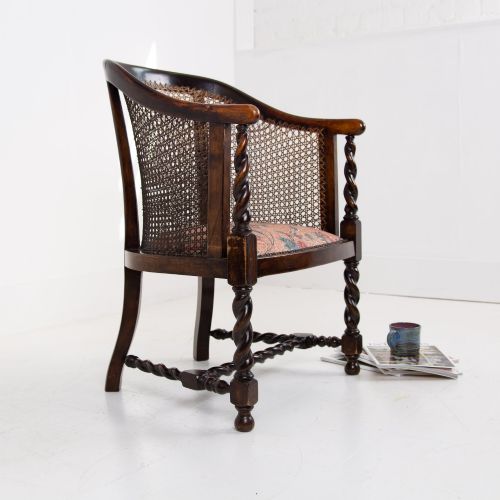
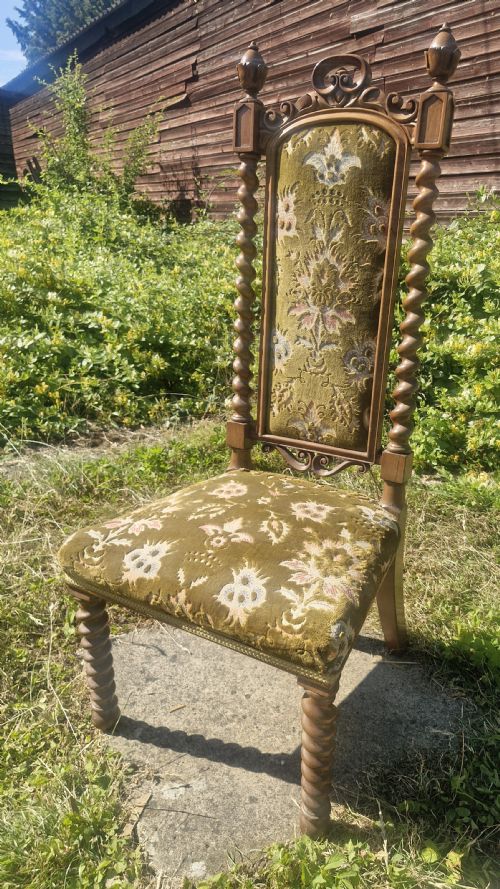
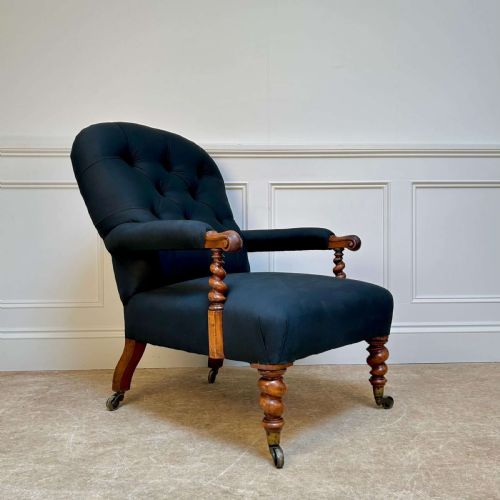
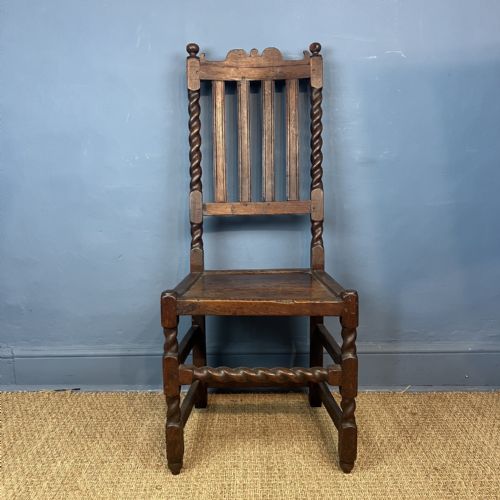
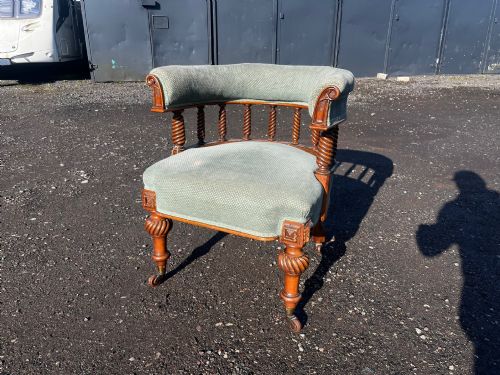


Barley Twist Desk Chair
A barley twist desk chair brings sculptural turned timber and practical seating together, offering robust construction and enduring period character for any study.
Barley Twist Desk Chair
A barley twist desk chair provides a sturdy, characterful seat featuring distinctive spiral-turned wooden members that draw directly from seventeenth-century furniture traditions. When exploring a barley twist desk chair, buyers frequently encounter substantial oak and walnut frames dating from the Victorian era and the early twentieth century.
These seating options manifest in various forms across the selection, ranging from open armchairs to dedicated desk chairs and carved carvers. The prevalence of revival styles such as Jacobean and Carolean ensures that makers often integrated elaborate turned woodwork into traditional forms.
Victorian and Edwardian iterations dominate the available selection, combining the helical turned supports with leather, fabric, or cane inserts. Each piece balances functional workspace utility with the decorative presence characteristic of nineteenth-century revival craftsmanship.
Materials and construction methods
Makers primarily utilised dense hardwoods such as oak, walnut, rosewood, and mahogany to ensure the structural integrity required for carved and turned frames. Solid timber sections were shaped on lathes to produce the characteristic helical spirals, while joinery relied on traditional mortise and tenon techniques.
Upholstered versions incorporate materials like leather and woven fabric fixed over padded seats, whilst other examples utilise natural cane inserts for lightweight panel support. Brass components occasionally appear in castors or decorative fittings attached to the lower frame members.
Factors influencing quality
The sophistication of the hand-turned spiral work largely dictates the visual merit of the piece, with crisp, deeply cut twists demonstrating superior craftsmanship over shallow machine shaping. Heavier gauge timbers and substantial proportions generally indicate a more robust construction intended for daily utility.
The choice of primary wood also affects the overall standard, as dense walnut and well-figured oak exhibit greater durability and finish retention than softer utility timbers. Original upholstery foundations and well-preserved cane panels further enhance the integrity of surviving specimens.
C. Hindley & Sons
The Barley Twist Desk Chair Glossary
- Barley twist
- A spiral-turned wooden column resembling a twisted barley stalk, popular in seventeenth-century furniture and revived during the nineteenth century. This decorative turning technique provides strong vertical support for legs and arm posts.
- Carver armchair
- An armchair designed with arms, traditionally placed at the head of a dining table or utilised as a desk chair. These pieces often feature matching side chairs within a larger set.
- Jacobean Revival
- A nineteenth-century design movement recreating the architectural style and heavy carved oak furniture of the early seventeenth century. Pieces from this period frequently incorporate geometric mouldings and turned members.
- Cane
- Woven rattan or split plant material used to form flexible, breathable panels for seat backs and squabs. This technique lightens the visual weight of heavy hardwood frames.
- Tub chair
- An upholstered seating form featuring a continuous curved back and arms that encircle the sitter. These chairs provide enclosed support suitable for writing desks and reading corners.
Barley Twist Desk Chair: Frequently Asked Questions
Are barley twist chairs comfortable for daily desk work?
Many examples provide solid upright support suitable for writing, particularly those featuring padded upholstered seats and supportive open arms.
Buyers intending extended daily use often look for models with generous seat depths and ergonomic proportions suited to modern workspaces.
How do I identify a Victorian barley twist chair?
Victorian interpretations usually combine seventeenth-century turning motifs with nineteenth-century timber preparation and construction methods. Examining the wood underneath and the style of the joinery helps confirm the nineteenth-century production date.
Revival pieces from this era frequently employ dark-finished oak or walnut alongside characteristic nineteenth-century upholstery techniques.
What is the difference between a carver and a side chair?
A carver includes structural armrests integrated into the frame design, whereas a side chair is built without arms to allow compact placement around tables.
Both forms frequently share identical barley twist leg turnings when produced as part of a larger matched suite.
How should I care for antique wood and cane?
Maintaining these pieces involves keeping them away from direct heat sources and sudden humidity changes that can dry out historic timber and brittle cane. Regular dusting with a soft cloth preserves the finish without requiring heavy chemical polishes.
Conditioning leather and feeding dry wood surfaces periodically helps maintain the flexibility and natural lustre of the materials.