


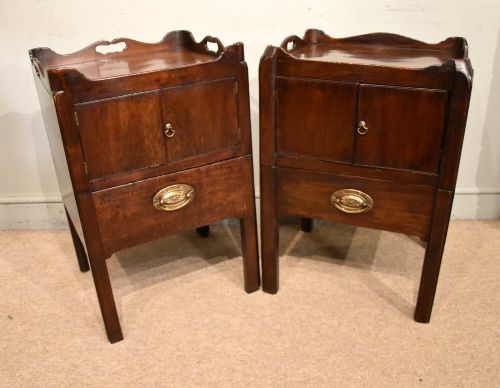
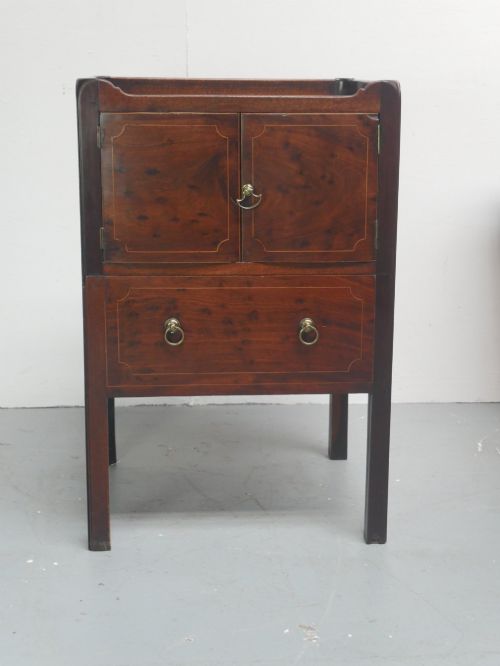
Dark Wood Bedside Cupboard
A dark wood bedside cupboard offers practical bedside storage with traditional character, spanning Georgian, Victorian, and Edwardian periods.
Dark Wood Bedside Cupboard
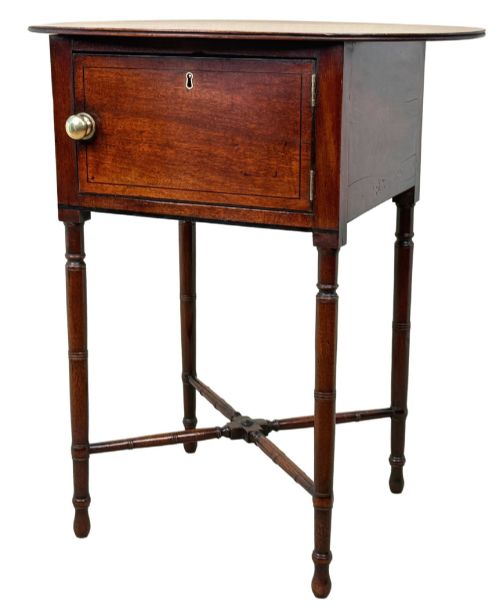
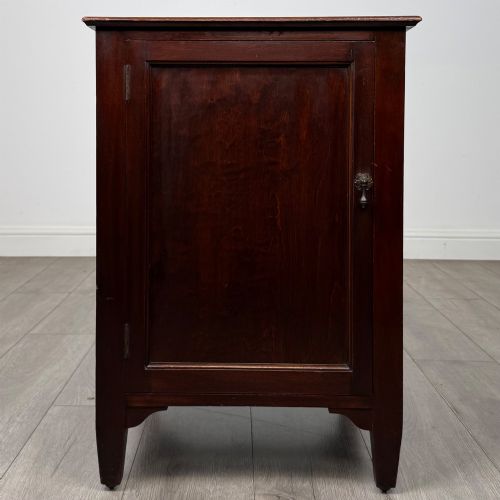
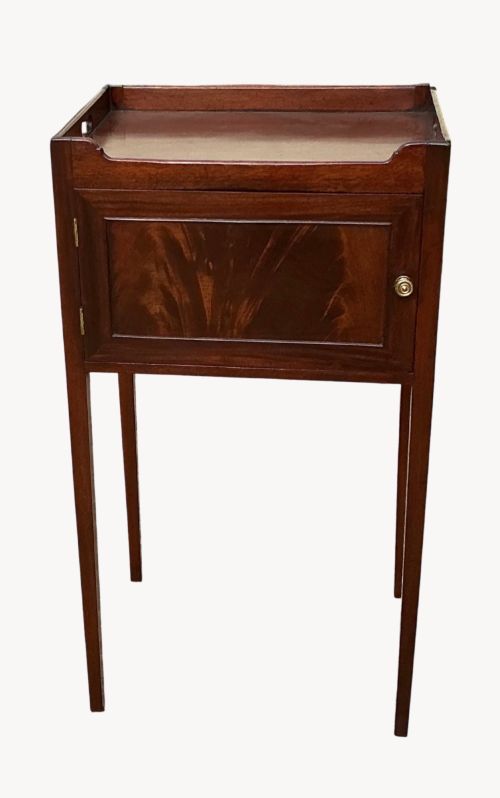
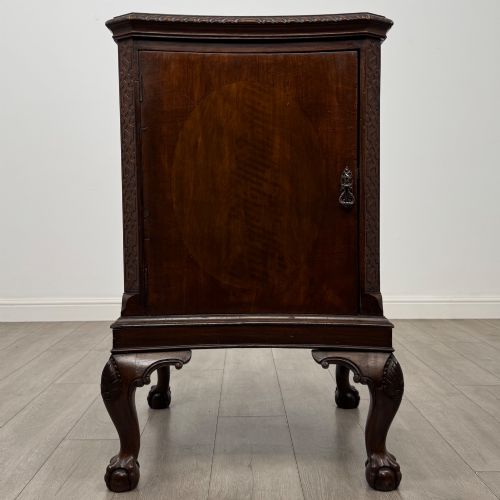
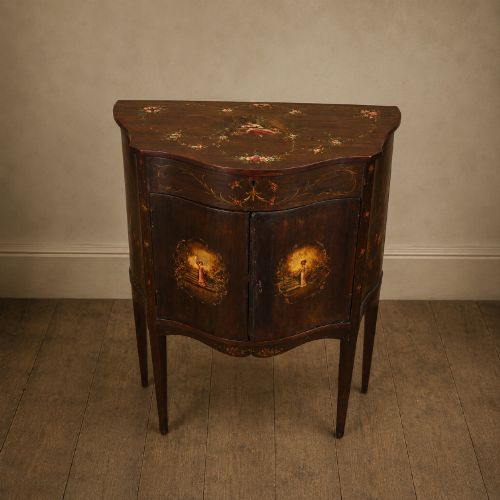
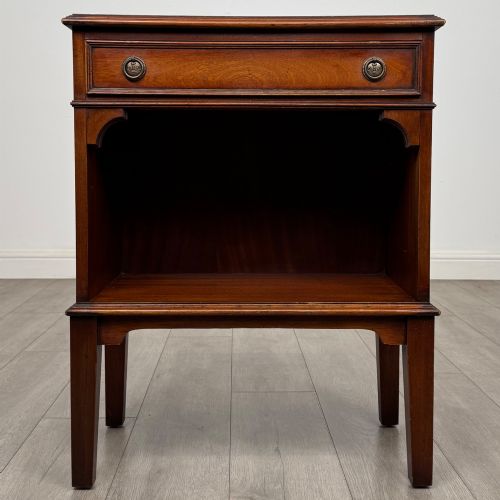
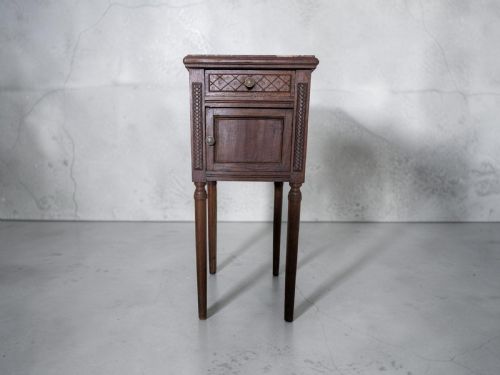
A dark wood bedside cupboard brings period craft and compact storage to the bedroom, appearing in forms such as pot cupboards, nightstands, and small bedside chests. Pieces span the 18th, 19th, and 20th centuries, covering Georgian, Victorian, Edwardian, and Regency eras.
Mahogany forms the primary dark wood material across these centuries, alongside rosewood, oak, and stained wood, sometimes accented with brass handles or marble tops.
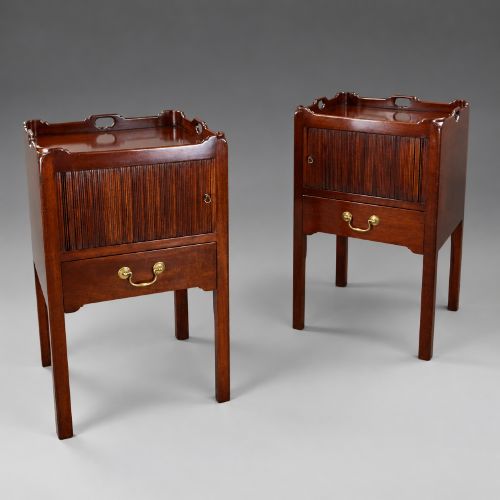
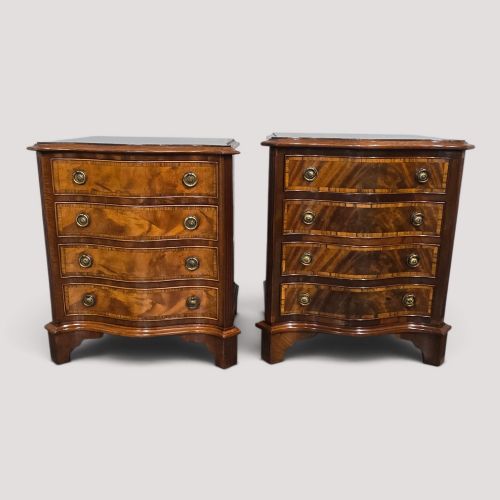
Makers and workshops construct these cabinets as single pieces or in matched pairs, utilising styles ranging from Sheraton and Chippendale to Georgian Revival.
Factors of quality
The choice of dense timber, such as well-figured mahogany or rosewood, separates standard pieces from finer examples.
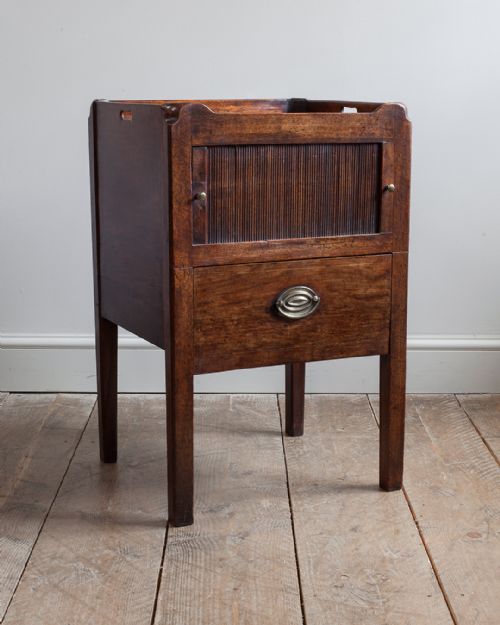
Some Georgian nightstands hide tambour shutters designed to keep midnight disturbances neatly out of sight.
HOWARD & SONS
The Dark Wood Bedside Cupboard Glossary
- Pot cupboard
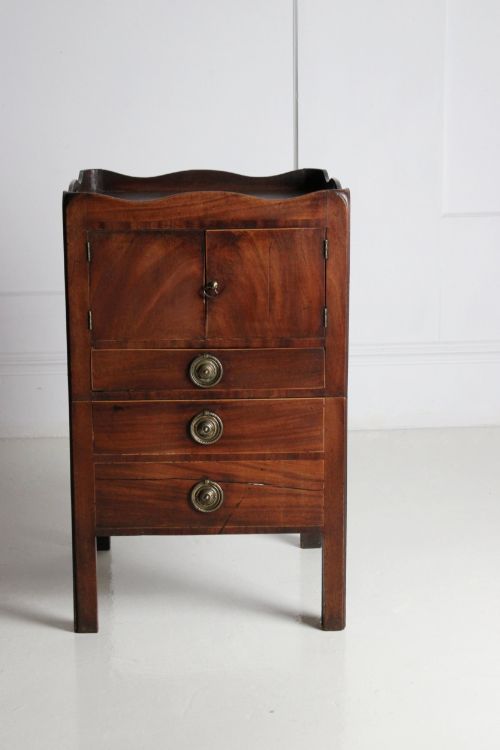
- A small bedside cabinet originally designed to enclose a chamber pot. These practical items often feature enclosed doors above a lower compartment.
- Tambour front
- A flexible shutter door constructed from narrow vertical strips of wood glued to a canvas backing. This mechanism slides smoothly around a curved track.
- Tray top
- A raised rim around the upper surface of a table or cabinet. This design prevents items from rolling off the edges.
- Serpentine
- A gently curved front edge undulating outwards and inwards. Cabinet makers apply this profile to drawers and doors for visual movement.
Dark Wood Bedside Cupboard: Frequently Asked Questions
What is a pot cupboard?
A pot cupboard is a compact bedside cabinet designed in the 18th and 19th centuries to house a chamber pot.
Today, these enclosed compartments serve well for storing books, modern electronics, or personal items beside a bed.
How do I date a bedside cabinet?
Dating relies on examining the timber species, construction methods, and stylistic details such as George III bracket feet or Victorian paneling.
Listing descriptions often point to specific periods like the 19th Century or Edwardian era based on these physical characteristics.
Are pairs common for these cupboards?
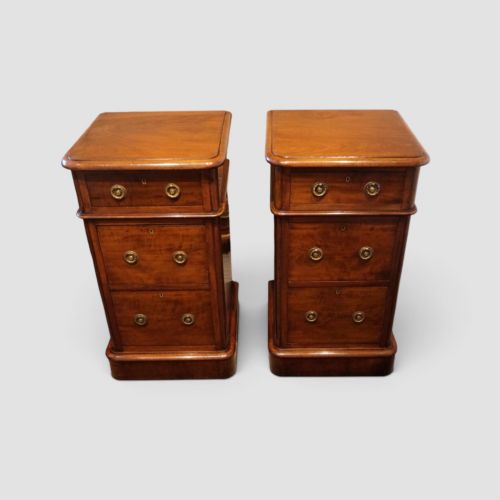
Matched pairs appear frequently among Georgian and Victorian listings, though single cabinets are also common.
Collectors prize genuine pairs for symmetrical placement on either side of a double bed.
What woods were used?
Mahogany is the predominant dark wood across Georgian, Regency, and Victorian examples, complemented by rosewood and oak.
Some pieces also incorporate painted finishes, marble tops, or exotic hardwoods.