
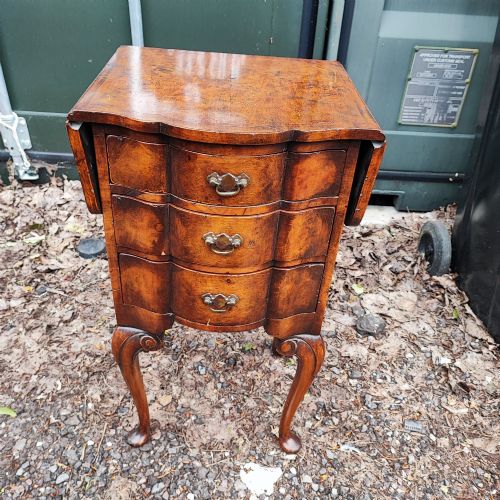


Small Serpentine Cupboard
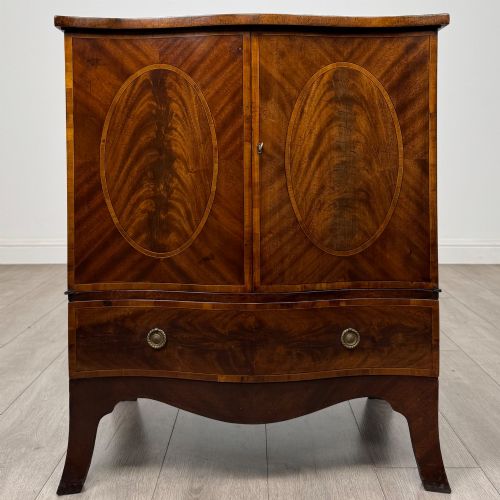
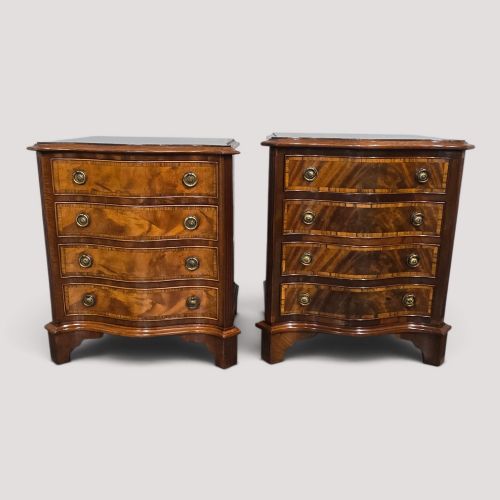
These small serpentine cupboards are compact timber cabinets with gently curved fronts, offering discrete bedside or corner storage.
Small Serpentine Cupboard
A small serpentine cupboard brings a distinctive wavy front profile to a domestic room, functioning primarily as a bedside table or compact side cabinet. These pieces appear across several eras, ranging from eighteenth-century origins to Victorian, Edwardian, and twentieth-century revivals.
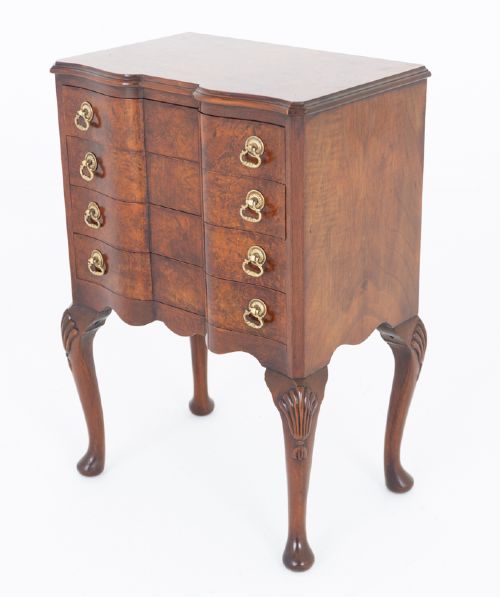
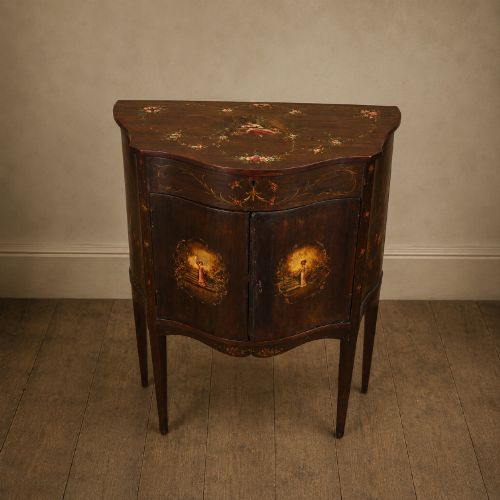
The forms span bedside chests of drawers, lamp stands, and painted side cabinets, usually constructed in mahogany or walnut. Buyers meet Georgian and Queen Anne revival iterations frequently among current selections.
Dimensions remain modest to suit domestic chambers, pairing surface space with enclosed storage behind shaped doors. The serpentine contour distinguishes these from flat-fronted alternatives.
Materials and construction
Makers utilised solid timbers alongside wood veneer, applying mahogany, walnut, burr walnut, and satinwood to achieve decorative grain patterns. Brass hardware frequently appears on drawers and cupboard doors.
Surfaces occasionally display hand-painted ornamentation, particularly on revival pieces from the Victorian and Edwardian periods. Timber frames are shaped to create the characteristic undulating front line.
Periods represented range from the eighteenth century through Victorian and Edwardian eras into the nineteen-twenties and thirties.
Assessing quality in a serpentine cupboard
Quality rests upon the execution of the curved timber front and the selection of veneer figures, such as burr walnut. Finer examples display precise joinery where doors and drawers meet the shaped frame.
The choice of secondary woods and the subtlety of decorative painting separate standard production from superior cabinet work. Hardware integration also indicates the level of original craftsmanship.
The Small Serpentine Cupboard Glossary
- Serpentine
- A furniture front shaped with a double curve, convex at the centre and concave at the ends. This undulating contour demands precise woodworking skill.
- Veneer
- A thin layer of choice timber applied over a secondary wood base to provide decorative grain patterns. Burr walnut and mahogany frequently serve this purpose.
- Revival
- A later stylistic movement that imitates the aesthetic of an earlier historical period, such as Georgian or Queen Anne. These pieces date from the nineteenth and twentieth centuries.
- Satinwood
- A durable hardwood with a lustrous, golden-yellow sheen used for fine furniture and painted decoration. It appears on cabinet surfaces from the turn of the twentieth century.
Small Serpentine Cupboard: Frequently Asked Questions
Where do I place a small serpentine cupboard?
These compact pieces suit bedrooms as bedside lamp chests or small side tables. Their shaped fronts also allow them to sit effectively in hallways or reception rooms as accent cabinets.
The enclosed storage keeps small items tidy while providing a flat surface for lighting or display.
What wood are these cupboards made from?
The selection includes mahogany, walnut, burr walnut, and satinwood, often enhanced with timber veneers. Brass fittings frequently complete the construction.
Some examples also feature painted surface decoration applied over the wood.
How do I date a serpentine cupboard?
Dating relies on stylistic clues and construction methods, spanning eighteenth-century originals to Victorian, Edwardian, and twentieth-century revivals. Revival pieces often emulate Georgian or Queen Anne forms.
Materials like satinwood and specific revival styles help narrow down the period of manufacture.
Are these cupboards used as bedside tables?
Many of these pieces function directly as bedside lamp chests or cabinets. Their dimensions accommodate bedside lighting and reading materials while concealing storage.
They also serve general utility roles as small side cabinets in various rooms.