


Dark Wood Banjo Barometer
A dark wood banjo barometer brings domestic weather tracking into the hall, framed in rich mahogany, rosewood or walnut.
Dark Wood Banjo Barometer
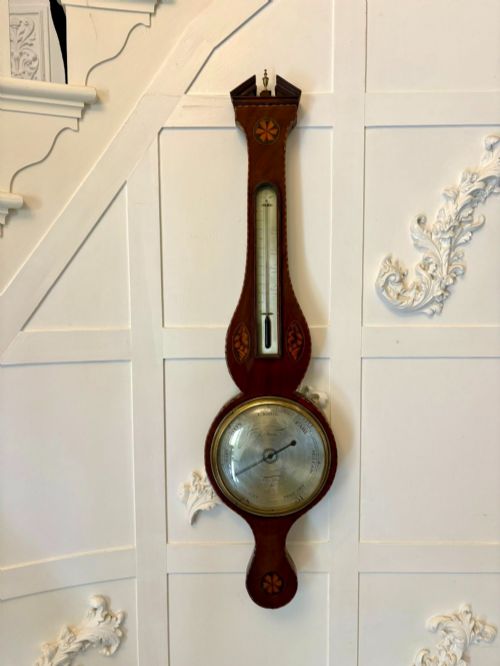
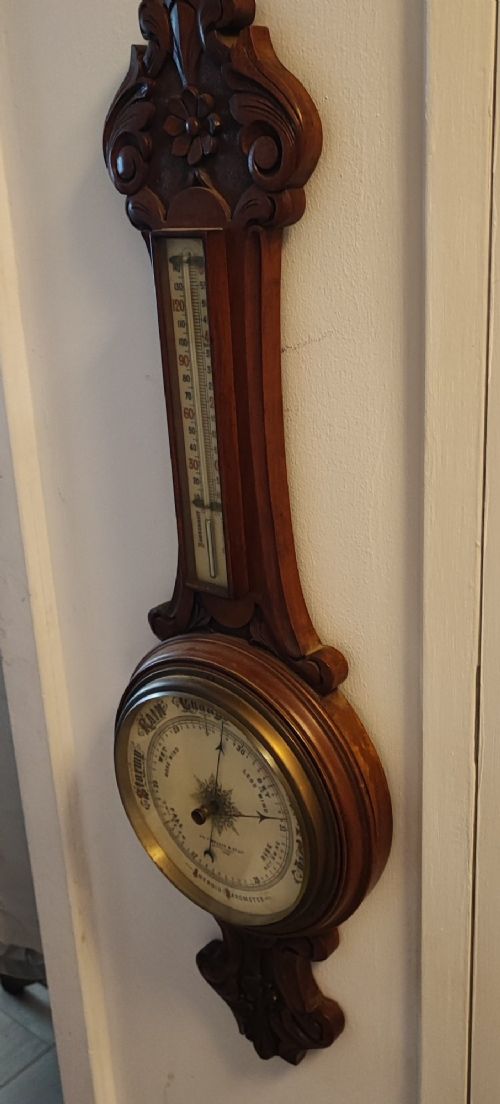
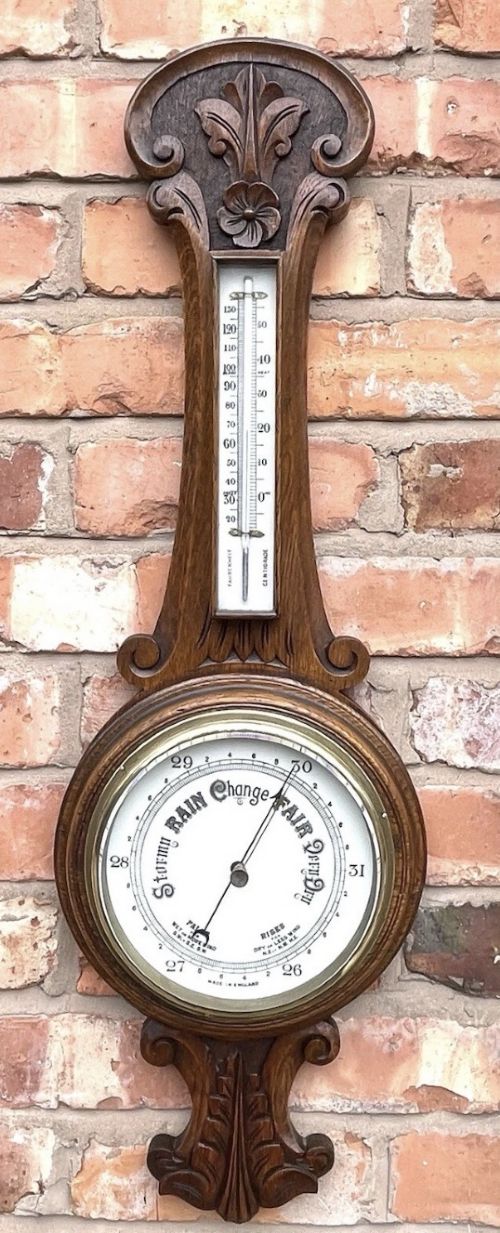
A dark wood banjo barometer takes its name from the distinctive stringed instrument shape, housing meteorological instruments within a tapering wooden trunk and a circular dial head. These domestic wall pieces appear across the Georgian, Victorian and Edwardian eras, spanning the eighteenth, nineteenth and early twentieth centuries.
The versions most common here combine dark timber bodies with glass faces, silvered metal dials and brass fittings. Examples range from simple wheel barometers to aneroid models that incorporate thermometers and carved details.
Makers such as Fagioli of Clerkenwell London, Roncoroni, Luisetti of London, Joseph Somalvico and Co and J C Moretti of King's Lynn signed these works. Their output defines the standard forms found in these listings.
Judging Quality and Execution
The caliber of a piece rests upon the choice of timber and the precision of the cabinetwork. Dense grain, careful book-matching and crisp carving distinguish superior examples from standard production.
The refinement of the brass fittings and the legibility of the silvered metal dials elevate an object. Signed work by known makers demonstrates a higher level of workshop competence.
Listings span the 18th Century, 19th Century, Georgian, Victorian and Edwardian periods, showcasing mahogany, rosewood, oak and walnut.
Fagioli of Clerkenwell London·Roncoroni·Luisetti of London·Joseph Somalvico and Co·J C Moretti of King's Lynn
The Dark Wood Banjo Barometer Glossary
- Banjo barometer
- A wall barometer housed in a case shaped like a banjo. The design became popular during the Georgian period.
- Aneroid barometer
- A barometer that measures atmospheric pressure without liquid, using a flexible metal box. This mechanism gained wide adoption during the Victorian era.
- Mercurial barometer
- A barometer that uses a column of mercury in a glass tube to indicate pressure changes. This traditional method appears in eighteenth and nineteenth-century examples.
- Wheel barometer
- A barometer where pressure changes move a float that turns a pointer around a circular dial via a silk thread and pulley. Many banjo barometers utilise this arrangement.
- Silvered metal
- A brass or copper dial plate coated with a silver compound and engraved with graduations. This surface catches the light behind the glass bezel.
Dark Wood Banjo Barometer: Frequently Asked Questions
How do I hang a banjo barometer?
These wall pieces require a secure fixing point capable of supporting the combined weight of the hardwood case, glass and internal mechanics. Hang the body upright so the plumb line or dial reads accurately against the wall.
Ensure the mounting screw grips solid timber or masonry rather than plaster alone. A stable wall prevents accidental bumps that could disturb the delicate interior linkage.
Are these barometers still accurate?
Historic barometers respond to changes in atmospheric pressure, though older movements may require professional calibration. The recorded pressure trends remain indicative of coming weather shifts.
Treat the readings as a guide rather than a precision meteorological instrument. The primary appeal lies in the traditional craftsmanship and decorative presence.
How do I tell an aneroid from a mercury barometer?
An aneroid barometer uses an internal sealed metal capsule to measure pressure without any visible fluid. These types often include an integrated thermometer on the trunk.
A mercurial barometer contains a glass tube filled with liquid metal, visible through a slot or glass panel. This traditional form was standard in eighteenth and early nineteenth-century workshops.
How do I clean the wood case?
Maintain the polished mahogany, rosewood or walnut surface with a soft dry cloth to remove dust. Avoid harsh modern cleaning sprays that can strip the historic polish.
Feed dry timber occasionally with an appropriate wax polish to preserve the grain. Keep the glass bezel clean with standard glass cleaner applied to a cloth rather than the frame.