

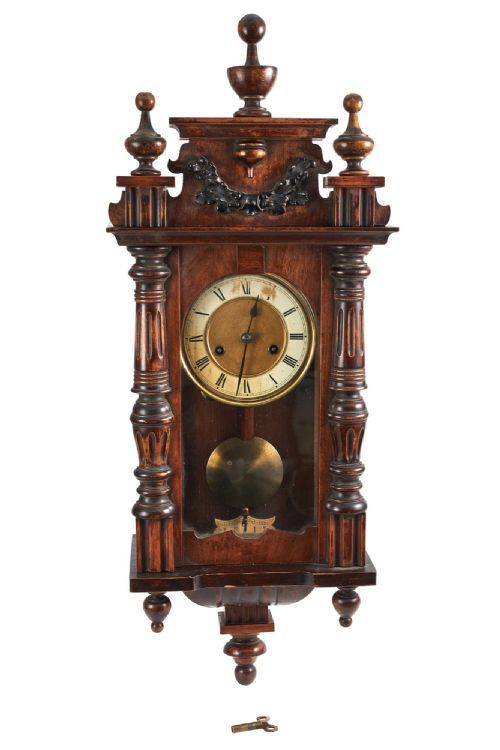


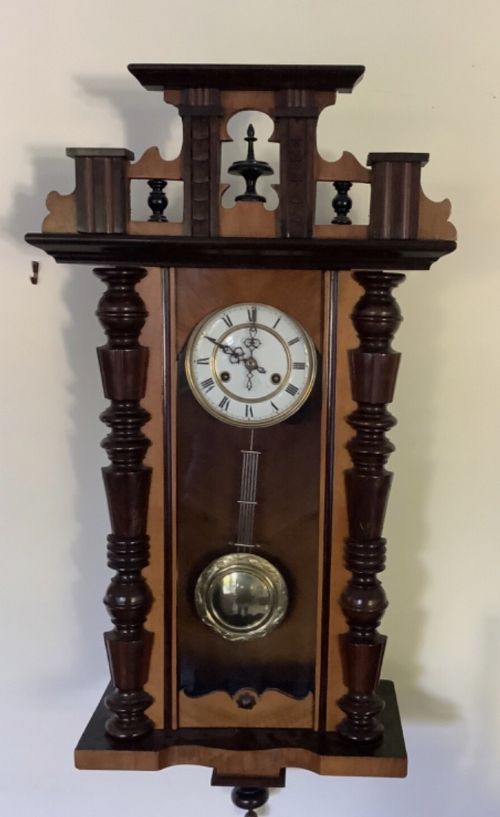


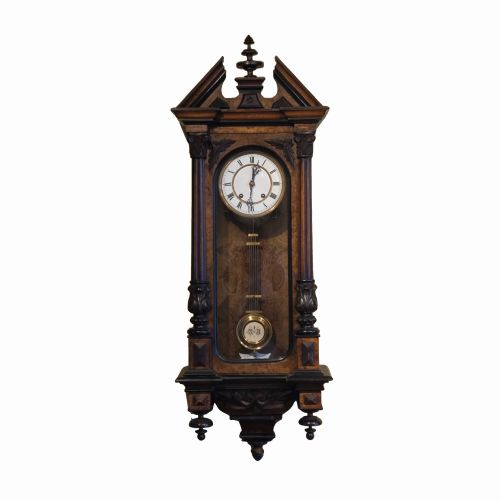


Dark Walnut Regulator Clock
A dark walnut regulator clock brings precise engineering and rich timber tones together, offering the serious collector a striking centrepiece for any room.
Dark Walnut Regulator Clock
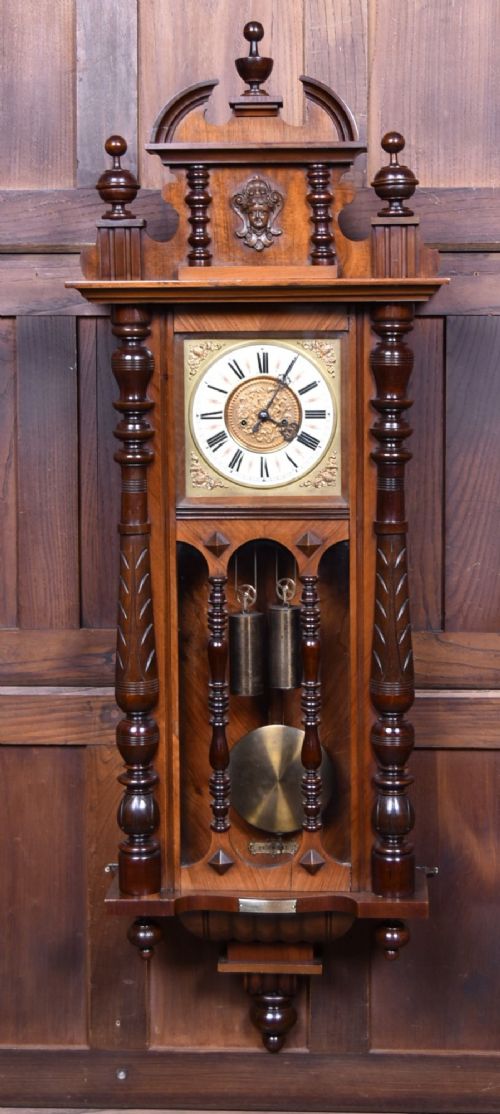
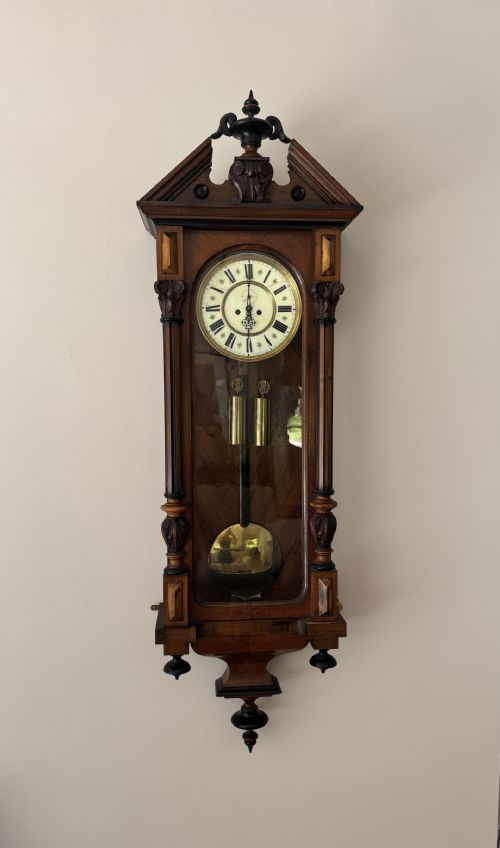
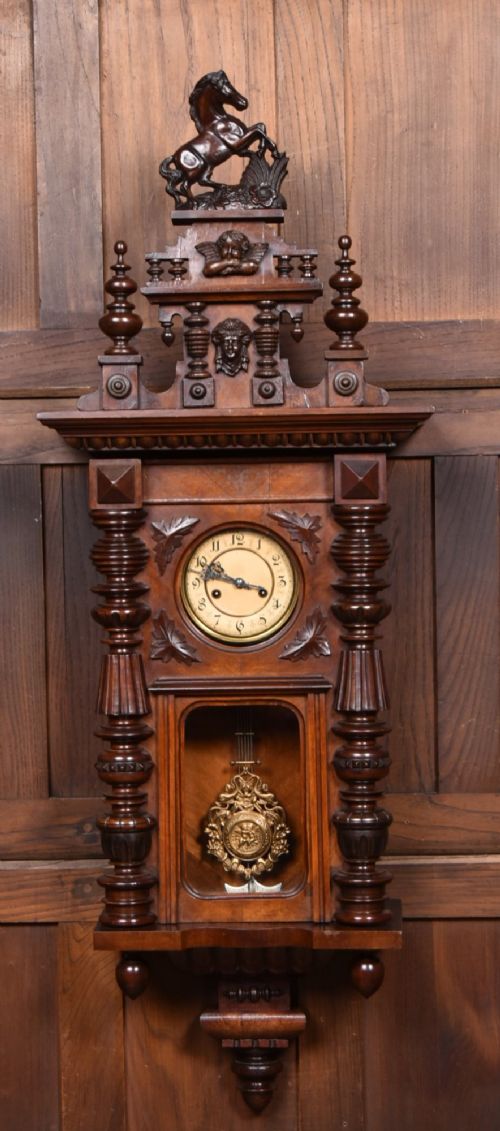
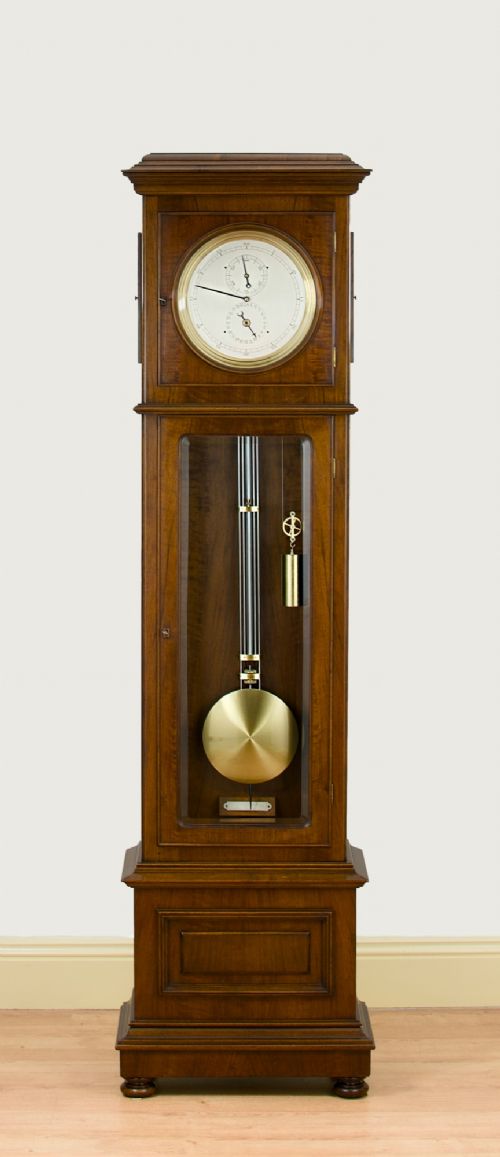
A dark walnut regulator clock represents a sophisticated timekeeper designed for accurate timekeeping, usually taking the form of a wall clock or occasionally a longcase clock. These instruments draw upon 19th Century and Victorian traditions, frequently appearing in Vienna-style designs alongside German and Austrian origins.
The versions most commonly met on this page span the Victorian era, particularly the later decades of the 19th Century around 1860, 1880, and 1890, through to early 20th Century examples including Edwardian and Art Deco periods. Buyers encounter variations such as double weight and triple weight wall clocks, drop dial formats, and precision longcase models.
Makers and regional styles shape the selection significantly, ranging from Austrian and German workshops to Italian interest automation pieces and specific horological houses. Each dark walnut regulator clock displays the architectural cases and clear enamel dials characteristic of high-precision timekeeping from these eras.
How they were made
The construction of a dark walnut regulator clock relies heavily on timber selection, utilising rich walnut for the primary case structure, often supplemented by ebonised wood details for contrast. Craftsmen shaped these dark woods into architectural wall clock and longcase bodies designed to house delicate internal movements securely.
Precision brass components form the mechanical heart of these timepieces, operating alongside heavy brass weights and swinging pendulums to maintain steady accuracy. Enamel dials provide a crisp, legible face for the Roman or Arabic numerals, protected behind glass panels within the wooden frames.
What varies in quality
The upper tier of a dark walnut regulator clock is defined by precision movement engineering from esteemed makers, clean architectural casework in figured timber, and original components that operate in harmony. Lesser examples show simpler joinery, replaced parts, or less refined dial work.
Case execution separates ordinary production from exceptional pieces, particularly where hand-carved details, ebonised contrasts, and well-proportioned walnut grain elevate the visual presence. The sophistication of the striking mechanisms and the inclusion of double or triple weight systems further distinguish the grade of the clock.
Lenzkirch·Gustav Becker·Johann Baptist Beha
The Dark Walnut Regulator Clock Glossary
- Regulator clock
- A high-precision timekeeper designed to keep exceptionally accurate time, often serving as a standard against which other clocks were set. These instruments typically feature long pendulums and clear, easy-to-read dials.
- Vienna wall clock
- A style of timepiece originating from Austrian workshops during the 19th Century, known for its elegant walnut case and weight-driven movement. These clocks frequently display neoclassical architectural elements.
- Drop dial
- A clock design featuring a circular dial case mounted above a lengthened wooden trunk, which houses the pendulum swing. This form became popular for wall-mounted timepieces in public and domestic spaces.
- Double weight
- A movement driven by two separate suspended weights, supplying power to the timekeeping train and the striking train respectively. This setup is common in robust Vienna wall clocks.
- Ebonised wood
- Timber treated with a dark finish to imitate expensive ebony, used by cabinetmakers to create sharp visual contrasts against walnut cases. This technique adds depth and framing to clock bezels and mouldings.
Dark Walnut Regulator Clock: Frequently Asked Questions
How do I wind a Vienna wall clock?
Winding requires inserting the key into the winding holes on the enamel dial and turning it gently until resistance is felt. Care must be taken not to overwind the spring or disturb the suspension spring behind the dial.
For weight-driven models, the brass weights are slowly hoisted back to the top of the case using a pull chain or winding crank. Ensuring the weights travel freely without rubbing against the case sides keeps the movement running evenly.
Where should I hang a heavy wall clock?
A dark walnut regulator clock requires mounting directly into a solid wall stud or masonry using heavy-duty fixings rated for the total weight of the timber case and brass movements. Securing the clock firmly prevents vibrations from disturbing the pendulum.
The hanging position should remain away from direct sunlight, central heating vents, and damp areas to protect the walnut veneer and ebonised details from warping or cracking over time.
How do I set the correct time?
The minute hand is gently moved forward to the correct time, allowing the striking mechanism to complete its sequence at each hour and half-hour interval. Moving the hands backward can damage the internal rack and snail gearing.
Once the hands indicate the correct hour, the pendulum is set in motion with a gentle push to start the beat. Listening to the uniform tick helps confirm the clock is hanging level.
What maintenance do these antique movements need?
Routine care involves keeping the glass and walnut case clean with a soft, dry cloth, avoiding harsh chemical polishes or excessive moisture. Periodic oiling of the pivots by a professional horologist ensures the brass gears continue to mesh smoothly.
Environmental stability is crucial for long-term operation, as significant temperature fluctuations can alter the length of the pendulum and affect timekeeping accuracy.