
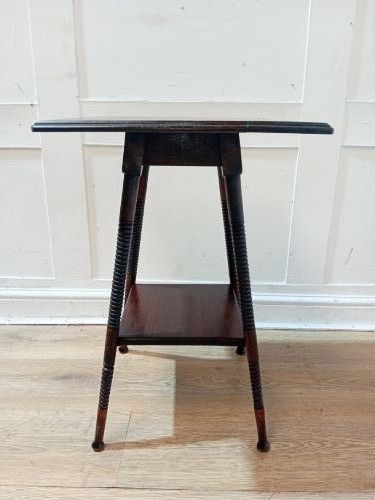
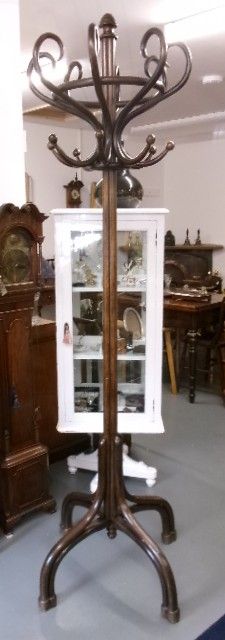
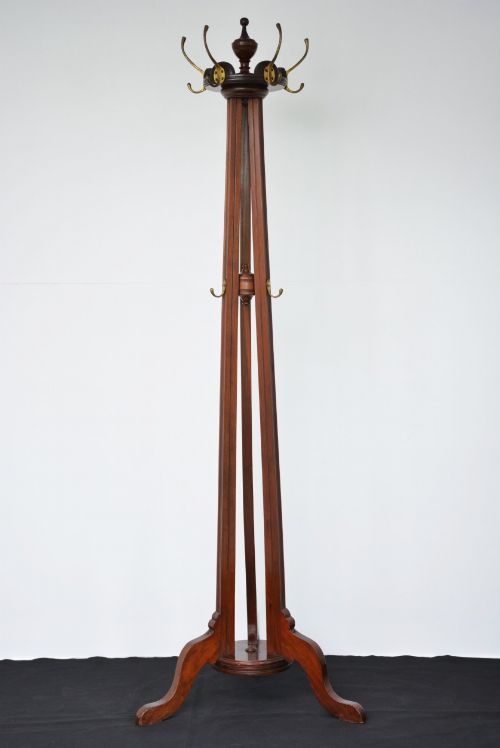


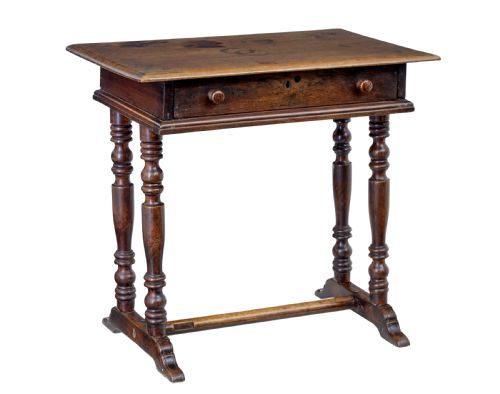


Dark Walnut Hall Stand
A dark walnut hall stand anchors an entrance hall with deep timber tones, offering a practical place for hats, coats, and walking sticks.
Dark Walnut Hall Stand
When you search for a dark walnut hall stand, you encounter pieces designed to organise entranceways, spanning periods from the Victorian era into the early twentieth century. These items take several physical forms, including carved standing frames, wall-mounted racks, and pieces incorporating umbrella or stick holders.
The selection on this page demonstrates various regional and stylistic influences, ranging from British Arts and Crafts workshops to continental Black Forest carvings and Irish vernacular designs. Walnut forms the primary timber across these examples, often complemented by carved details, brass hooks, and fitted trays.
While the inventory leans heavily towards dedicated umbrella and stick stands alongside hat and coat combinations, related forms such as benches with shoe storage and side tables also appear. Each piece reflects the functional requirements of historical hallways, providing sturdy timber construction suited to daily use.
Materials and construction methods
Makers utilised solid walnut and stained hardwoods, shaping the timber through turning, joinery, and detailed hand carving. Metal elements such as brass appear as hanging hooks, drip pans, and structural fixings.
Surface decoration ranges from the elaborate figural carving seen in Black Forest examples to simpler linear mouldings on Victorian frames. Workshops employed traditional joinery techniques to ensure stability for tall, weight-bearing furniture.
A carved bear holds watch over coats and hats, bringing a touch of the forest directly into the hallway.
Evaluating craftsmanship and condition
Quality in these hall furniture pieces rests on the depth and crispness of the timber carving, the integrity of the joints, and the selection of figured walnut veneers. Finer examples display balanced proportions, integrated metal drip trays, and original brass hardware.
Substantial carved elements, such as figural animal motifs or architectural pediments, distinguish high-end workshop production from simpler utility items. The presence of secondary timbers and the condition of the primary walnut surfaces further indicate the standard of manufacture.
LIBERTY of LONDON·WILLIAM BIRCH·Jas. Shoolbred
The Dark Walnut Hall Stand Glossary
- Walnut
- A dense, hard timber prized for its rich dark colour and prominent grain patterns, frequently used in high-status nineteenth-century furniture.
- Arts and Crafts
- A design movement valuing hand craftsmanship, simple forms, and the honest expression of materials over mass-produced ornamentation.
- Black Forest
- A style of deeply carved wooden furniture and decorative objects originating from Central Europe, often featuring naturalistic animal motifs.
- Drip tray
- A metal insert placed at the base of stick and umbrella stands to catch moisture from wet items and protect the surrounding wood.
- Vernacular
- Furniture built by local craftsmen using regional traditions and readily available materials rather than following metropolitan academic styles.
Dark Walnut Hall Stand: Frequently Asked Questions
How do I clean dark walnut?
Dust the timber regularly with a soft, dry cloth to prevent dirt accumulation. Avoid harsh chemical cleaners or silicone sprays.
Apply a traditional beeswax polish occasionally to nourish the wood and maintain a soft lustre. Buff the surface gently after application to preserve the natural grain.
Where should I place a hall stand?
Position the piece in a primary entrance hall or porch where coats, hats, and umbrellas are deposited upon entry. Ensure adequate floor space so the stand remains stable under the weight of heavy garments.
Keep the furniture away from direct heat sources and strong sunlight to prevent the walnut timber from drying out or splitting over time.
What is the difference between a coat stand and a hall stand?
A coat stand typically consists of a vertical post with an arrangement of hanging hooks at the top, primarily designed for garments and hats. It occupies a smaller footprint in a room.
A hall stand is a larger, more architectural piece of furniture that often incorporates a mirror, glove drawers, umbrella wells, and a bench or panelled backboard.
How can I date a walnut hall stand?
Examine the construction methods, fixing types, and hardware to determine the period of manufacture. Hand-cut joinery and original brass hooks suggest nineteenth-century Victorian or Arts and Crafts origins.
Compare the decorative style against documented examples from specific movements, such as the naturalistic carvings of the Black Forest tradition or early twentieth-century designs.