

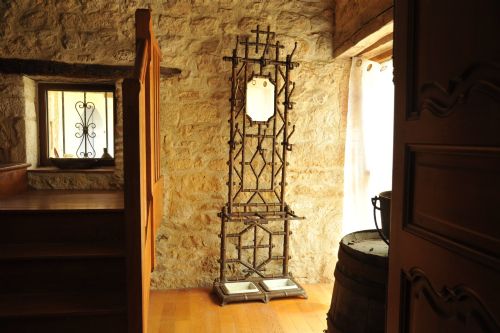
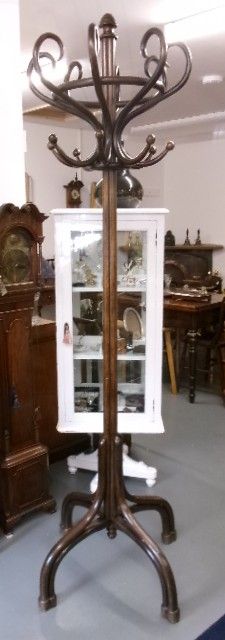
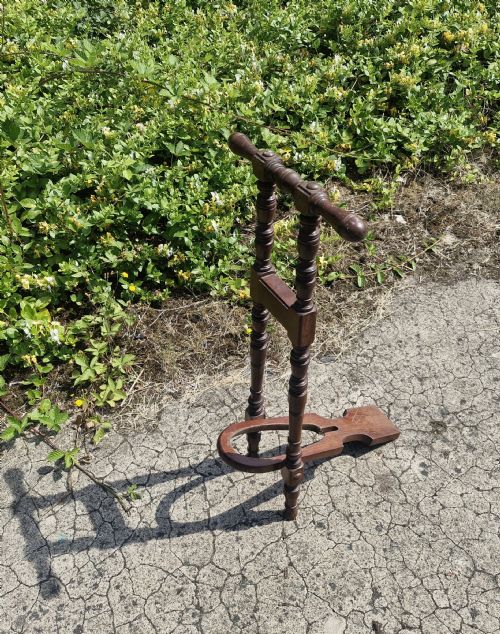
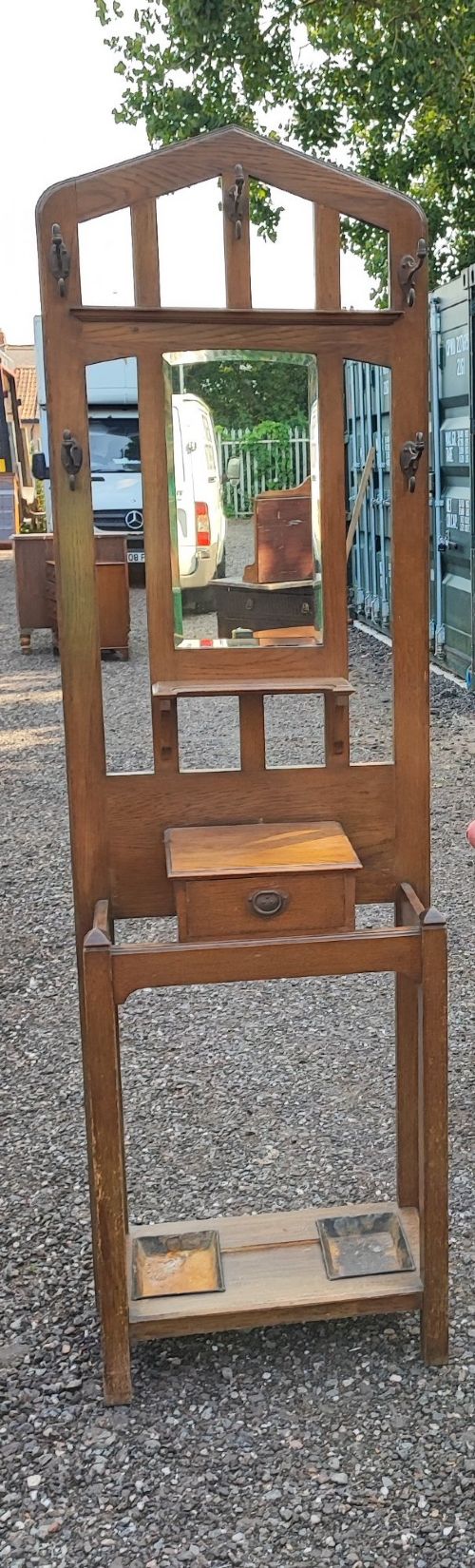
Antique Hallstand
An antique hallstand organises coats, hats and umbrellas while setting a distinct architectural tone in an entrance hall.
Antique Hallstand
When searching for an antique hallstand, buyers encounter substantial entryway furniture designed to hold garments, walking sticks and umbrellas. These pieces bridge the gap between practical storage and decorative joinery, often incorporating central mirrors and small surfaces for visiting cards.
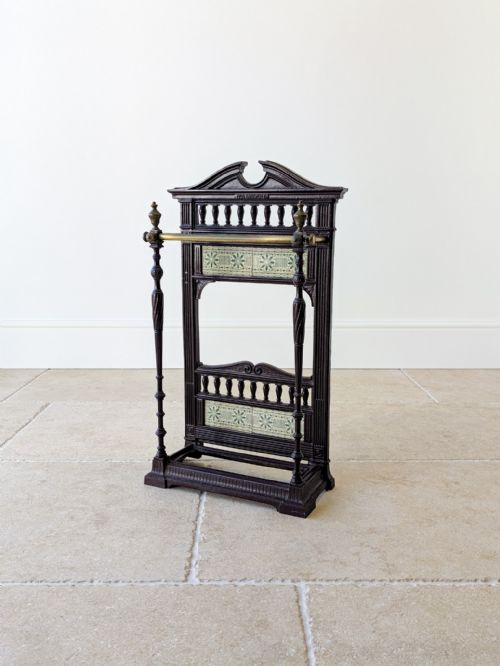
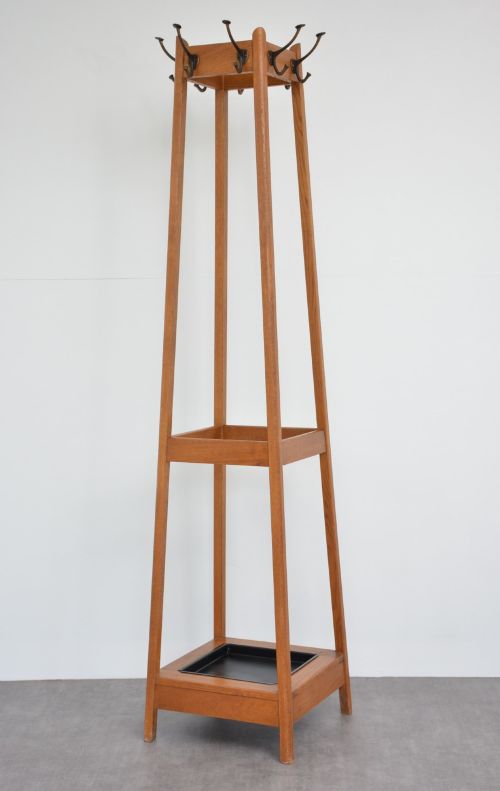
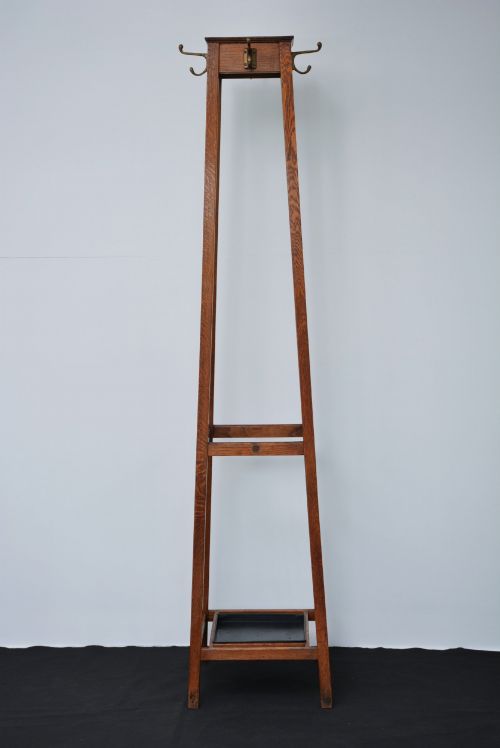
The pieces appearing on this page span the Victorian, Edwardian and Arts and Crafts periods, alongside late nineteenth and early twentieth century examples. Common formats range from heavy timber framework with integrated metal drip trays to lighter bentwood constructions and cast iron umbrella holders.
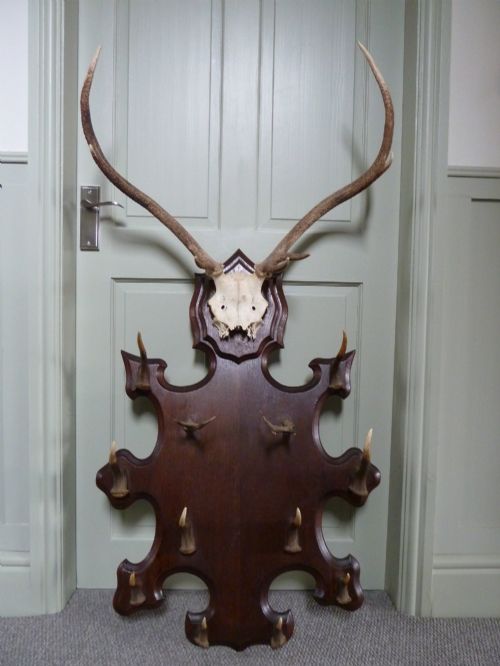
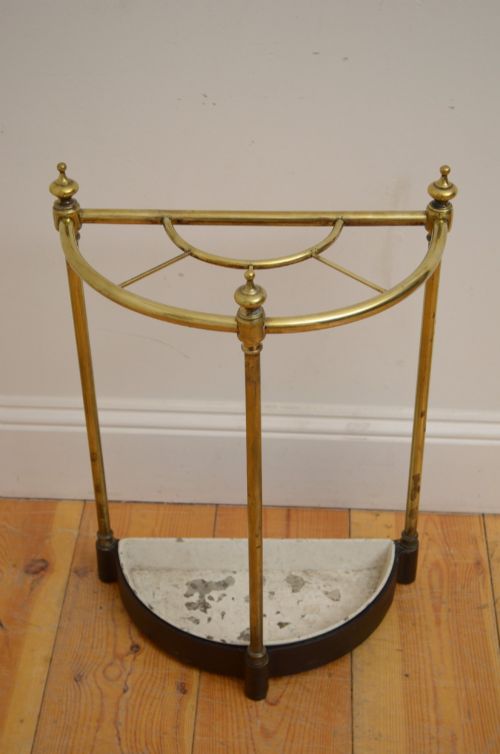
Oak and mahogany dominate the timber selections, frequently paired with brass hooks and marble inserts. Many variants exist, including revolving designs, demi-lune shapes for smaller spaces, and more elaborate pieces featuring carved details such as stags' horns or gothic motifs.
How they were made
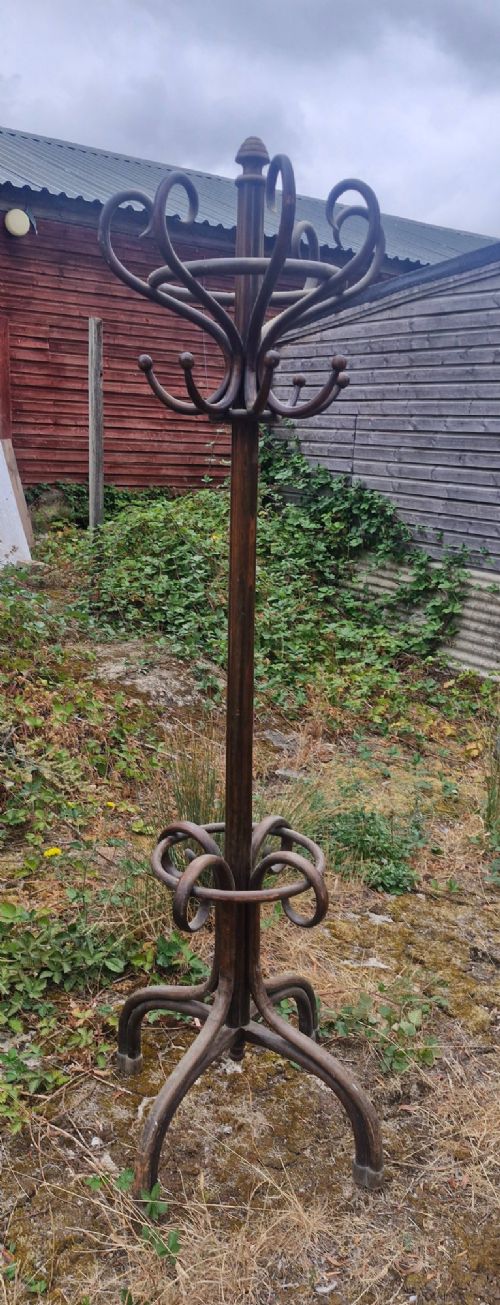
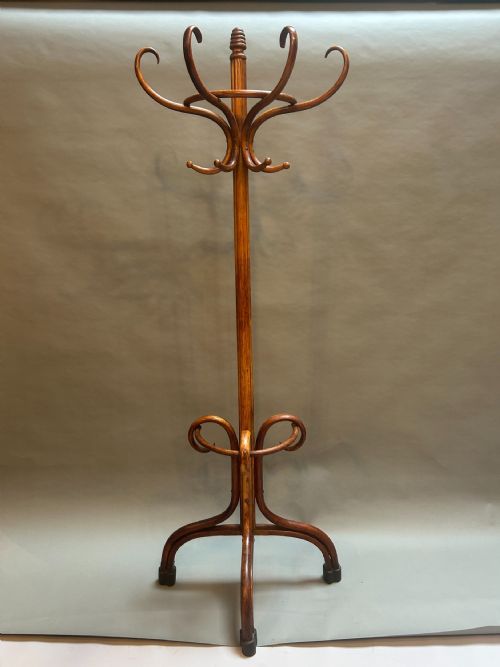
Makers utilised solid timbers such as oak, walnut, mahogany and pine, joining structural elements with traditional mortise and tenon techniques. Bentwood examples rely on steam-heated beech forced into curved forms to create lightweight yet resilient frames for hats and coats.
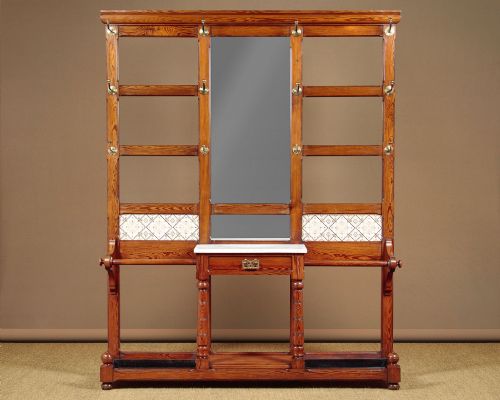
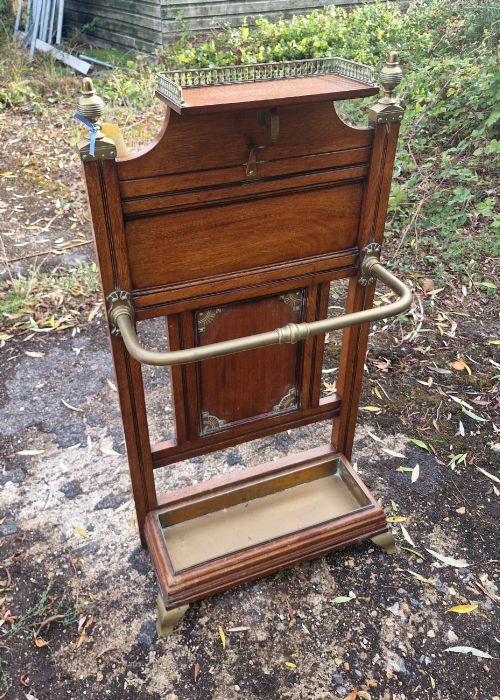
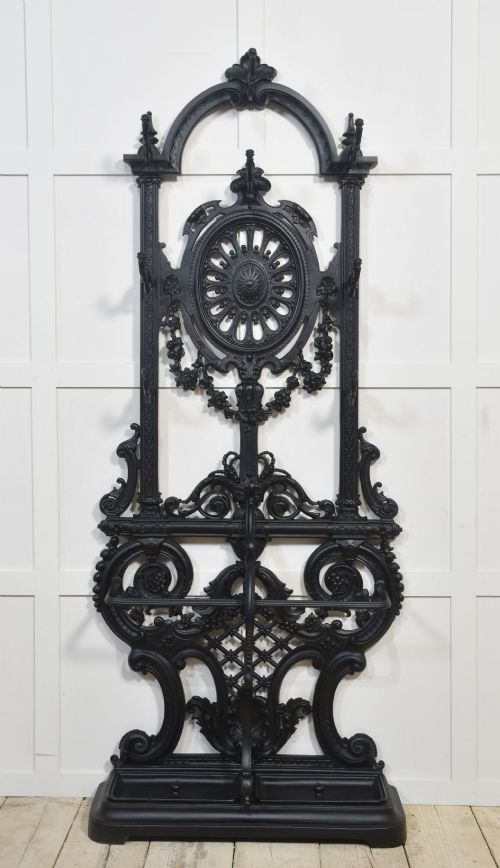
Metal components play a structural and decorative role, featuring cast iron frames for heavy umbrella stands alongside brass hooks, rods and drip trays. Marble slabs frequently appear on larger bases to resist moisture from wet umbrellas, while bevelled glass mirrors are secured into panelled timber backs.
Stags' horns and carved bears make unexpected appearances among the coat hooks, bringing nineteenth-century woodland drama straight into the front hallway.
What varies in quality
The distinction between tiers rests upon timber selection, carving depth and the integrity of hardware. Superior examples display carefully figured grain, substantial brass fittings fixed with original screws, and heavy cast iron bases free from replacement parts.
Structural complexity also dictates standing, with revolving mechanisms, integrated marble surfaces and complex bentwood framing requiring advanced joinery. Pieces retaining their original drip trays, mirrored glass and matching coat hooks command greater architectural presence.
Coalbrookdale·Falkirk Ironworks·James Shoolbred·Fischel·Charles Shoolbred and Co
The Antique Hallstand Glossary
- Bentwood
- Timber shaped by exposure to steam and pressure. This technique allows manufacturers to create curved frames for lightweight coat and hat stands.
- Demi-lune
- A half-moon shape. Hallstands built to this profile sit flat against a wall, making them suitable for narrow corridors.
- Drip tray
- A metal receptacle placed at the base of a stand. It catches water running off wet umbrellas and walking sticks.
- Revolving
- A design incorporating a rotating upper section. This allows access to multiple coat hooks and hats without moving the entire structure.
- Gothic Revival
- An architectural and decorative style drawing on medieval motifs. Pieces from this movement often feature pointed arches and heavy carved ornamentation.
Antique Hallstand: Frequently Asked Questions
What is an antique hallstand used for?
An antique hallstand serves as a multi-functional piece of hallway furniture designed to store outerwear, hats, walking sticks and umbrellas in one dedicated footprint.
Many examples also incorporate a central mirror for checking appearance before departure and a small shelf or compartment for keys and visiting cards.
How do I identify a Victorian hallstand?
Victorian hallstands typically feature dark timbers like oak, walnut or mahogany, often decorated with heavy carving, turned spindles and applied mouldings.
They frequently include a central mirror, heavy brass coat hooks, and a marble base or ceramic tile inset designed to catch moisture from umbrellas.
Where should I place a bentwood hallstand?
Bentwood hallstands suit smaller entryways or hallways due to their lighter visual weight and slender profiles. Many take a circular or demi-lune shape to sit neatly against a wall.
Because they rely on steam-bent timber rather than massive solid frames, placing them away from direct heat sources helps preserve the curved joints.
What is the difference between a stick stand and a hallstand?
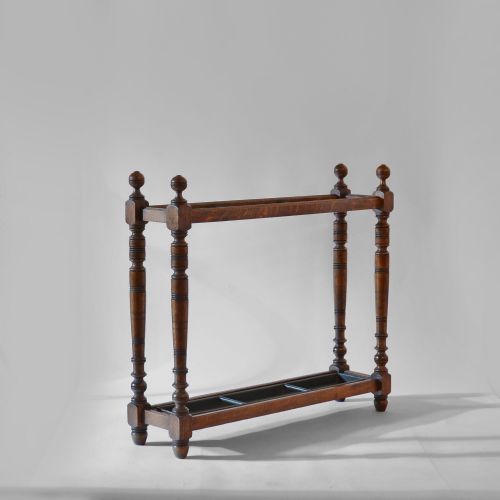
A stick stand focuses specifically on holding walking sticks and umbrellas, often constructed entirely from cast iron, brass or simpler timber frameworks.
A hallstand provides that same umbrella storage alongside a tall vertical back panel fitted with coat hooks, a hat rack, and frequently a mirror and glove drawer.