




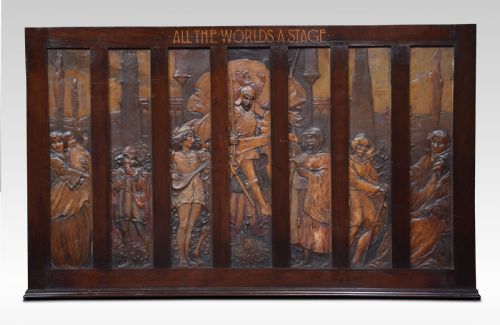
Dark Timber Framed Art
Dark timber framed art brings together heavy wood and historic imagery, offering a solid period focal point for any room.
Dark Timber Framed Art
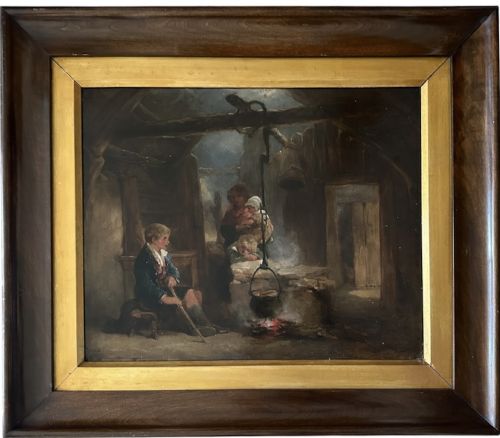
Dark timber framed art covers oil paintings, silhouettes, mirrors, and reverse prints enclosed in heavy wooden or carved surrounds. These pieces span from the eighteenth century through the Edwardian era, incorporating styles such as Georgian, Victorian, and Arts and Crafts.
You will most frequently encounter nineteenth-century oil paintings and mirrors mounted in oak, walnut, or heavily carved wood. The selection also includes silhouettes, watercolours, and photographs housed within deep timber borders.
The objects serve primarily as wall art and mirrors, utilising substantial wooden framing to anchor the visual weight of the canvas, glass, or paper within.
How they were made
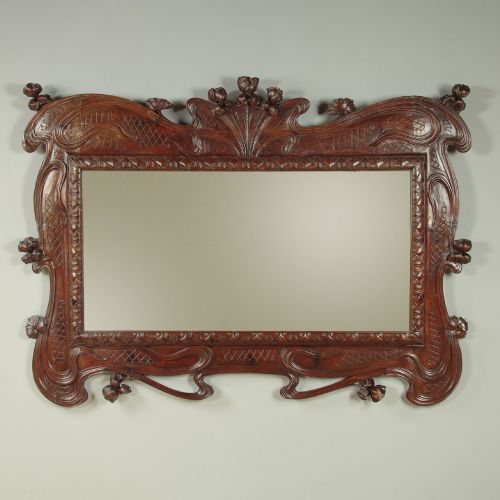
Makers utilised solid timbers like oak, walnut, and hardwood, often shaping the wood through deep relief carving or simple moulded sections. Frames frequently show hand-carved detailing, particularly in Black Forest and Arts and Crafts examples.
Artworks within these frames employ oil paint on canvas or board, watercolour on paper, glass for mirrors and reverse prints, and photographic prints. The assembly combines traditional joinery in the frames with standard period mounting techniques for the interior art.
Listings feature items from the eighteenth, nineteenth, and early twentieth centuries, constructed using oak, walnut, and canvas.
What varies in quality
Quality rests in the crispness of the timber carving and the depth of the wood grain, alongside the execution of the artwork itself. Hand-carved elements display sharper detail and more deliberate tool marks than mass-produced mouldings.
The harmony between the frame and the enclosed piece dictates overall success, as period-correct pairings hold greater visual integrity. Preservation of the original wood finish and the stability of the inner canvas or paper further separate standard items from finer examples.
George Whitton Johnstone·Augustin Edouart·Christoffel Bisschop·William Woodhouse·Joseph Paul
The Dark Timber Framed Art Glossary
- Oil on board
- A painting technique where oil paint is applied to a rigid wooden board rather than stretched canvas. This surface was common for smaller nineteenth-century works.
- Reverse print on glass
- An image painted or printed directly onto the back of a glass panel and viewed from the front. This technique produced glossy, protected surfaces popular in the Georgian period.
- Silhouette
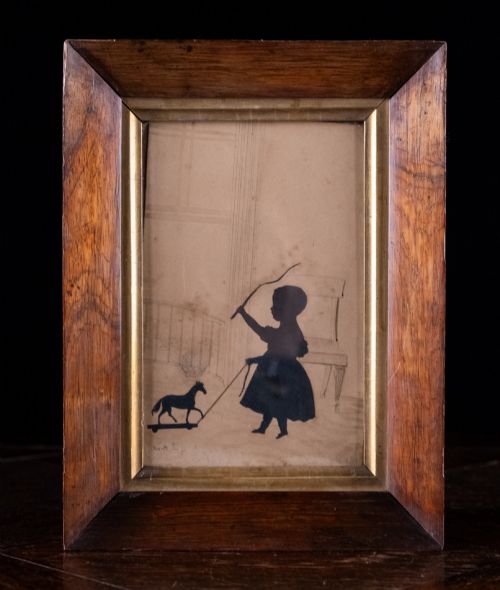
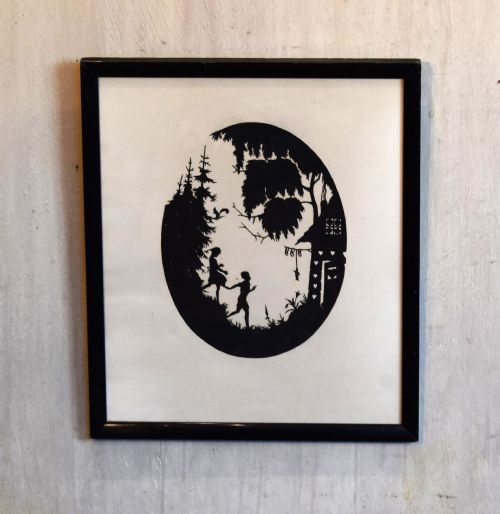
- A solid dark profile portrait cut from paper or painted on a background, often set within a small timber frame. These profile images became highly fashionable in the eighteenth and nineteenth centuries.
- Carved relief
- Ornamentation that projects from a flat wooden background, created by cutting away the surrounding material. Deep relief work requires considerable skill from the woodcarver.
Dark Timber Framed Art: Frequently Asked Questions
Are these frames original to the paintings?
Many pieces retain their original frames, particularly where the rebate and timber wear match the age of the artwork. Over centuries, some works have been reframed to suit changing interior tastes.
Examining the fixings at the back often reveals whether the frame and art have a shared history.
How should I clean dark wooden frames?
Dust the timber gently with a soft, dry cloth to remove surface particles without disturbing the grain or finish. Avoid chemical polishes or excessive moisture, which can degrade old wax or varnish.
Applying a specialist microcrystalline wax occasionally helps nourish historic wood surfaces safely.
What rooms suit dark timber frames?
These pieces suit spaces that benefit from grounding elements, such as studies, dining rooms, or hallways with traditional decor. The heavy wood tones contrast well against pale walls and anchor lighter interior colour schemes.
Placing them away from direct sunlight protects both the dark timber and any oil paint or paper within.