



Dark Rosewood Tea Chest
A dark rosewood tea chest is a compact vessel designed to store dried leaves safely, offering deep grain and rich timber tones that anchor a room.
Dark Rosewood Tea Chest
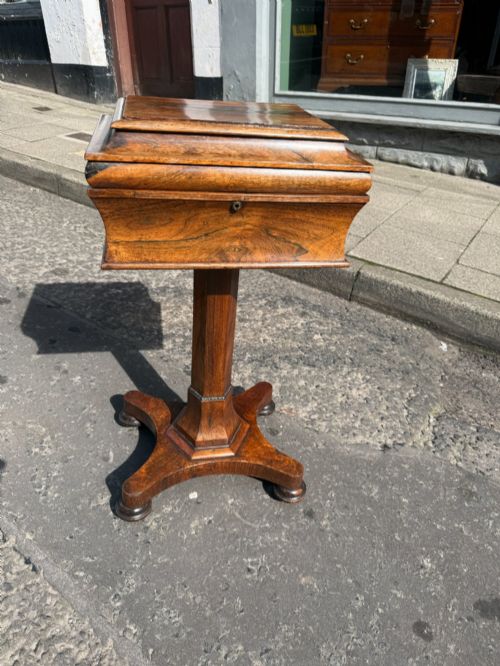
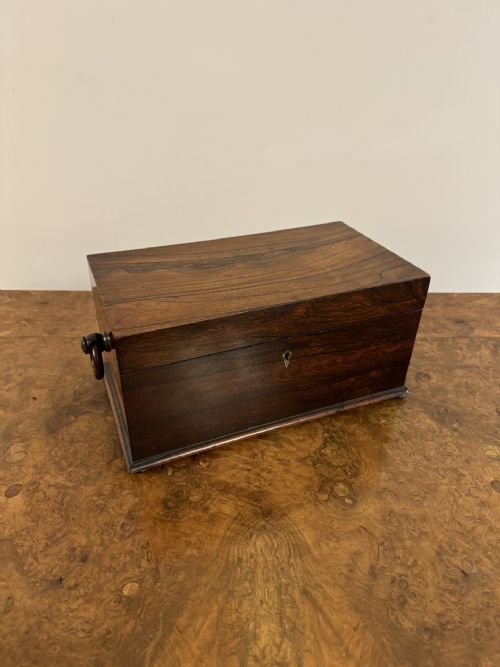
When you examine a dark rosewood tea chest on this page, you are looking at domestic storage containers designed during the Georgian, Regency, William IV and Victorian eras. These boxes served a valuable household commodity when tea was kept under lock and key.
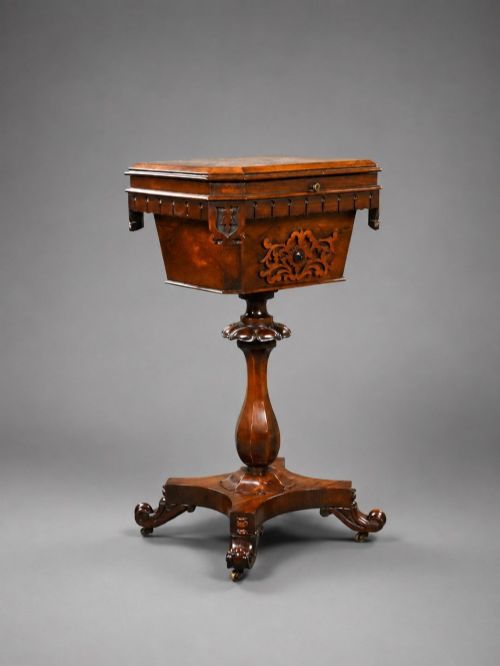
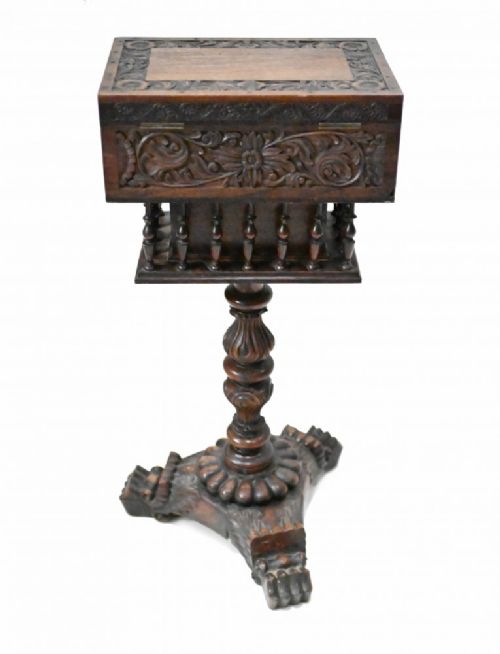
The objects take several distinct forms, from tabletop sarcophagus boxes to freestanding teapoys mounted on pillars or stands. You will encounter compact caddies intended for sideboards alongside larger work boxes and miniature sideboard forms.
The origins span English workshops and Anglo-Indian colonial production, reflecting global trade routes of the nineteenth century. These pieces combine practical storage with decorative presence through varied timber choices.
How they were made
Cabinetmakers constructed these vessels using dense rosewood and padouk timbers, often enhanced by contrasting boxwood stringing and mixed wood inlay. Artisans applied brass stringing, brass inlay and mother of pearl foliate designs to enrich the dark polished surfaces.
Interiors frequently incorporate glass mixing bowls, bone handles and fitted compartments designed to hold loose leaf tea. Workmanship shows careful attention to parquetry, mosaic patterns and structural joinery suited to daily handling.
Listings feature items from the Georgian, Regency, William IV and Victorian periods, constructed from rosewood, padouk, brass, bone and mother of pearl.
What varies in quality
The standard of execution separates everyday containers from exceptional examples designed for prosperous households. Precision in brass inlay, the intricacy of parquetry or mosaic work, and the depth of the rosewood grain mark the superior items.
Proportion and form also define the tier of a piece, particularly in sarcophagus shapes and freestanding teapoys with carved detailing. Complete interior fittings, including original glass bowls and working locks, elevate the standing of a box.
The Dark Rosewood Tea Chest Glossary
- Tea caddy
- A box or chest made to store loose tea leaves securely. These containers often featured internal compartments and locking lids.
- Teapoy
- A freestanding table or pedestal container designed for holding tea equipment. Examples often stand on a central pillar with carved supports.
- Sarcophagus form
- A box shape featuring sloping sides that widen toward the base, resembling an antique stone coffin. This style became popular during the Regency period.
- Parquetry
- A geometric mosaic of wood pieces used for surface decoration. Artisans utilised contrasting timbers to create patterns on the lid or sides.
- Tunbridge Ware
- Woodworking characterised by mosaic decoration made from tiny blocks of various coloured woods. This technique produced detailed pictorial and geometric motifs.
Dark Rosewood Tea Chest: Frequently Asked Questions
What is a dark rosewood tea chest?
A dark rosewood tea chest is a lidded container built in the nineteenth century to store dry tea leaves. These boxes protected a valuable commodity from moisture and theft.
Craftsmen built them in various forms, including tabletop boxes and freestanding teapoys, utilising rich dark timbers and decorative inlays.
How were tea chests used?
Households used these chests to keep expensive tea leaves locked away from servants and visitors. The mistress of the house held the key to portion out daily amounts.
Many examples include internal lidded canisters and glass mixing bowls for preparing blends at the table.
How do I date a tea chest?
Dating relies on stylistic clues such as cabinet form, inlay materials and construction methods. Regency and Georgian examples often feature sarcophagus shapes and brass stringing, while Victorian pieces may display mosaic work.
Hardware styles, including lion mask handles and escutcheons, also help narrow the period of manufacture.
Where were these tea chests made?
The majority of these pieces originated in English workshops during the Georgian, Regency and Victorian periods. Cabinetmakers utilised imported tropical hardwoods available through maritime trade.
Some examples reflect Anglo-Indian colonial production, featuring carved padouk and distinctive regional ornamentation.