

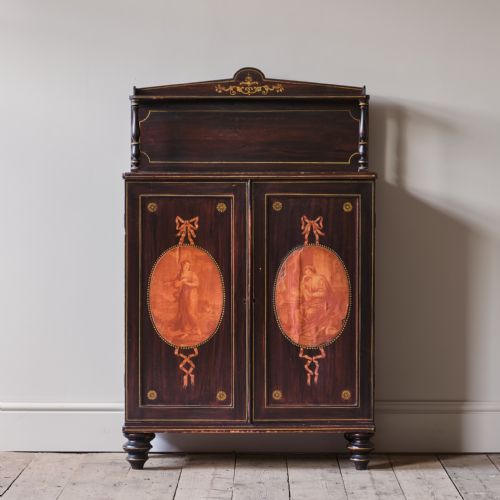

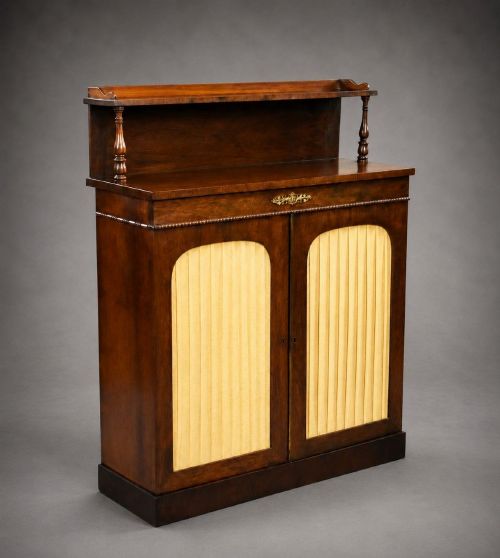
Dark Rosewood Storage
Dark rosewood storage offers a deep, richly grained surface that brings warmth to an interior through cabinets, caddies, and chiffoniers.
Dark Rosewood Storage
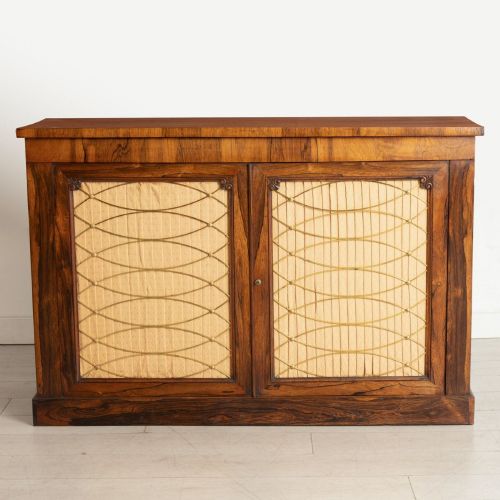
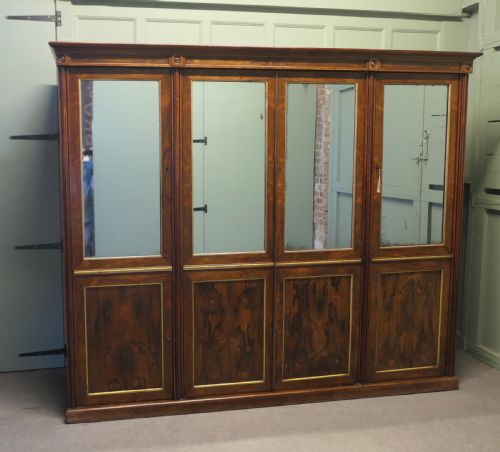
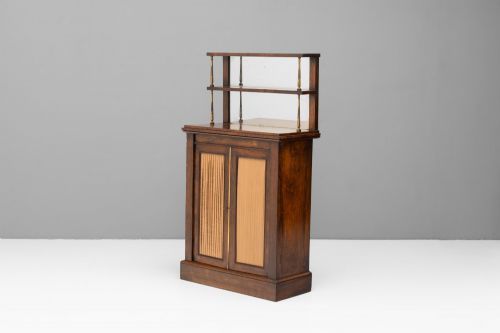
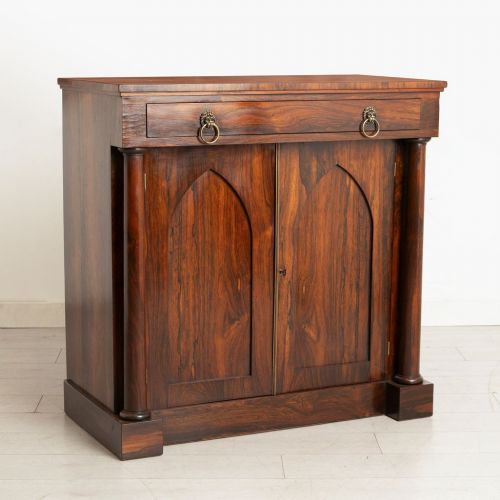
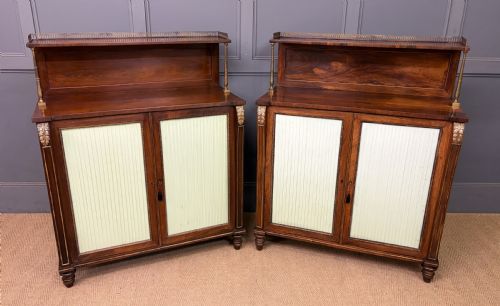
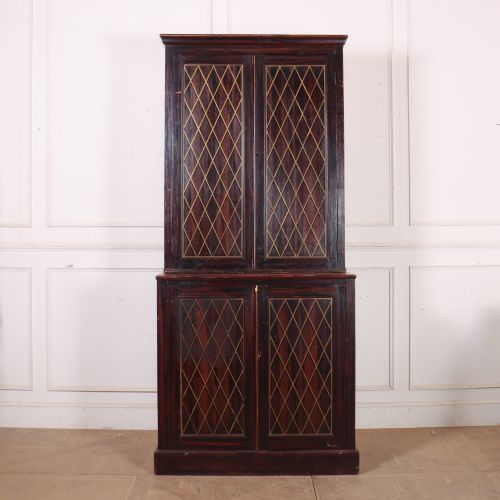
Dark rosewood storage encompasses a variety of practical furniture, from Regency and Victorian chiffoniers to side cabinets and bookcases. Buyers seeking this phrase encounter distinct utilitarian forms such as wardrobe linen presses, Wellington chests, and metamorphic coal scuttles alongside smaller table pieces.
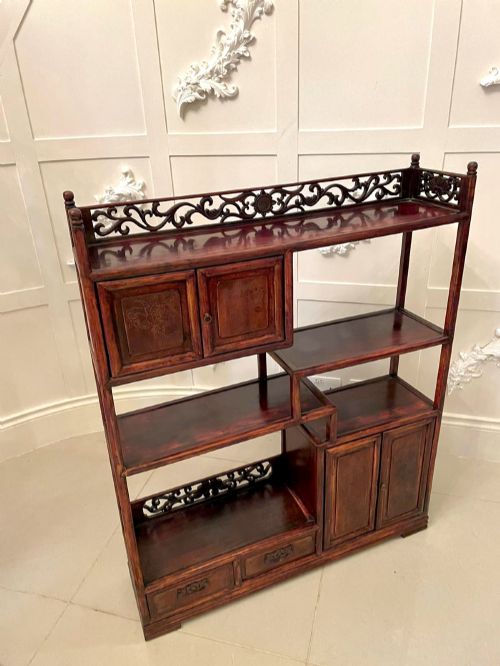
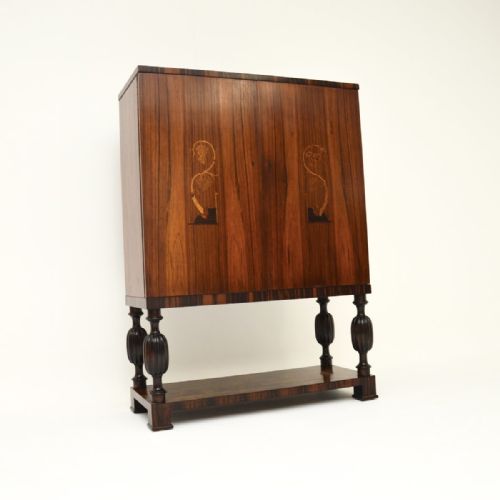
The material appears across multiple stylistic periods, notably the Regency, William IV, and Victorian eras, with occasional Chinese hardwood display cabinets and vintage Swedish pieces. Chiffoniers and side cabinets dominate the available selections, frequently featuring low proportions and enclosed shelving.
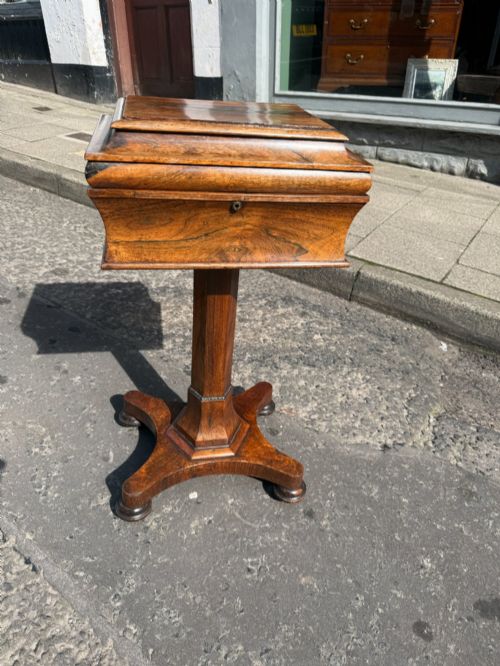
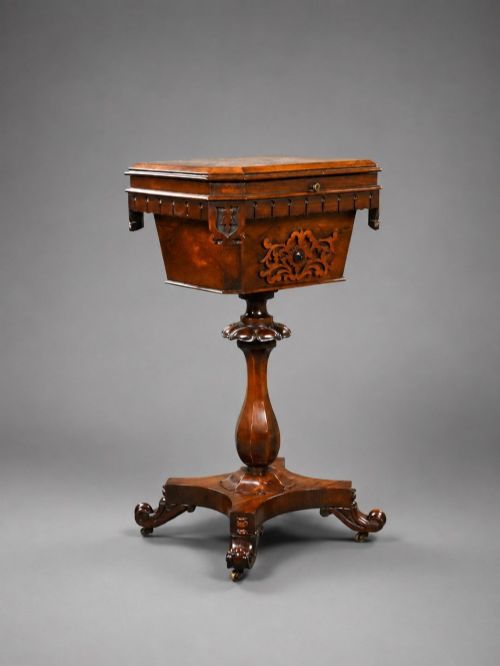
Smaller tabletop items also fall into this category, including sarcophagus tea caddies, document boxes, and work boxes lined for keeping keepsakes. These domestic objects share the dense, dark timber characteristic of the larger cabinetry.
Craftsmanship and proportion
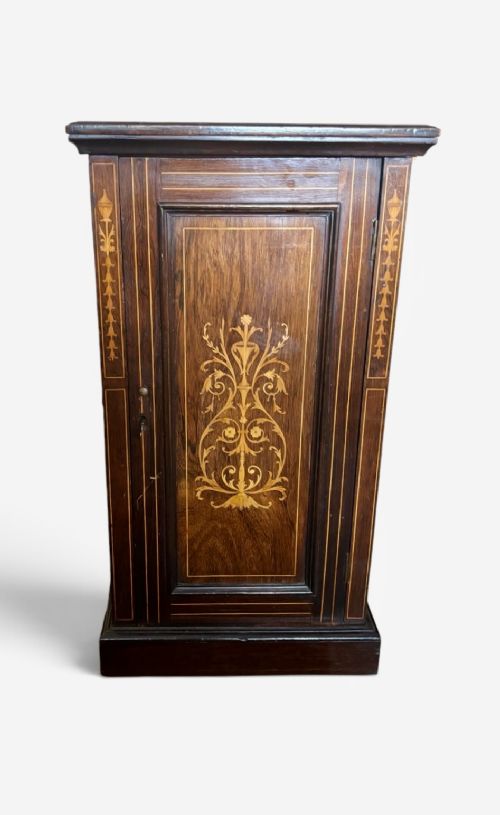
Quality rests in the selection of the timber figure and the precision of the contrasting inlay, such as fine satinwood or brass stringing. Superior examples maintain balanced proportions, particularly in neat Regency bookcases and compact side cabinets.
The integration of functional hardware, including original locks, handles, and pleated chiffon panels, distinguishes finer items from standard utility pieces. Cabinetwork integrity, seen in the tight fit of drawers and doors, marks the difference at the upper end of the range.
Metamorphic coal scuttles hide household fuel inside elegant parlour boxes disguised as fine rosewood cabinets.
The Dark Rosewood Storage Glossary
- Chiffonier
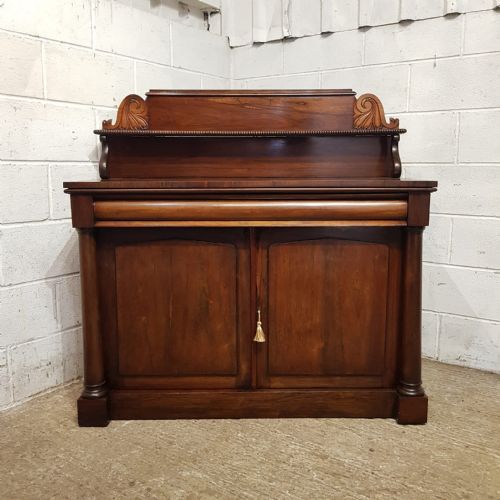
- A low sideboard or cabinet with enclosed shelves below, popular during the Regency and Victorian periods for dining room storage. It frequently incorporates a raised back gallery or small shelf.
- Teapoy
- A small stand or caddy designed to hold tea canisters, often supported by a central pillar on a platform base. Regency examples frequently feature elaborate sarcophagus shapes.
- Crossbanding
- A strip of veneer applied to the border of a furniture surface with the grain running perpendicular to the main panel. This technique creates a distinct visual frame.
- Metamorphic
- Furniture designed to transform into another object or serve a secondary function, such as a coal scuttle doubling as an enclosed box.
- Sarcophagus form
- A burial-vault shape with a domed lid and panelled sides, frequently adapted for nineteenth-century tea caddies and document boxes.
Dark Rosewood Storage: Frequently Asked Questions
How do I clean dark rosewood surfaces?
Dust regularly with a soft, dry cloth to prevent particulate buildup on the polished finish. Avoid modern silicone sprays, opting instead for traditional beeswax applied sparingly.
Buff gently along the direction of the grain to maintain the natural lustre without stripping the patina. Excessive moisture can damage older veneers, so keep liquids away from the timber.
What is a chiffonier used for?
Chiffoniers served primarily as dining room serving tables and enclosed storage for glassware, linens, or silverware. The lower cupboards kept everyday items out of sight while the top surface held serving dishes.
In the nineteenth century, the small shelf above the cabinet also displayed decorative ornaments. They function well today as hallway consoles or living room media storage.
How do I spot a Regency piece?
Regency furniture dates roughly from the early nineteenth century, characterised by classical restraint and architectural lines. Look for sabre legs, brass inlay, and simulated rosewood paint finishes on alternative timbers.
Proportions tend to be neat and compact, reflecting neoclassical influences. Maker choices and hardware styles further help anchor pieces to this specific era.
Can I use a tea caddy for storage?
Antique tea caddies make excellent containers for small modern accessories like jewellery, keys, or stationery. Their compartmentalised interiors were originally built to keep different tea leaves separated.
Lined compartments and lockable lids provide secure storage for precious keepsakes on a dressing table or desk. The compact size allows them to fit easily onto standard bookshelves.