
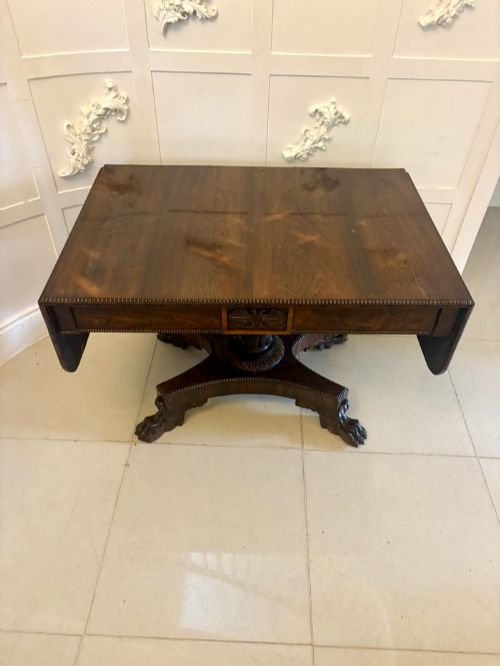
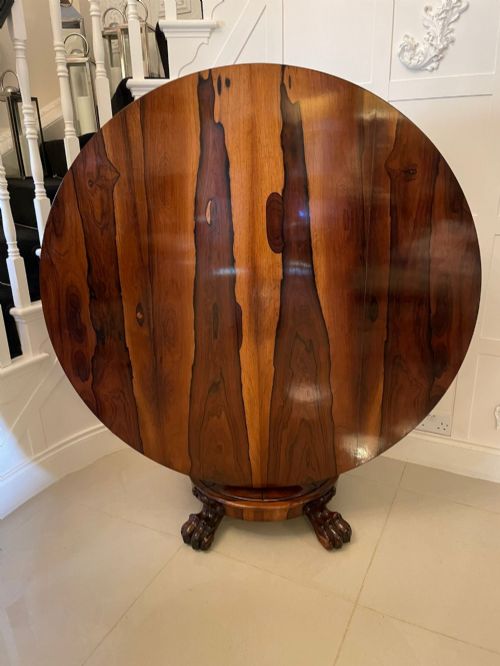
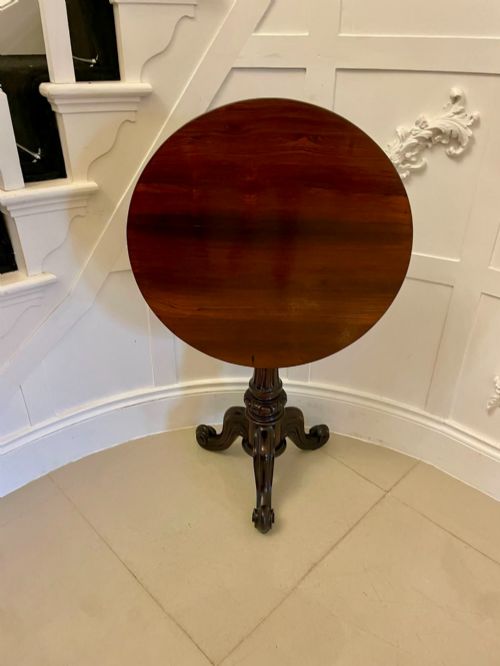


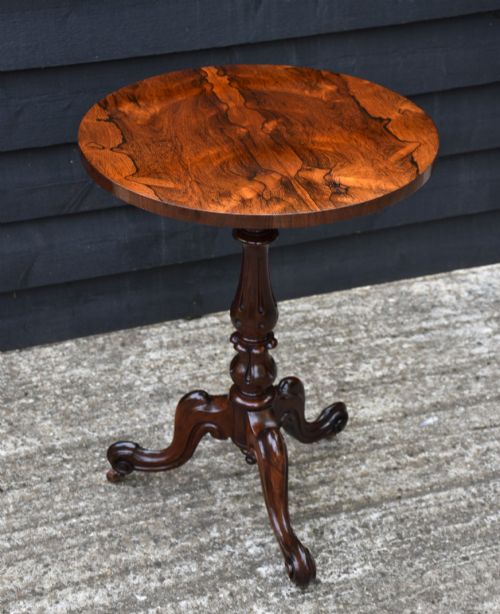
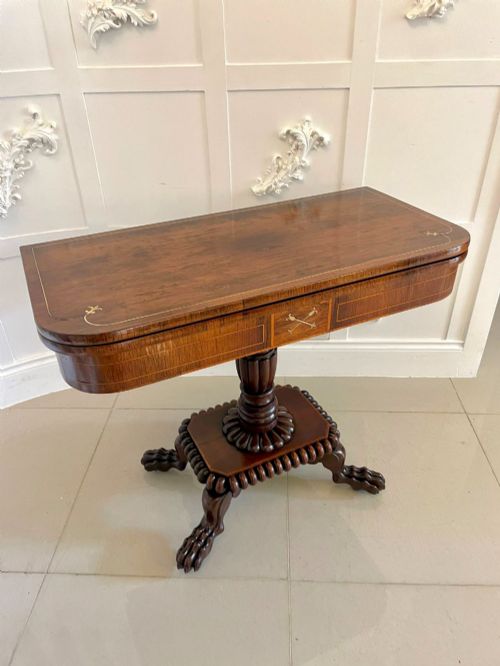
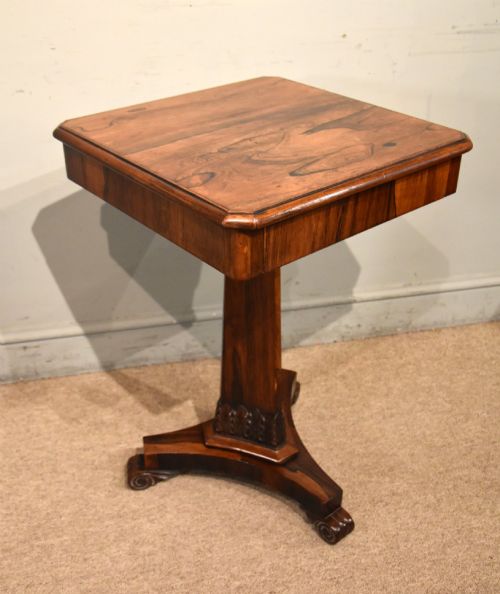
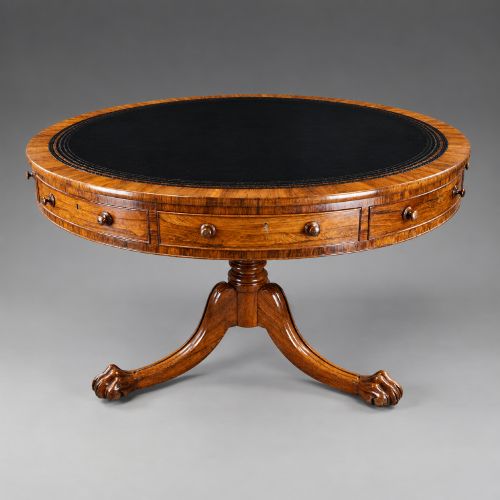
Dark Rosewood Pedestal Table
A dark rosewood pedestal table brings rich grain and solid central support to a room, appearing in Regency, William IV, and Victorian forms.
Dark Rosewood Pedestal Table
A dark rosewood pedestal table sits on a central pillar rather than four corner legs, leaving the perimeter free. When searching for a dark rosewood pedestal table, a buyer encounters dining tables, breakfast tables, and smaller lamp or occasional pieces.
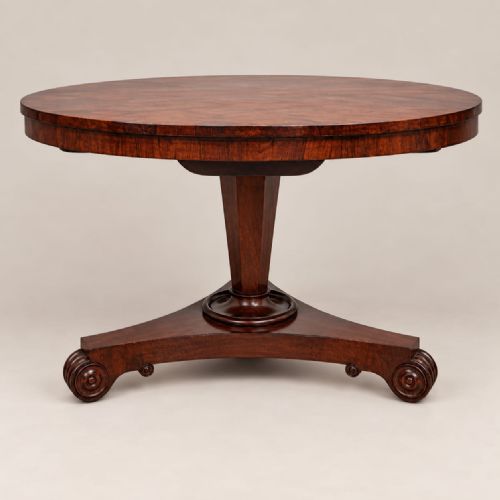
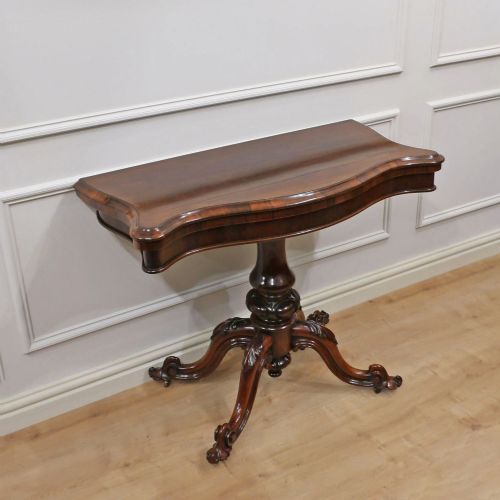
The material gives these items a deep colour and distinct grain pattern, shaped primarily during the nineteenth century across periods such as Regency, William IV, and Victorian. Forms range from heavy circular dining surfaces with triform bases to smaller card and occasional tables.
Makers utilised the dense timber to build freestanding pieces for libraries, parlours, and dining rooms. Examples often feature tilt mechanisms, brass inlay, or carved columns resting on platform bases.
How they were made
Joiners constructed these tables using dense rosewood, often selected for its dark tone and striking natural grain. Secondary timbers formed the internal framing, while solid rosewood or thick veneers made up the visible surfaces.
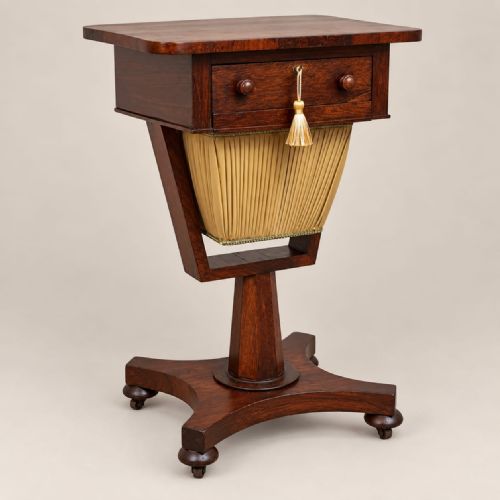
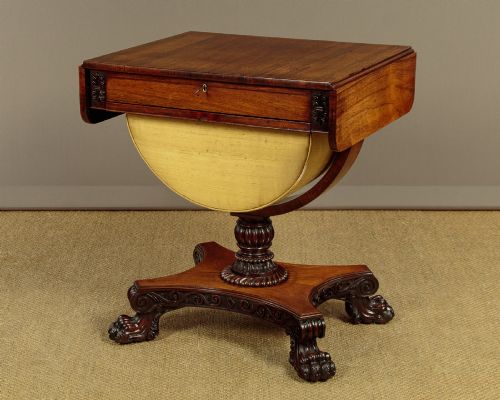
Workshops incorporated brass inlay, boxwood stringing, and mother of pearl details into the tops of card and occasional tables. Pillars were turned on lathes or carved by hand, rising from triangular or platform bases supported by scroll feet.
Some sewing and hobby tables included hidden compartments for threads, proving that nineteenth-century clutter required dedicated architecture.
What varies in quality
The execution of the central column and the weight of the base determine the stability and visual balance of the piece. Superior examples display crisp hand-carved details on the pedestal and precise matching of the rosewood veneers across the top.
Hardware and secondary materials also set pieces apart. Quality tables use substantial brass fittings, stable tilt-top mechanisms, and refined inlay work rather than simpler painted or stamped ornamentation.
George Bullock·Gillows·Mein of Kelso
The Dark Rosewood Pedestal Table Glossary
- Pedestal table
- A table supported by a single central pillar and base instead of four corner legs. This construction allows more legroom around the perimeter.
- Tilt-top
- A tabletop hinged to the pillar so it can tilt vertically when not in use. This mechanism allowed tables to be stored against walls in period rooms.
- Triform base
- A three-sided platform or foot arrangement beneath the central pillar. It provides stability for heavy circular dining and breakfast tables.
- Teapoy
- A small stand or box designed to hold tea canisters, often mounted on a pedestal. They became popular in the nineteenth century for drawing rooms.
- Sofa table
- An oblong occasional table designed to sit in front of a sofa. These typically feature drop leaves on either side.
Dark Rosewood Pedestal Table: Frequently Asked Questions
How do I identify a Regency period table?
Regency tables often display classical restraint with brass inlay, rosewood veneers, and slender turned columns. They date from the early nineteenth century and lean toward architectural forms.
Look for proportion and specific brass motifs that match the design vocabulary of the period rather than heavy Victorian carving.
What is a breakfast table used for?
A breakfast table is a circular or oval pedestal table designed for morning meals or light parlour use. Their tilt-top design made them easy to clear away.
In modern rooms, they function well as small dining surfaces or centre tables in larger entryways.
How should I care for rosewood surfaces?
Rosewood requires stable humidity and protection from direct sunlight to prevent the timber from drying out or fading. Polish the wood gently with traditional wax rather than modern silicon sprays.
Avoid placing hot items or damp glasses directly on the polished top to protect the historical finish.
What distinguishes a William IV pedestal table?
William IV tables are marked by heavier proportions, robust scrolling pedestals, and bold carved details. The timber is often very dark and richly figured.
These pieces emphasise solidity and sculptural form, sitting chronologically between Regency elegance and Victorian elaboration.