



Dark Rosewood Etagere
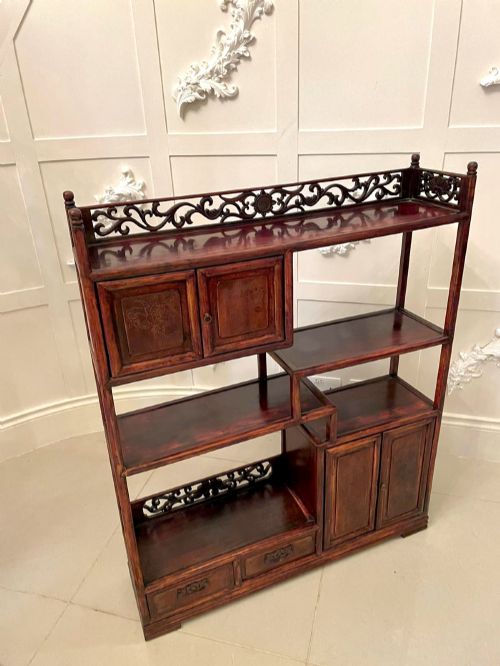
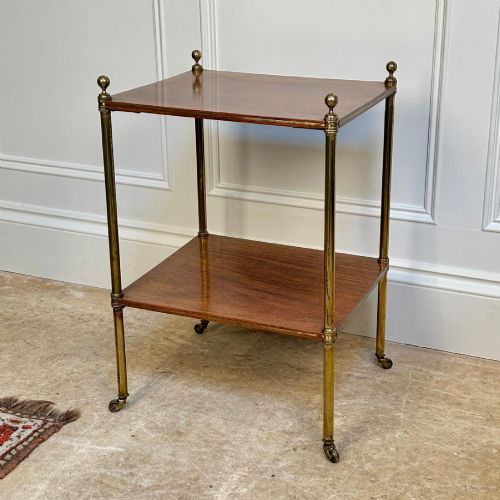
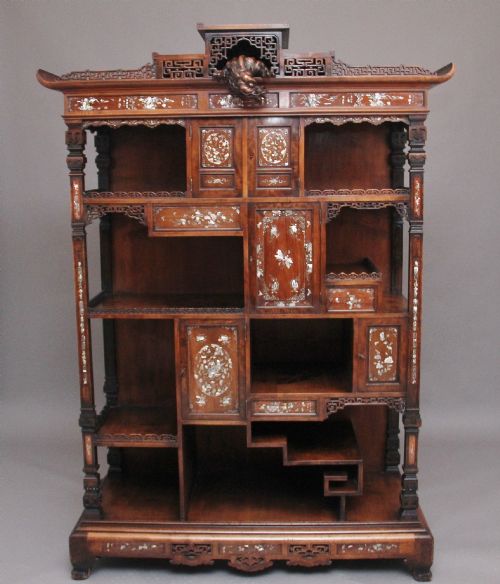
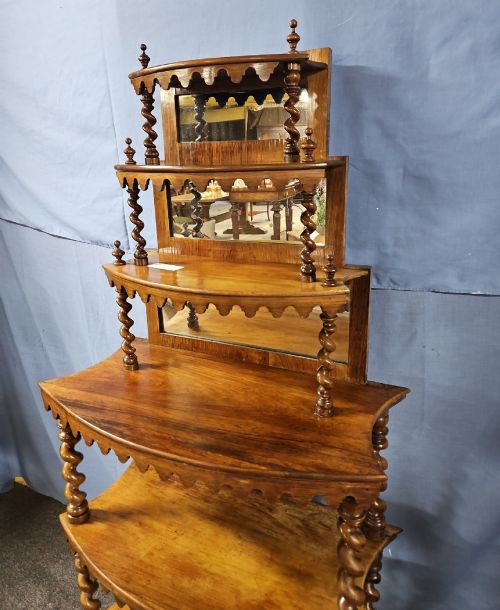
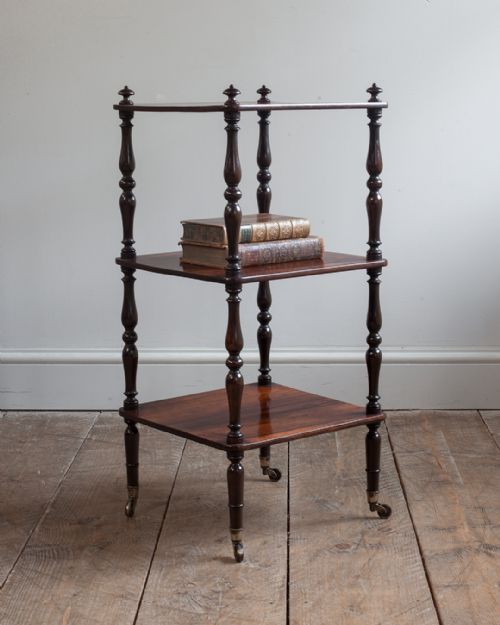
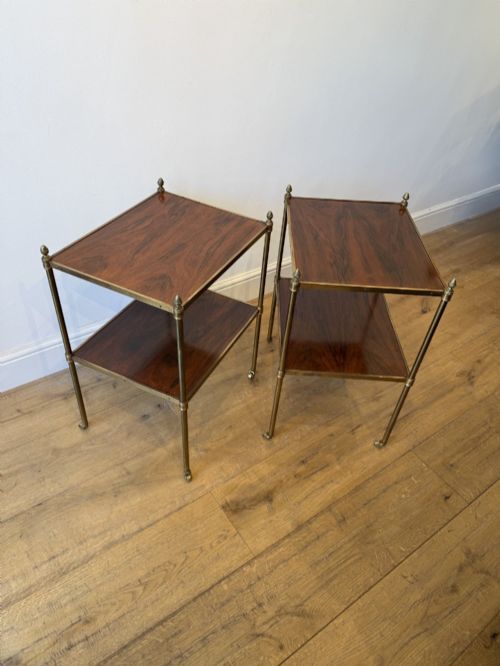
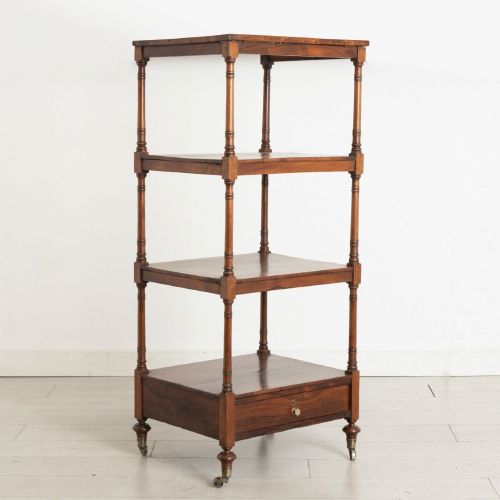
These dark rosewood etagere pieces are tiered open shelves built for displaying ornaments, books and curiosities.
Dark Rosewood Etagere
A dark rosewood etagere is a multi-tiered shelving unit designed to display small decorative objects in principal rooms. These pieces emerged strongly during the Regency and Victorian periods, often taking the form of open stackable tiers supported by turned columns or uprights.
You will most frequently encounter Victorian and nineteenth-century examples on this page, alongside Regency items and occasional Edwardian pieces. Forms range from simple three-tier corner units and freestanding central stands to elaborate multi-tiered arrangements with glazed cabinets or marquetry inlay.
How they were made
Cabinet makers utilised dense rosewood timber, selected for its dark grain and polished finish, forming the structural shelves and upright supports. Many pieces incorporate brass fittings, ormolu mounts and delicate marquetry inlay in contrasting satinwood or mother of pearl.
Construction methods relied on sturdy joinery to bear the weight of stacked tiers, sometimes incorporating turned wooden columns or brass rods at the corners. Surfaces were finished to a high sheen, accentuating the natural figure of the hardwood.
Some nineteenth-century makers built corner whatnots so tidy they practically apologise for occupying floor space.
What varies in quality
Quality rests upon the crispness of the timber selection and the precision of any decorative inlay, brass work or carved detailing. Superior examples demonstrate balanced proportions across multiple tiers, with tight joints and well-figured rosewood grain that remains stable over time.
Lesser pieces may exhibit plain secondary timbers, heavy or clumsy column turnings, and loss of original brass castors or finials. The distinction lies in whether the maker lavished attention on every visible surface and structural junction.
Edwards & Roberts·Samson & Son London
The Dark Rosewood Etagere Glossary
- Etagere
- A piece of furniture consisting of a set of open shelves for displaying small objects. This French term translates literally as a tier-table.
- Whatnot
- A nineteenth-century multi-shelved stand used for storing or displaying ornaments. It shares a very similar form to the etagere.
- Marquetry
- Decorative woodwork where thin pieces of veneer are applied to a structure to form intricate patterns. Makers often used contrasting woods like satinwood for this work.
- Ormolu
- Gilded bronze ornamentation applied to furniture mounts and details. It adds metallic contrast to the dark rosewood surfaces.
- Dumb waiter
- A tiered shelving unit or small stand historically used for holding tableware. Some nineteenth-century examples overlap in form with open bookcases and étagères.
Dark Rosewood Etagere: Frequently Asked Questions
What is an etagere used for?
An etagere is primarily designed for holding and displaying small decorative items, porcelain, and books in sitting rooms or parlours. The multiple open tiers allow objects to be seen from various angles.
Historically, they served as decorative storage furniture rather than utilitarian cupboards. Their open structure keeps collections visible and accessible.
How do I date a rosewood etagere?
Dating relies on stylistic clues, construction methods, and the specific proportions popular in periods like the Regency or Victorian eras. Earlier pieces from the early nineteenth century often feature simpler, cleaner lines and robust mahogany or pine secondary woods.
Later Victorian and Edwardian examples might incorporate heavier turning, extensive marquetry, or specific brass mounting styles. Comparing the tier count and support columns helps narrow down the decade.
Where should I place an etagere?
These pieces suit living rooms, studies, or hallways where they can stand against a wall or fit neatly into a corner. Corner etageres make efficient use of unused room angles.
Avoid positioning them in direct sunlight to protect the dark rosewood finish from fading. Ensure the floor is level so freestanding multi-tiered units remain stable.
Are etageres and whatnots the same?
They share a near identical function and form, consisting of stacked open shelves for display. The terms were often used interchangeably by nineteenth-century makers and buyers.
Minor regional preferences dictated the name, with etagere leaning towards French-influenced designs and whatnot remaining common in British inventories.