


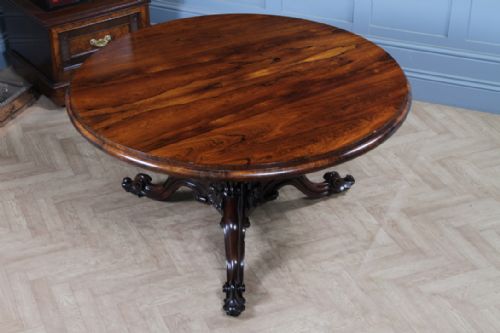

Dark Rosewood Breakfast Table
A dark rosewood breakfast table brings rich grain and solid nineteenth-century presence to a room, functioning as both dining surface and centrepiece.
Dark Rosewood Breakfast Table
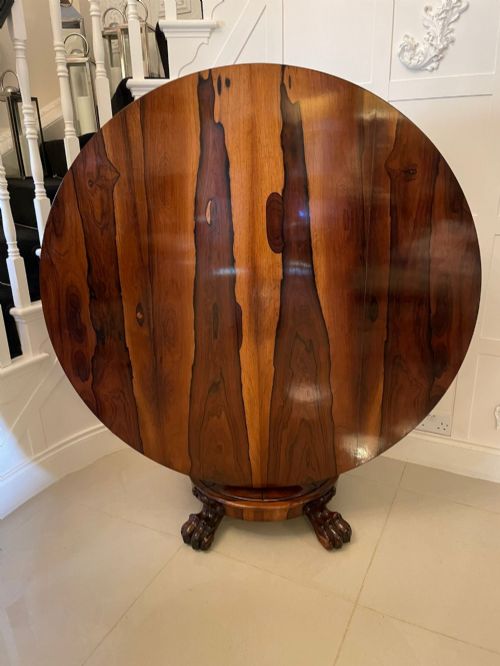
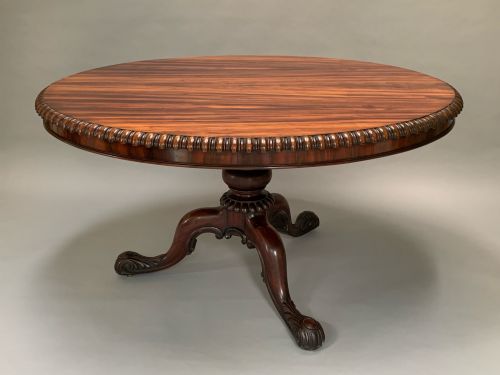
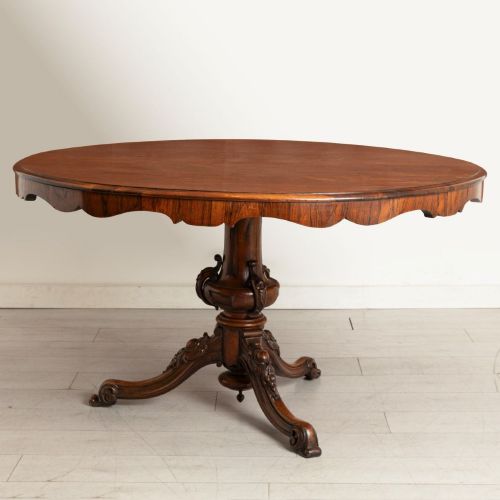
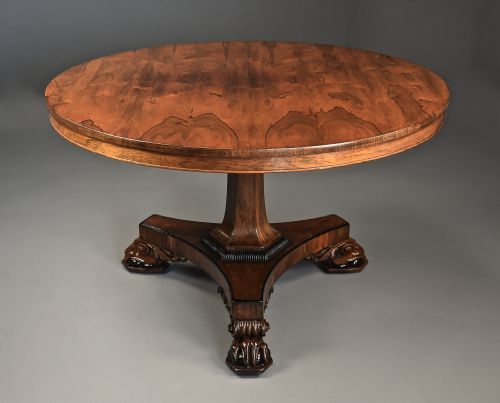
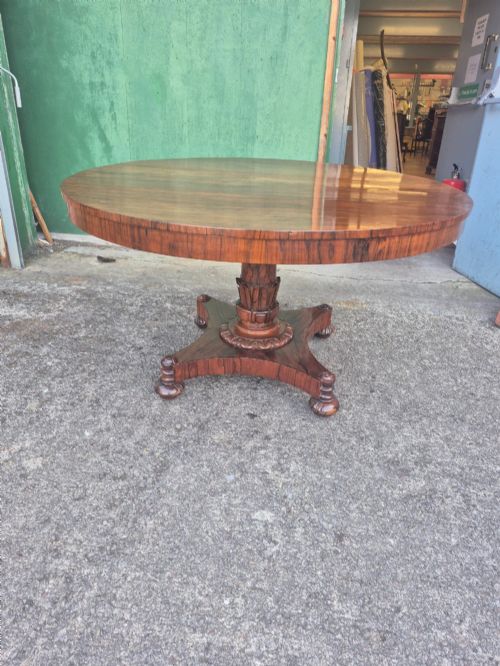
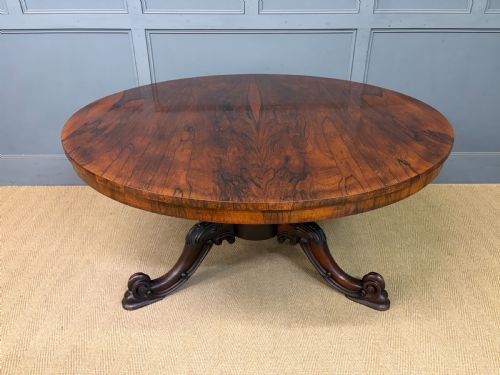
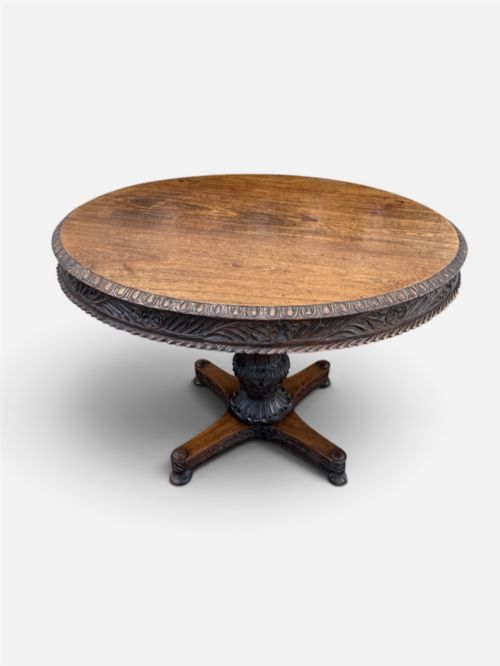
A dark rosewood breakfast table typically dates from the nineteenth century, spanning the Regency, William IV, and Victorian periods. These pieces frequently appear as circular, oval, or serpentine tables designed to stand in the middle of a room as centre tables or dining tables.
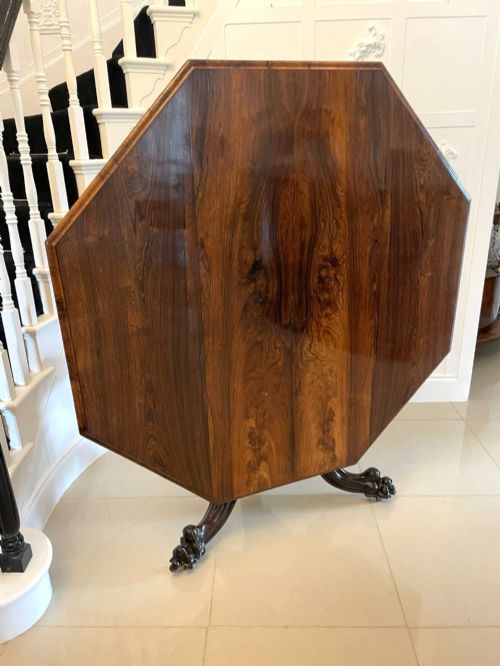
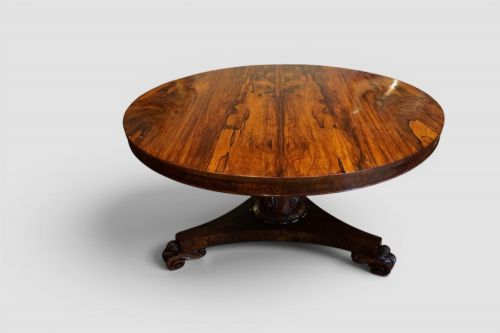
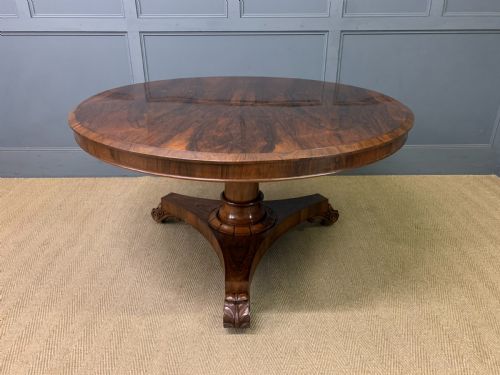
The most common formats on this page feature tilt-top or snap-top mechanisms supported by heavy central pedestals and triform bases. Makers constructed these tables from dense timber, utilising figured veneers to create striking surface patterns across the top.
Judging quality and execution
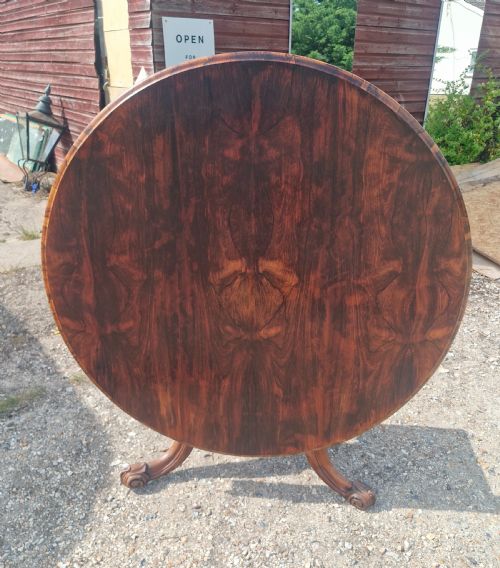
Quality rests heavily on the selection and matching of the rosewood veneers, where superior examples display symmetrical, highly figured grain patterns across the entire tabletop rather than fragmented pieces. The depth and crispness of the hand-carving on the pedestals and bases further distinguish workshop output.
The engineering of the tilt-top mechanism and the stability of the central column dictate daily utility, with finer pieces operating smoothly without wobble or play in the joints. Attribution to documented makers like Gillows elevates certain examples through refined joinery and proportion.
Listings span the nineteenth century, including Regency, William IV, and Victorian periods, constructed primarily in rosewood, mahogany, and brass.
Gillows
The Dark Rosewood Breakfast Table Glossary
- Tilt-top
- A tabletop mounted on a pivot mechanism that allows the surface to lock vertically against the pedestal for storage or display. This feature appears frequently on nineteenth-century breakfast and centre tables.
- Triform base
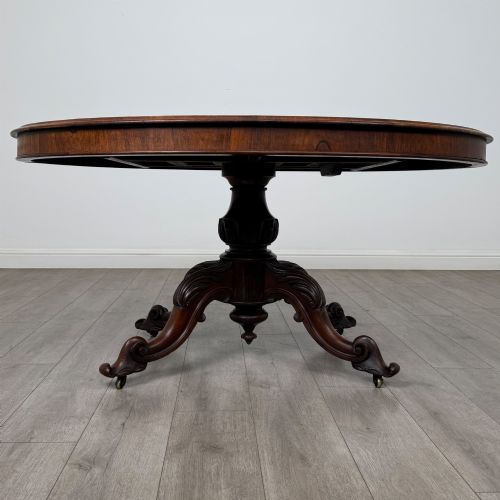
- A three-sided pedestal base that provides stability for heavy central column tables. It often terminates in scrolled feet or castors.
- Loo table
- A large nineteenth-century round or oval table used for evening card games or breakfast. These pieces share the pedestal and tilt-top format common to breakfast tables.
- Parcel gilt
- The practice of applying thin gold leaf to specific carved details or mouldings on a wooden piece. It highlights structural ornaments against dark rosewood surfaces.
- Veneer
- A thin layer of figured wood applied over a stable timber foundation to create decorative surface patterns. Cabinet makers selected rosewood veneer for its dark, contrasting grain.
Dark Rosewood Breakfast Table: Frequently Asked Questions
How do I use a tilt-top table?
Release the under-top catch or wooden toggle to pivot the heavy rosewood surface into a vertical position for room clearance. Return the top to horizontal and secure the latch firmly before placing objects on the surface.
Ensure the mechanism locks securely into place to prevent accidental tipping during daily use as a dining or centre table.
Can I use this as a daily dining table?
These tables were originally built for breakfast or informal dining and suit regular daily use provided you protect the polished surface from heat and moisture. Use coasters and placemats to preserve the nineteenth-century polish.
Circular and oval formats encourage conversation and fit comfortably in reception rooms or large dining spaces.
How do I tell Regency from Victorian pieces?
Regency and George IV examples often feature neoclassical brass inlay, parcel gilt details, and crisply reeded or sabre-leg supports reflecting early nineteenth-century design. William IV pieces introduce heavier proportions with bold scrolled pedestals.
Victorian tables from 1850 onwards frequently display heavier carved fruit and floral motifs on solid rosewood bases with serpentine or shaped oval tops.
What is an albuera wood table?
Albuera wood is a dense exotic timber associated with high-end cabinet makers like Gillows during the nineteenth century. It shares the dark, heavy qualities of rosewood and takes a high polish.
Tables executed in this material display the same sturdy pedestal construction and formal presence as standard rosewood pieces.