
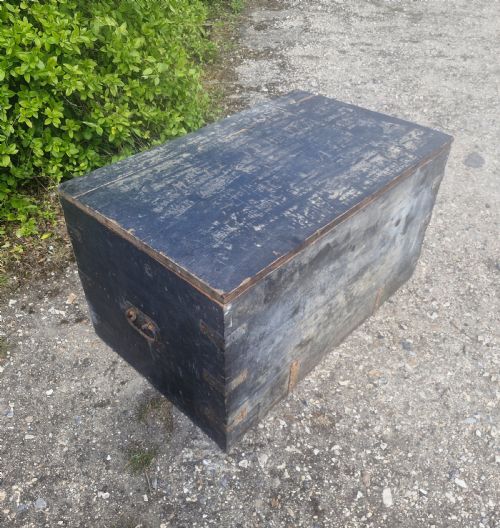

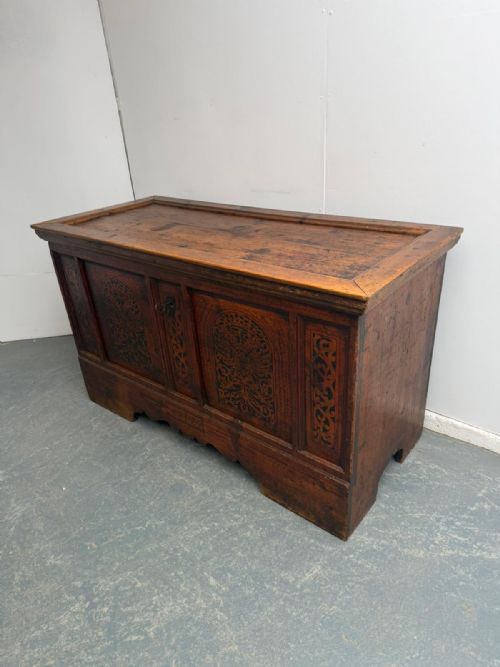


Dark Pine Trunk
A dark pine trunk brings robust utility and deep historical character into a room, fashioned from soft timber and fitted with iron or brass hardware.
Dark Pine Trunk
A dark pine trunk serves as a practical storage box, blanket chest, or travel coffer shaped by regional traditions across Britain, Scandinavia, and Europe. These pieces emerge from the eighteenth, nineteenth, and early twentieth centuries, functioning originally as durable vessels for personal possessions, military gear, and tools.
Buyers encounter forms ranging from simple Scottish kists and Welsh coffers to painted Swedish marriage boxes and campaign chests. These utilitarian items often display dark surface treatments, original paint, or aged patination developed over generations of use.
The category encompasses specialised items such as regimental tool boxes, seaman's chests, and mule chests fitted with internal compartments. Each surviving example records the specific domestic or institutional demands of its era.
How they were made
Carpenters constructed these boxes primarily using solid pine, jointed with dovetails or simple rebates to withstand heavy loads and constant movement. Surfaces were frequently treated with dark paint, tar, or simple oils to protect the softwood from moisture and wear.
Blacksmiths and metalworkers supplied essential reinforcement through wrought iron strap hinges, carrying handles, brass lock plates, and corner brackets. Rope handles also appear on maritime and military pieces designed for manual transport.
One surviving nineteenth-century pine chest carries the proud inscription 'Emblem of Liberty'.
What varies in quality
The integrity of the original construction and the survival of surface finish dictate the character of an individual piece. Boxes retaining their early painted decoration, folk art motifs, or specific regimental markings command greater historical interest.
Hardware preservation matters significantly, as original hand-wrought iron hinges, locks, and brackets contribute to the authenticity of the object. Substantial timber thickness and intact internal compartments, such as candle boxes, distinguish better-preserved utilitarian examples.
The Dark Pine Trunk Glossary
- Mule chest
- A traditional storage chest featuring one or more drawers beneath the main lift-top compartment. This form bridges the evolution between the simple coffer and the modern chest of drawers.
- Kist
- A traditional Scottish term for a wooden chest or trunk used for storing blankets, clothing, or personal valuables. These sturdy boxes formed essential items of furniture in Highland and Lowland homes.
- Campaign chest
- A portable trunk or chest made in sections for military officers on active service, typically fitted with flush brass handles and corner brackets. They were designed for durability and ease of transport during campaigns.
- Coffer
- A heavy wooden box with a lid, traditionally used for safekeeping valuables, documents, or textiles. Early examples often display robust joined construction.
- Folk art
- Decorative painting and carving executed by self-taught or traditional craftsmen rather than academic artists. In these trunks, it appears as regional floral motifs, dates, and initials on painted surfaces.
Dark Pine Trunk: Frequently Asked Questions
What were dark pine trunks used for?
These trunks served multiple purposes in homes, ships, and military camps, acting primarily as secure storage for garments, blankets, and personal effects.
Specialised variants like tool boxes and seaman's chests were built to protect heavy equipment and instruments during transport across land and sea.
How do I care for a painted pine trunk?
Keep the trunk away from direct sunlight and extreme humidity fluctuations to protect the aged softwood and any historic painted surfaces.
Dust the surface gently with a dry cloth and avoid modern chemical polishes that can damage older finishes.
How can I tell the age of a pine chest?
Examine the construction methods, such as the hand-cut dovetails and the type of iron or brass fixings used on the lid and corners.
Tool marks, timber shrinkage, and the nature of any surface paint or patination also offer clear indicators of the period of manufacture.
Are these trunks suitable for daily storage?
Their robust pine construction and spacious interiors make them practical for storing household items like extra bedding and winter garments.
Ensure the interior is clean and dry before placing textiles inside historic wooden containers.