
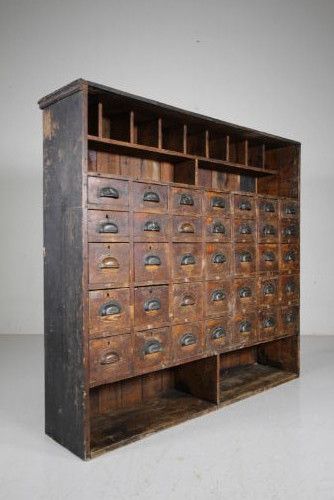
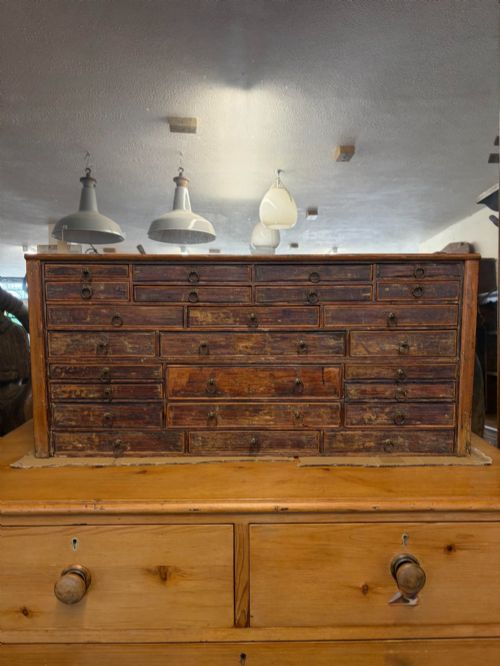
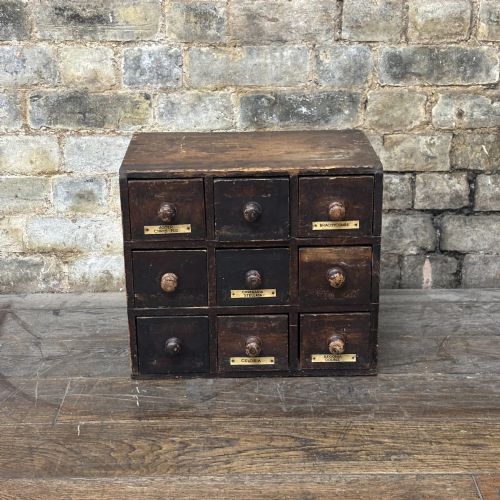
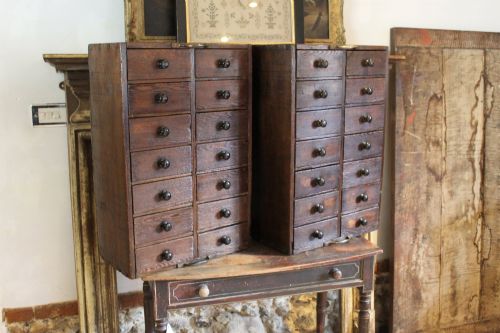


Dark Pine Apothecary Cabinet
These dark pine apothecary cabinet selections offer practical compartmentalised storage built from sturdy pine and oak, finished in dark or stained tones.
Dark Pine Apothecary Cabinet
When buyers search for a dark pine apothecary cabinet, they encounter multi-drawer storage pieces originating from the nineteenth century and the Edwardian era. These items include banks of drawers, spice boxes, and collectors cabinets designed for organising small goods.
The pieces on this page span Victorian and industrial styles, often utilising pine, stained deal, and oak. Such storage units serve well in modern interiors for organising small items while providing period character.
Most examples hail from English and French workshops, encompassing utility pieces from ironmongers, florists, and watchmakers. Their multiple small drawers offer functional storage tailored for collectors and domestic organisation.
How they were made
Joinery relies on solid pine, oak, and stained deal for the primary carcases and drawer boxes, ensuring robust daily use. Timber selection prioritised utility, leading to durable construction suited for commercial and domestic settings.
Hardware components incorporate brass and cast iron pull handles, knobs, and label holders fastened to each drawer front. These metal elements provide the functional grip necessary for frequently accessed storage banks.
Some drawers retain the ghosts of dried seeds and metal shavings from their past lives in florists and watchmakers' workshops.
What varies in quality
Construction depth separates utilitarian trade pieces from finer display items, visible in the dovetail joints and drawer thickness. Cabinets built for commercial ironmongers or watchmakers often exhibit tighter tolerances than domestic spice boxes.
Surface finishes range from original painted or stained patinas to stripped deal surfaces, impacting the visual weight of the piece. The retention of original brass hardware and maker stamps influences the historical integrity of the cabinet.
The Dark Pine Apothecary Cabinet Glossary
- Bank of Drawers
- A piece of furniture featuring numerous small drawers arranged in rows and columns, designed for trade or workshop storage. These units frequently served apothecaries, watchmakers, and ironmongers.
- Deal
- A historical term for fir or pine timber used extensively in British cabinet making. Stained deal provided an inexpensive alternative to hardwood while accepting dark finishes readily.
- Specimen Chest
- A small cabinet housing shallow drawers intended for geological, botanical, or entomological collections. They protect delicate items behind fitted doors or within tightly stacked drawer tiers.
- Spice Box
- A wall-hanging or small countertop wooden chest fitted with multiple miniature drawers for culinary herbs and spices. Nineteenth-century examples often combine oak and pine construction.
Dark Pine Apothecary Cabinet: Frequently Asked Questions
What were apothecary cabinets used for?
These cabinets stored medicinal herbs, powders, and ingredients dispensed by apothecaries and chemists. The numerous small drawers kept specific remedies separated and protected from light.
Over time, similar multi-drawer formats were adopted by ironmongers, watchmakers, and florists for sorting small trade inventory and seeds.
How do I date a pine cabinet?
Dating relies on construction methods, timber preparation, and associated hardware styles found across the piece. Nineteenth-century examples often feature hand-cut dovetails and iron or brass pulls suited to trade use.
Later Edwardian pieces display standardised machine-cut joints and distinct aesthetic finishes associated with the turn of the twentieth century.
Are these cabinets made of solid pine?
Construction primarily utilises solid pine, oak, and stained deal for both the exterior carcase and drawer interiors. Secondary timbers may appear on drawer bases or internal dividers depending on the workshop origin.
Makers selected these softwoods and hardwoods for durability in commercial trade environments rather than purely decorative display.
How do I integrate one into a home?
Multi-drawer cabinets function effectively in kitchens, studies, or hallways for organising stationery, cutlery, or small household items. Placing them on countertops or mounting wall-hanging spice boxes preserves floor space while adding period utility.
The dark wood tones and brass hardware complement both traditional country interiors and industrial living spaces.