

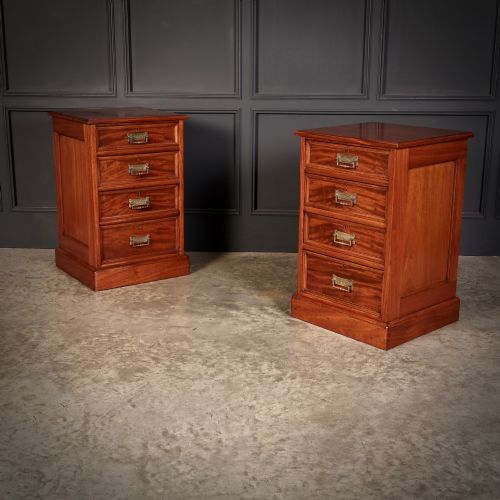
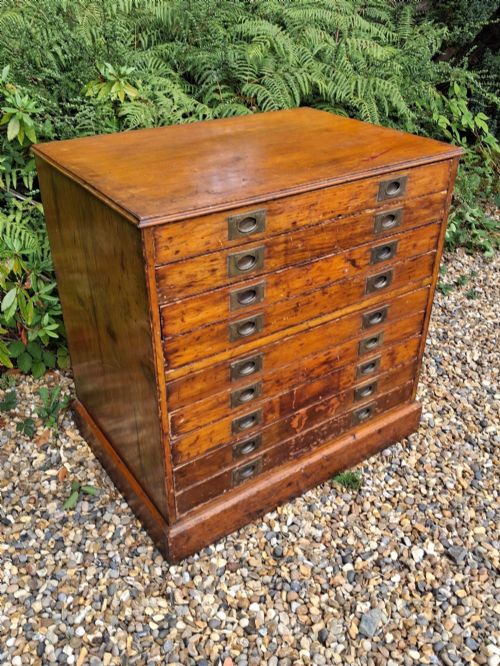
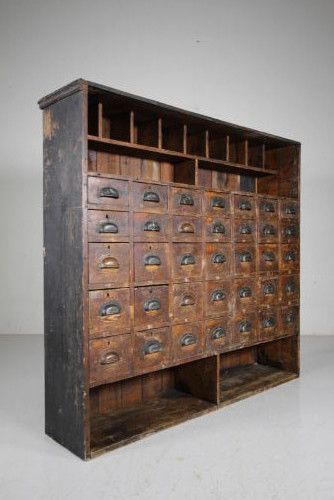
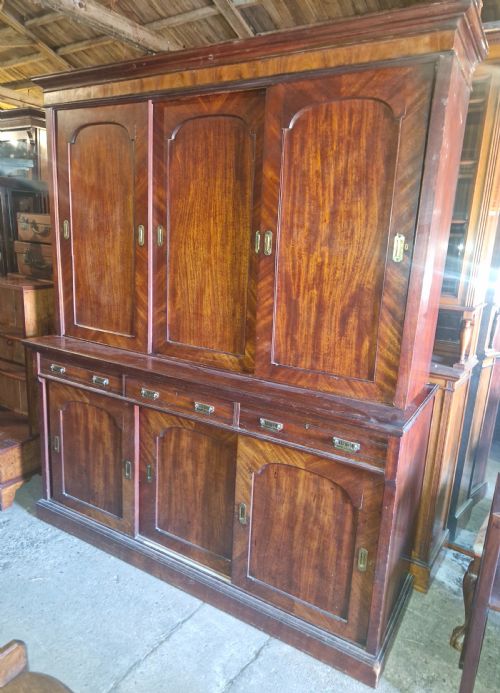


Large Filing Cabinet
These large filing cabinet pieces offer substantial storage through banks of drawers and plan chests built in mahogany, oak, and pine.
Large Filing Cabinet
A large filing cabinet typically takes the form of a bank of drawers, a plan chest, or an office cabinet designed for heavy workspace storage. These substantial pieces originate from periods spanning the eighteenth century through to the mid-twentieth century.
The versions most commonly met on this page include Victorian mahogany country house estate office cabinets, 1920s workshop banks of drawers, and turn-of-the-century oak plan chests. Such items served practical roles in offices, pharmacies, and workshops before finding a place in domestic interiors.
Buyers encounter a variety of regional styles, from Georgian mahogany styles to Belle Epoque and industrial utility pieces. Each form reflects the specific filing and storage requirements of its working past, whether housing architectural plans or pharmacist sundries.
How they were made
Cabinet makers utilised dense timbers such as mahogany, oak, walnut, and pine to construct carcases capable of withstanding heavy daily use. Hardwood fronts and drawer liners were frequently paired with secondary softwoods to manage the immense weight of the contents.
Functional hardware played a primary role in construction, incorporating brass pulls, cast iron handles, and steel fittings that secured dozens of individual drawers. Joinery methods prioritized durability and load-bearing strength over decorative flourish.
Large Filing Cabinet Retail Price Guide 2026
Typical asking prices for large filing cabinet among the pieces listed under this phrase on Sellingantiques today, from the lower quarter to the upper quarter. They describe what is for sale here now, not the wider market.
Listings feature oak, mahogany, pine, and walnut across styles spanning the eighteenth century to the mid-twentieth century.
What varies in quality
The distinction between a standard utility piece and a superior example lies in the choice of primary timber and the complexity of the internal drawer configuration. Pieces featuring extensive banks of drawers, such as pharmacy or office cabinets with numerous compartments, demand greater precision in joinery.
Original hardware, including brass and cast iron handles, significantly influences the integrity of a piece. The presence of matching period mounts and sound structural timber elevates the standing of an item within its particular style category.
The Large Filing Cabinet Glossary
- Bank of drawers
- A large piece of furniture comprising multiple tiers of small drawers originally used in workshops, offices, or shops. They provide exceptional storage capacity for smaller items.
- Plan chest
- A wide, shallow set of drawers designed specifically for storing architectural plans, maps, and large sheets of paper. They are typically constructed from oak or mahogany.
- Haberdashers cabinet
- A multi-drawer storage unit featuring glazed or solid fronts, traditionally used in textile shops to display and store stock. These pieces are prized for their numerous glass-fronted or wooden compartments.
- Estate office cabinet
- A heavy storage piece originating from large country houses, utilised for managing estate paperwork and records. They are commonly executed in mahogany and oak.
- Industrial utility
- A design classification reflecting the robust, unadorned aesthetic of early twentieth-century workplaces. These items prioritize function over ornament.
Large Filing Cabinet: Frequently Asked Questions
What is a large filing cabinet used for today?
These large filing cabinet pieces serve as practical storage units in modern homes, functioning as kitchen islands, hallway consoles, or studio organisers. Their numerous drawers accommodate paperwork, craft materials, and household items with ease.
The sturdy construction of oak, mahogany, and pine allows them to handle contemporary demands just as effectively as their original commercial roles. Buyers often place them in studies or living spaces to anchor a room with substantial period character.
What materials were used to build these cabinets?
Cabinet makers relied primarily on hardwoods like mahogany, oak, and walnut for the exterior facades and drawer construction of higher-end pieces. Pine and other sturdy softwoods were frequently utilised for internal carcases and backing boards.
Hardware elements incorporated brass, cast iron, and steel to reinforce the heavy usage these commercial cabinets endured. This combination of dense timber and robust metal fittings ensures the continued longevity of the furniture.
How do I identify the period of a large filing cabinet?
Dating relies on examining the timber species, drawer construction techniques, and the style of the hardware handles. Eighteenth and nineteenth-century pieces often display hand-cut dovetails in mahogany or oak, whereas 1920s and 1930s industrial examples incorporate steel, cast iron, and machine-cut elements.
Stylistic cues, such as Georgian proportions or Belle Epoque details, further narrow down the decade of manufacture. Comparing the specific configuration of the drawers to known eras of office and workshop design provides a reliable timeline.