


Dark Oak Upholstered Chairs
Dark oak upholstered chairs bring dense timber frames and tactile coverings together, offering grounded character and sturdy seats for any room.
Dark Oak Upholstered Chairs
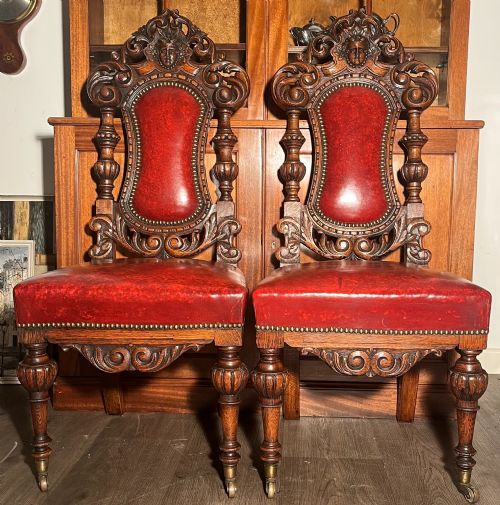
Buyers frequently encounter nineteenth-century revival pieces alongside Edwardian and early twentieth-century examples on this page. Styles span Victorian Gothic Revival, Jacobean, Arts and Crafts, and Baroque influences, reflecting enduring revivals of earlier vernacular and formal designs.
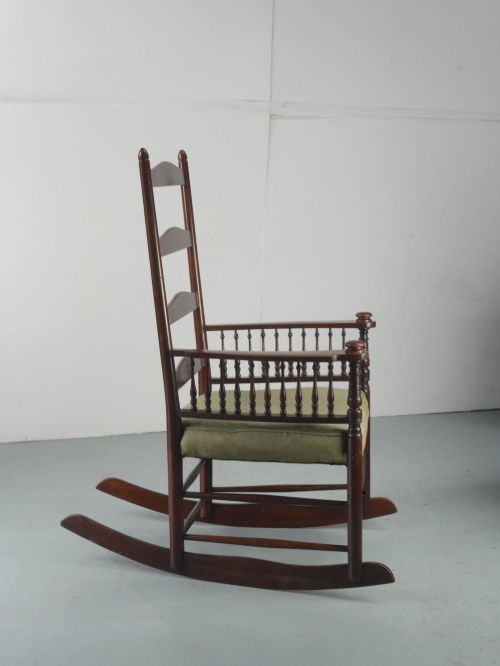
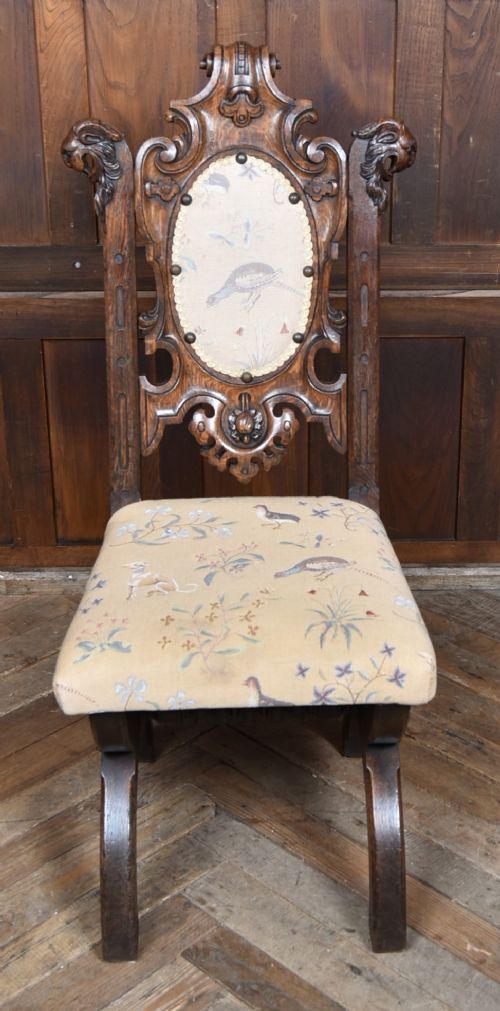
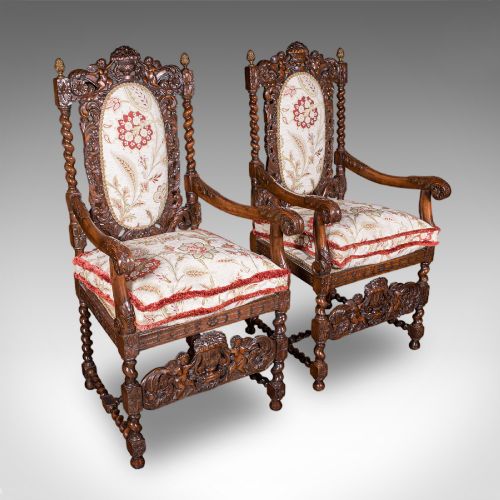
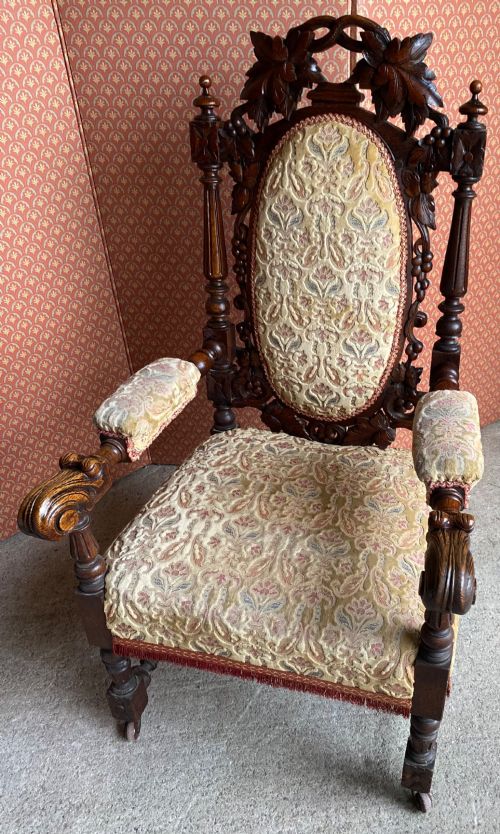
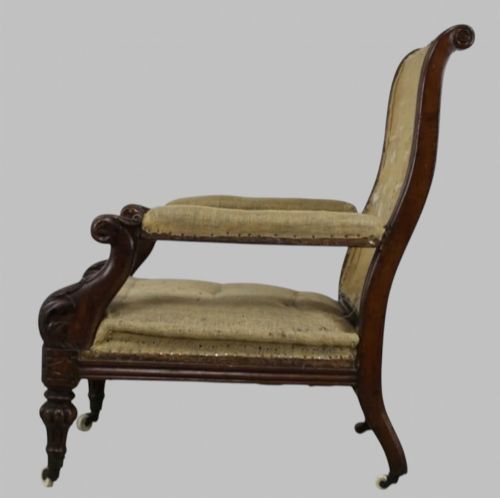
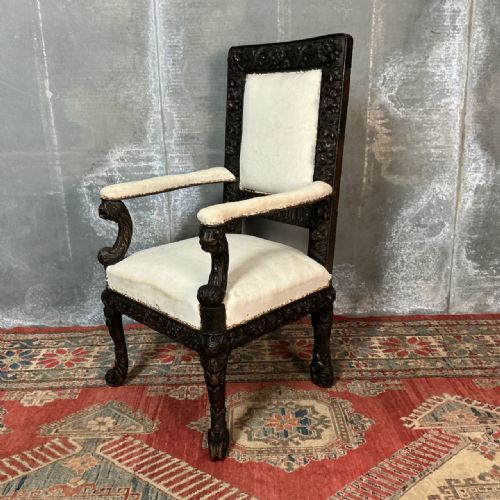
Forms range from simple side chairs and tall-backed hall seats to heavy baronial armchairs and rocking chairs. Oak frames provide the structural foundation, while leather, velvet, fabric, or brass details complete the seating surface.
Assessing craftsmanship and condition
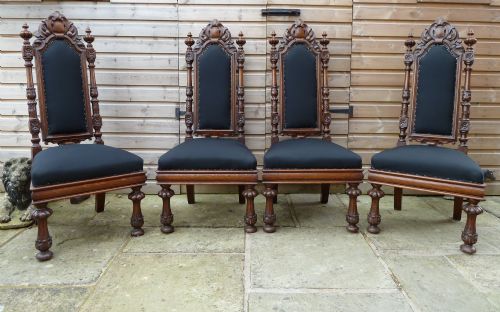
Quality reveals itself in the depth of the timber carving and the integrity of the frame construction. Heavy baronial armchairs and matched dining sets show finer hand-tooled details and more substantial timber thickness than simpler vernacular pieces.
The standard of upholstery and the retention of original or sympathetic coverings influence the character of each piece. Frames with tight joints and crisp surface patination stand apart from those with loose construction or heavy alterations.
Dark Oak Upholstered Chairs Retail Price Guide 2026
Typical asking prices for dark oak upholstered chairs among the pieces listed under this phrase on Sellingantiques today, from the lower quarter to the upper quarter. They describe what is for sale here now, not the wider market.
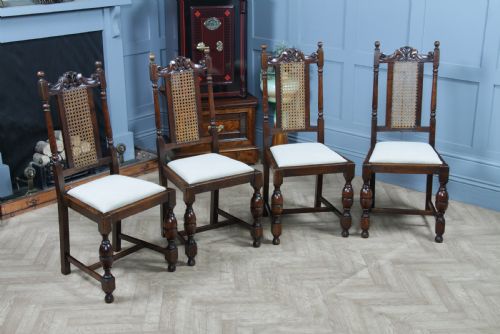
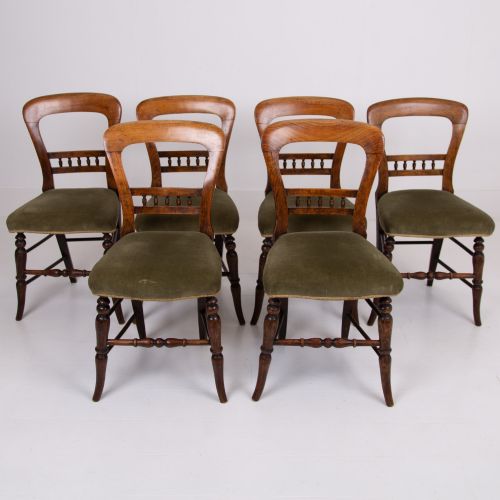
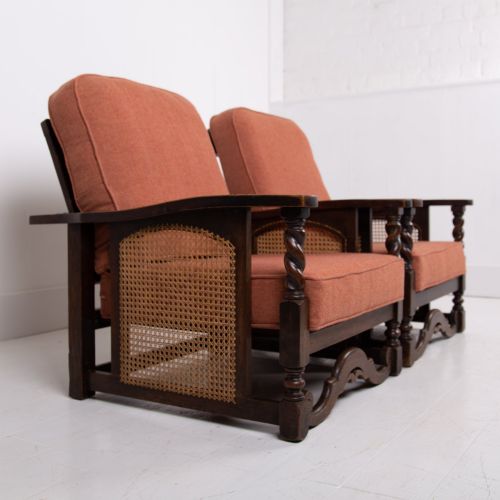
Listings feature oak combined with leather, velvet, and cane, spanning centuries of craftsmanship from the 1700s through the Edwardian era.
Liberty's·Liberty & Co
The Dark Oak Upholstered Chairs Glossary
- Barley twist
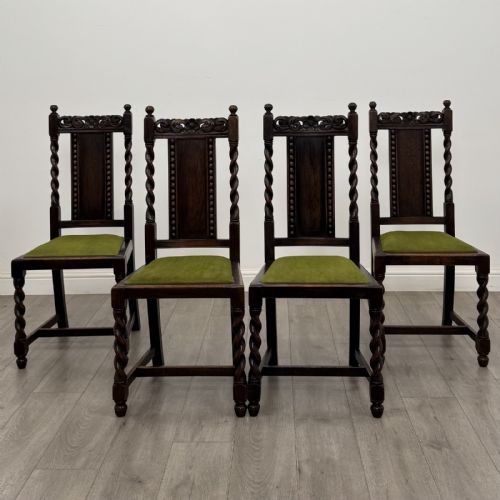
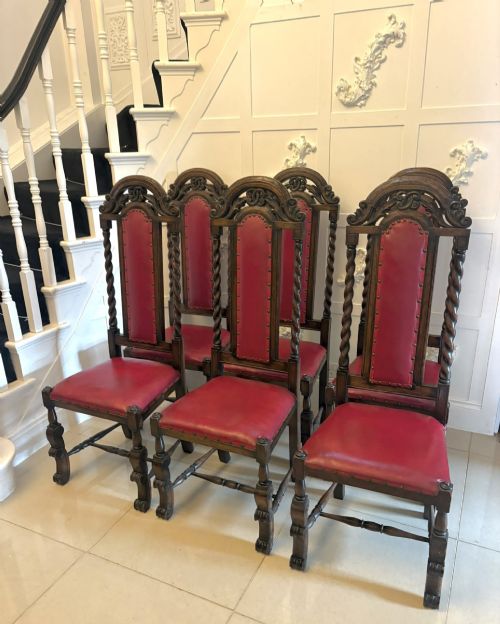
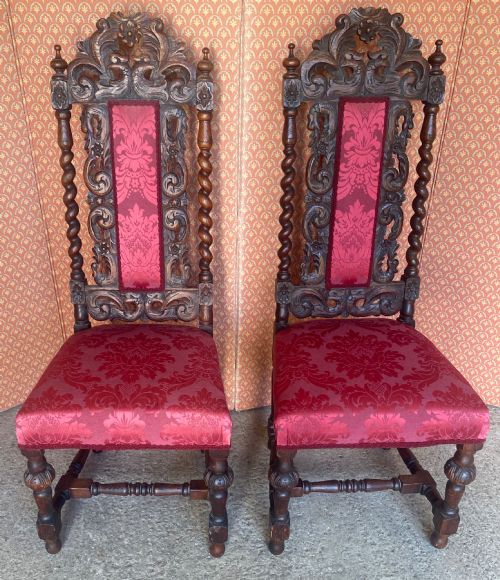
- A woodworking technique featuring a spiral turning resembling a twisted barley stalk. It appears frequently on the legs and stretchers of Victorian and Edwardian dining chairs.
- Jacobean Revival
- A nineteenth and twentieth-century design style emulating the heavy, rectilinear furniture of the early seventeenth century. These pieces typically feature deep carving and dark finishes.
- Carver
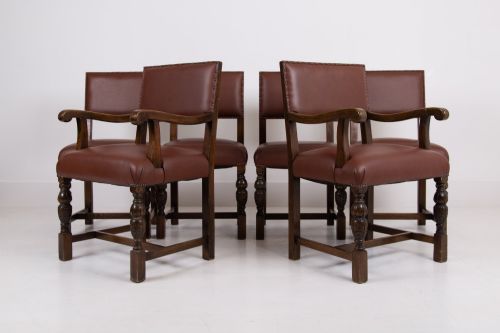
- An armchair designed with elbow rests, often produced as part of a larger set of dining chairs for the heads of the table.
- Cane back
- A chair back woven from split rattan or cane strips. This method provides a lighter visual element against dark wooden frames.
- Fauteuil
- An open-framed armchair with upholstered armrests and seat. Originating in France, these pieces feature exposed wooden frames and padded components.
Dark Oak Upholstered Chairs: Frequently Asked Questions
How do I date dark oak chairs?
Dating relies on observing construction marks, joinery methods, and stylistic cues such as turning styles and carved motifs. Victorian and Edwardian revivals often incorporate earlier seventeenth-century design elements while retaining nineteenth-century production techniques.
Examining the underside of the seat, the type of screws or nails used, and the wear patterns on the timber provides further clues to age.
Are these chairs suitable for daily dining?
Most dining chairs and sets listed are built from durable hardwood designed for regular seating use. Checking the structural stability of the joints ensures the piece handles daily activity safely.
Adding appropriate floor protectors helps prevent wear on the feet of heavier armchairs and side chairs during everyday movement.
What is the difference between hall chairs and dining chairs?
Hall chairs are typically stiffer, upright, and heavily carved, designed to stand along a hallway for occasional use rather than long periods of sitting. Dining chairs focus on seated comfort with padded backs and upholstered seats.
Dining chairs usually appear in matched sets, whereas hall chairs often occur as single items or pairs.
How should I care for dark oak and leather?
Maintaining dark oak involves dusting with a dry cloth and occasionally applying traditional wax to nourish the timber. Leather upholstery benefits from gentle cleaning and leather conditioners to prevent cracking.
Keeping these materials away from direct heat sources and strong sunlight preserves the finish and prevents the wood from drying out.