
Dark Oak Storage Sideboard
These dark oak storage sideboards bring deep timber tones and centuries of utility into modern rooms.
Dark Oak Storage Sideboard
A dark oak storage sideboard encompasses sturdy timber furniture built for holding household items, spanning centuries from the seventeenth up through the twentieth. Buyers hunting this phrase will find a heavy concentration of Edwardian revivals, alongside earlier Georgian, Victorian, and eighteenth-century country pieces.
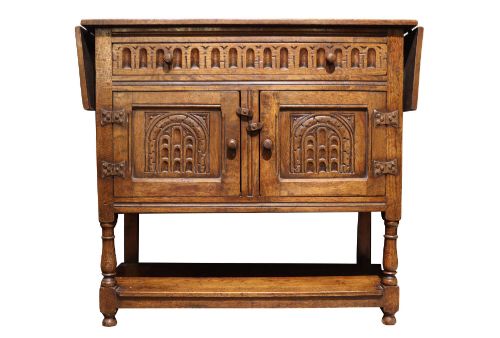
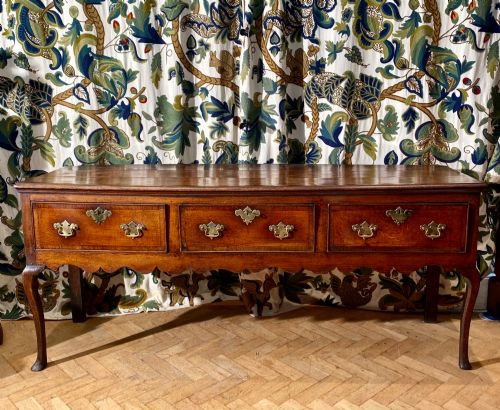
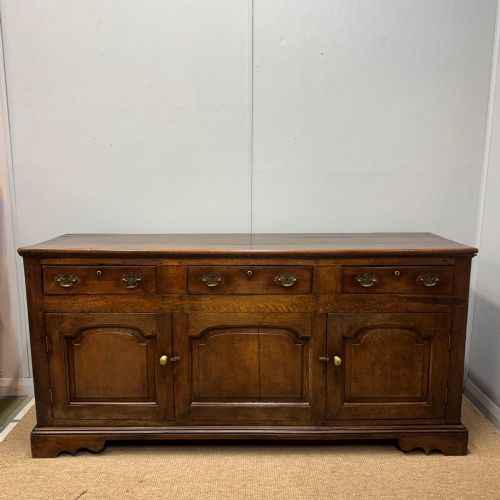
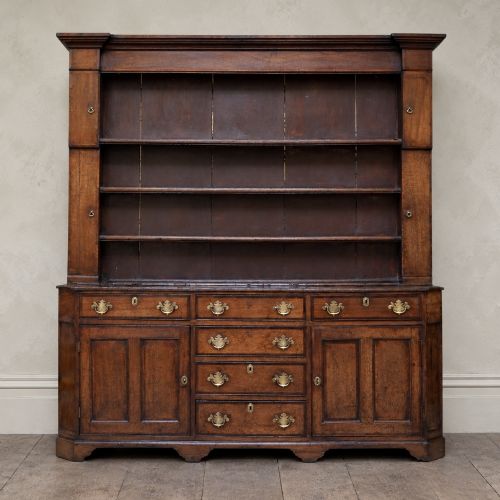
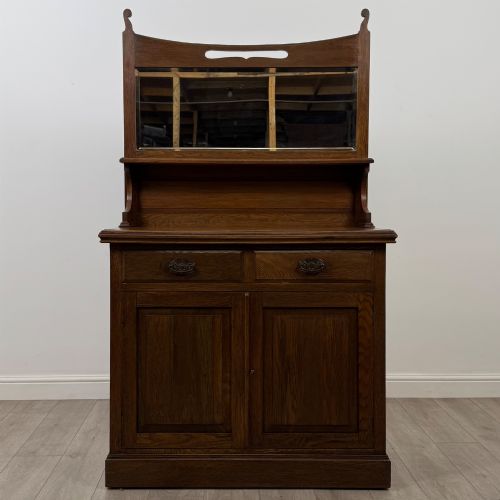
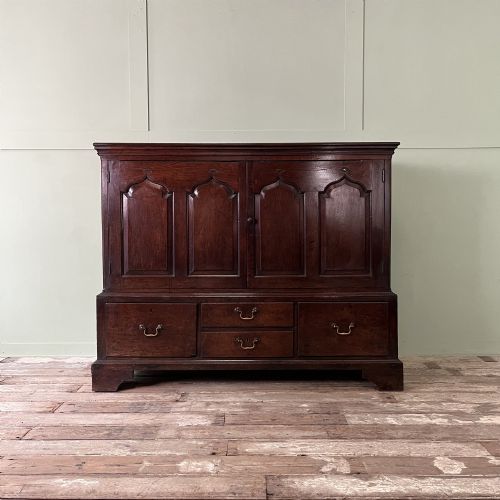
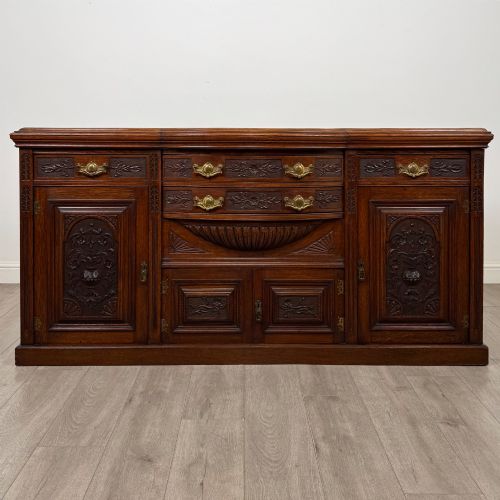
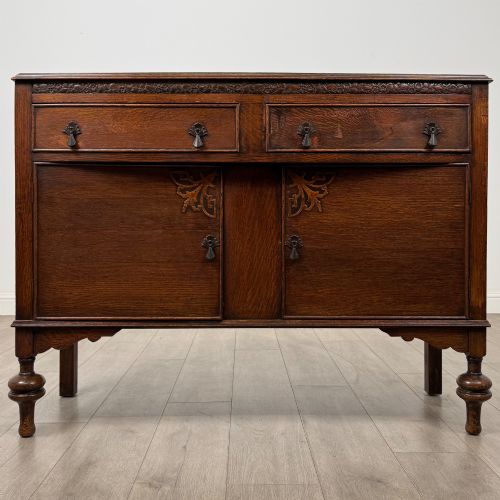
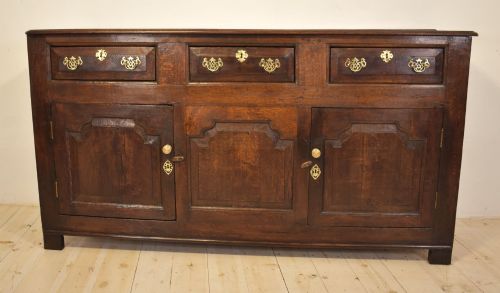
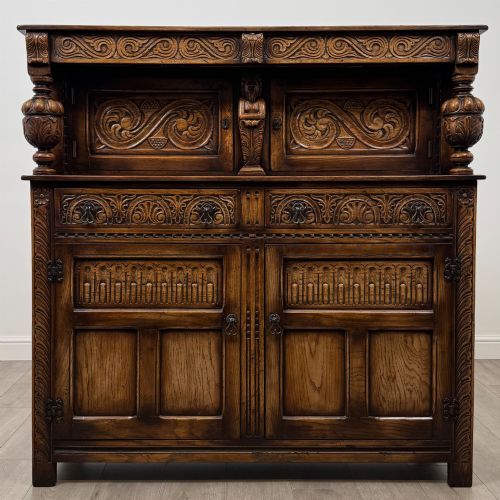
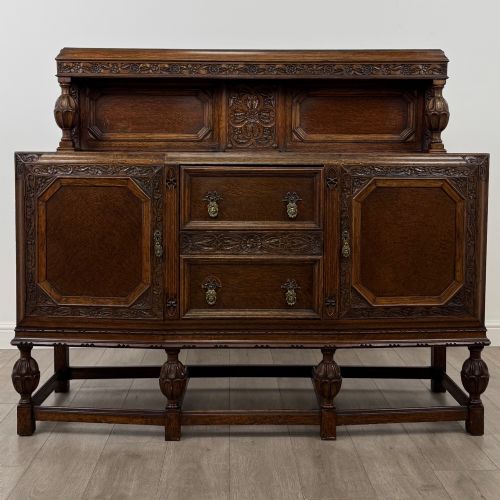
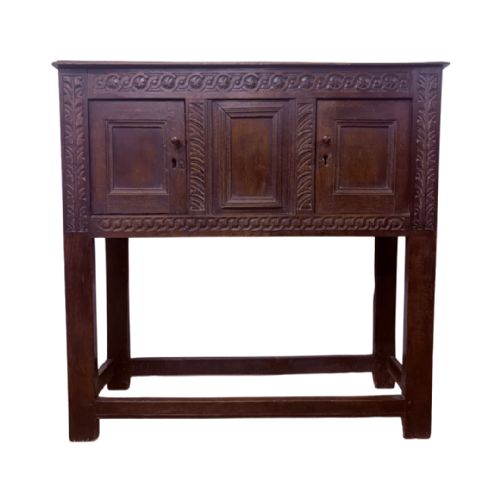
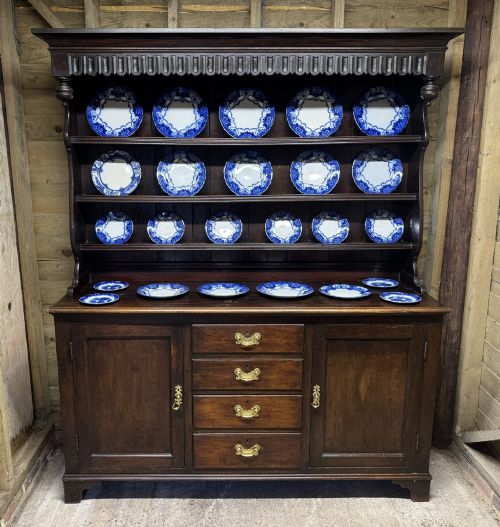
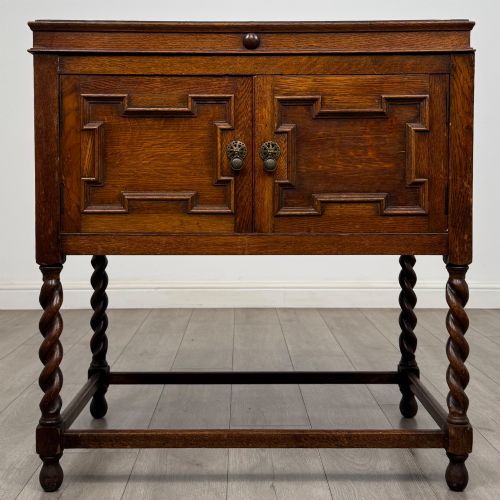
The forms vary widely across the inventory, ranging from low dresser bases and court cupboards to linen presses, Welsh dressers with plate racks, and breakfront sideboards. Most examples rely on solid timber construction designed to anchor a dining room, hallway, or kitchen with functional surface space and enclosed shelving.
How they were made
Cabinet makers relied primarily on solid oak, frequently paired with brass or iron hardware such as drop handles, hinges, and escutcheons. Secondary woods like pine and mahogany appear in internal linings or structural supports, while occasional pieces incorporate glass panels or leadwork.
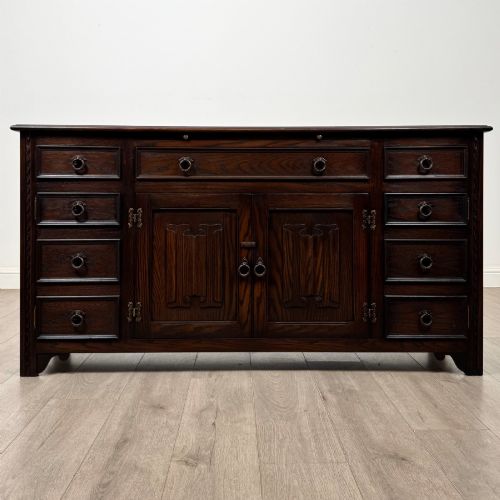
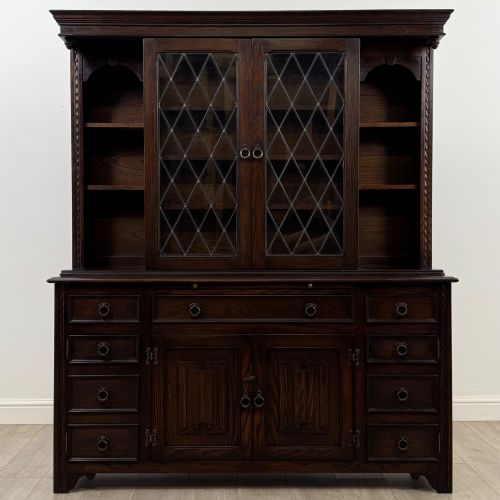
Construction techniques span traditional joined frameworks, pegged mortise and tenon joints in earlier centuries, and later revival framing. Surfaces often display hand carving, linenfold panelling, or Gothic elements executed directly into the dense timber.
Several centuries of anonymous family meals live on inside these cupboards, preserved quietly beneath layers of dark beeswax and old oak grain.
What varies in quality
Quality reveals itself in the choice of timber and the crispness of the hand carving rather than surface finish alone. Earlier joined pieces from the seventeenth and eighteenth centuries command attention for their honest structural integrity and authentic period fixings.
The execution of revival styles, whether Jacobean, Gothic, or Tudor, dictates the relative standing of later Edwardian and twentieth-century examples. Heavier gauge oak and well-proportioned breakfront layouts distinguish the finer utility builds from simpler vernacular chests.
The Dark Oak Storage Sideboard Glossary
- Court cupboard
- A traditional English enclosed piece of furniture featuring an upper section recessed behind pillars or brackets above a wider lower cabinet. These sturdy timber items date from the seventeenth century and later revival periods.
- Dresser base
- A low utilitarian table fitted with drawers across the front, sometimes featuring open potboards beneath. They served working kitchens and dining spaces alike before evolving into decorative living room storage.
- Linenfold
- A carved decorative motif imitating folded parchment or cloth, commonly seen on Tudor and Jacobean revival panels. Craftsmen carved this pattern directly into the timber surface to create rhythmic vertical texture.
- Breakfront
- A cabinet or sideboard design where the central section projects forward from the flanking outer wings. This configuration adds architectural depth and internal capacity to larger oak storage pieces.
- Joined oak
- Furniture constructed primarily through interlocking mortise and tenon joints secured with wooden pegs rather than metal nails. This traditional method defined seventeenth-century cabinet making before mass industrial production.
Dark Oak Storage Sideboard: Frequently Asked Questions
How do I spot an eighteenth-century dresser base?
Eighteenth-century dresser bases typically show honest hand construction using joined oak timbers, hand-cut dovetails within the drawers, and period iron or brass drop handles. The timber develops a deep, rich patina over centuries of daily use.
These pieces were built for utility in country kitchens, featuring generous drawer space and sturdy top boards. Their proportions remain functional and unpretentious compared to later highly ornamented revival pieces.
Where should I place a dark oak sideboard?
Dark oak sideboards anchor dining rooms, large hallways, and living spaces by offering substantial surface areas alongside deep enclosed shelving. Their heavy timber tones pair naturally with neutral walls and stone floors.
Ensure you measure both floor space and clearance for opening cabinet doors or drawers. Keeping them out of direct sunlight preserves the rich natural finish of the antique oak.
What is the difference between Georgian and Edwardian oak furniture?
Georgian oak pieces date from the eighteenth century and were built primarily for active domestic utility, showing straightforward construction and honest wear. They rely on functional proportions and minimal surface decoration.
Edwardian oak furniture often revives earlier styles like Jacobean or Gothic Revival, incorporating heavier carved motifs, linenfold panels, and machine-assisted precision alongside solid timber. These later pieces interpret historic aesthetics for twentieth-century homes.