
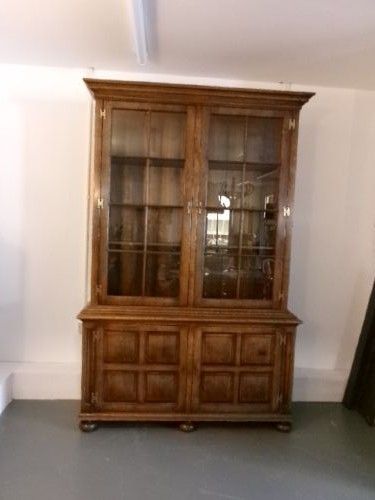
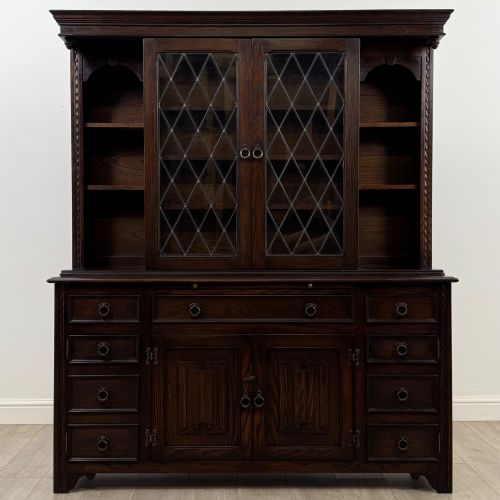
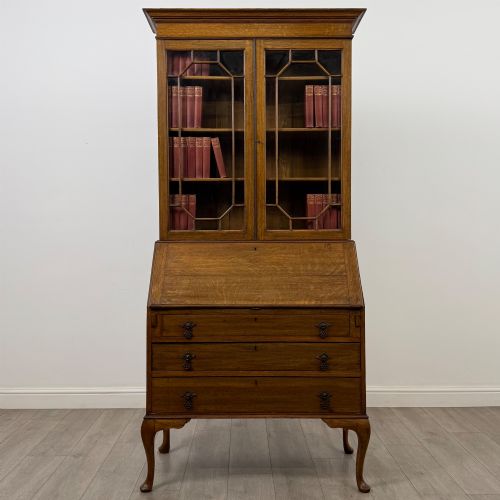

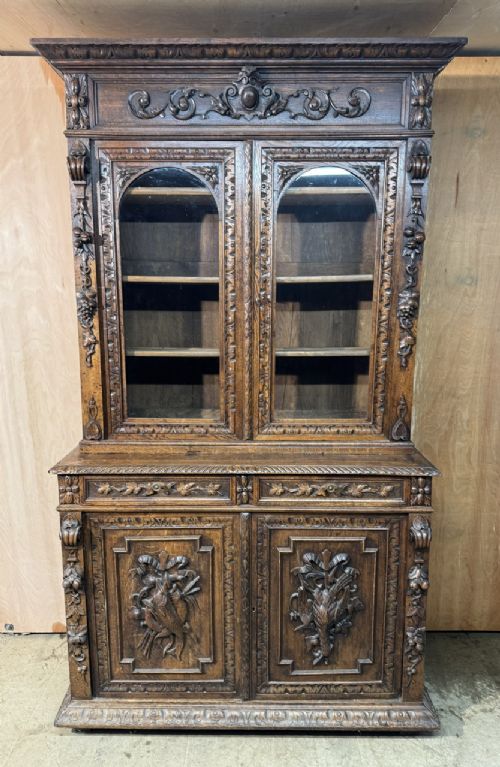
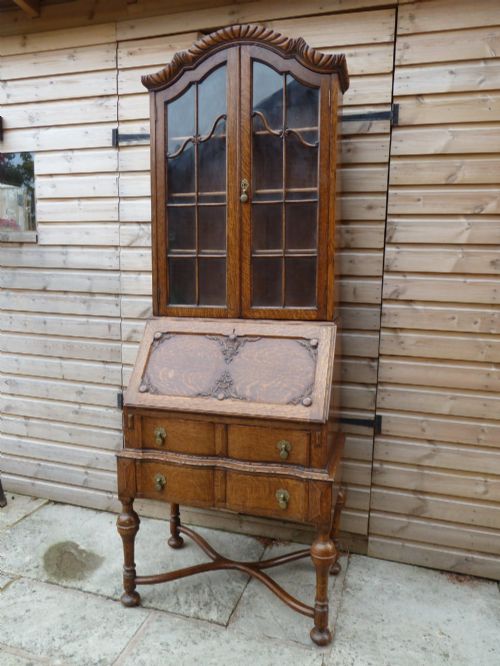
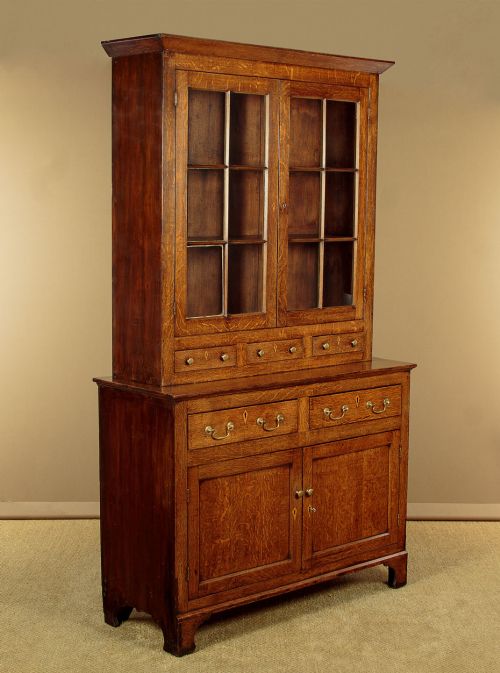


Glazed Top Oak Cabinet
A glazed top oak cabinet brings together solid timber and clear glass to show and protect books and objects.
Glazed Top Oak Cabinet
A glazed top oak cabinet combines a transparent upper display section with a sturdy lower storage base, appearing across periods from the eighteenth century to the twentieth century. These pieces serve primarily to house books, ceramics, and personal collections while keeping dust at bay.
Buyers meet diverse forms on this page, ranging from tall bureau bookcases and Welsh dressers to compact counter-top display cabinets and bedside pieces. Oak dominates the timber selection, frequently paired with glass, brass, and occasionally ceramic tiles or lead.
Styles span standard Edwardian and Victorian designs alongside revival movements like Jacobean, Tudor, Art Deco, and Arts and Crafts. Pieces originate from English, French, Welsh, and Dutch workshops, reflecting regional preferences in joinery and carving.
How they were made
Cabinet makers constructed these pieces primarily from solid oak, sometimes utilising lighter oak varieties, joined with traditional framing and panel techniques. Timber was selected for its grain pattern, providing structural strength to support heavy shelving and glazed doors.
Glass panes for the upper sections were secured using wooden glazing bars or lead came, while brass hardware such as hinges, handles, and drawer pulls provided functional detail. Certain pieces incorporate ceramic tiles or carved motifs into the framework, adding decorative contrast to the plain wood.
Materials recorded across the available pieces comprise oak, glass, brass, lead, metal, and ceramic tiles.
What varies in quality
The distinction between standard examples and finer items lies in the precision of the joinery and the selection of the timber. Superior pieces display carefully matched wood grains, well-fitted doors, and harmonious proportions between the glazed top and the base.
Decorative execution also separates pieces, with hand-carved details, quality brass fittings, and integrated design elements showing greater maker skill. Simpler utility pieces, such as school library or counter-top cabinets, prioritise robust daily function over ornamental refinement.
The Glazed Top Oak Cabinet Glossary
- Bureau bookcase
- A combination of a sloping desk front and a shelved upper bookcase enclosed by doors. This form allows both writing and storage within a single tall item.
- Cwpwrdd gwydr
- A traditional Welsh term for a glazed cupboard. These regional pieces often feature local craftsmanship and distinctive panel proportions.
- Counter-top cabinet
- A smaller glazed display unit designed to sit upon a shop counter or table. Merchants used them to showcase small goods to customers.
- Lead came
- A slim lead strip used to hold individual pieces of glass together in a window or door. This technique appears on specific cabinet door designs.
- Roll top
- A flexible slatted wooden tambour that slides across to cover a desk surface. It permits the user to conceal the writing area without moving papers.
Glazed Top Oak Cabinet: Frequently Asked Questions
What is a glazed top oak cabinet?
A glazed top oak cabinet is a storage furniture piece featuring a transparent upper section made of glass for display and a lower wooden base.
These cabinets appear in various forms, including tall bookcases, bureau combinations, and counter-top display units.
How do I date an oak cabinet?
Dating relies on observing stylistic details, construction methods, and materials associated with periods like the Victorian era, Edwardian period, or the 1920s.
Hardware styles, timber finishes, and regional building traditions also help narrow down the decade of manufacture.
Were these cabinets used in homes?
Many of these pieces served domestic purposes, housing libraries in living rooms or displaying ceramics in dining spaces.
Other variants, such as counter-top shop cabinets, were built specifically for commercial environments to exhibit small wares.
How should I care for oak furniture?
Oak furniture benefits from regular dusting with a soft cloth and occasional treatment with suitable natural waxes to maintain the timber.
Keeping pieces away from direct sunlight and sudden temperature changes protects both the wood and the glass framing.