


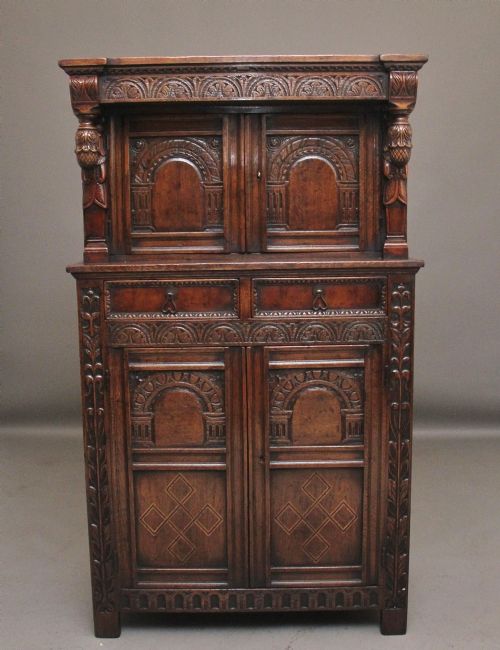


Tudor Revival Dresser
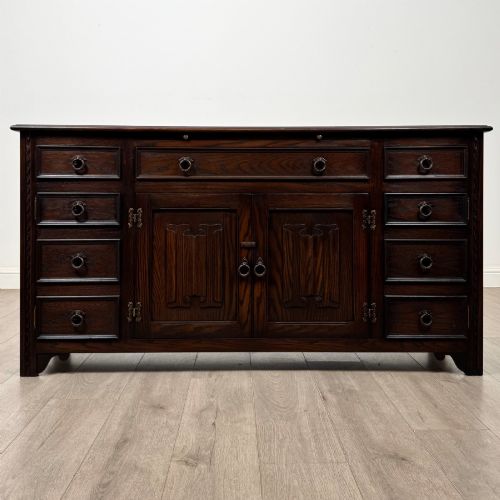
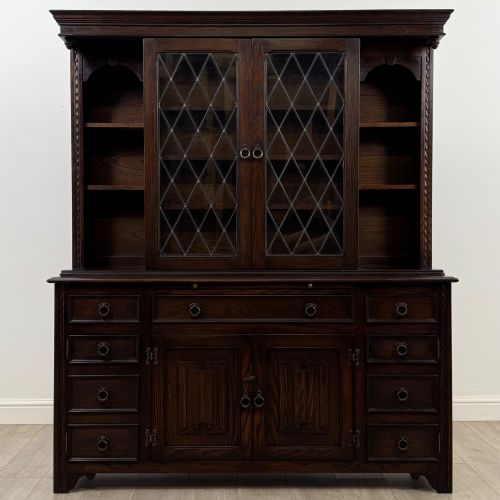
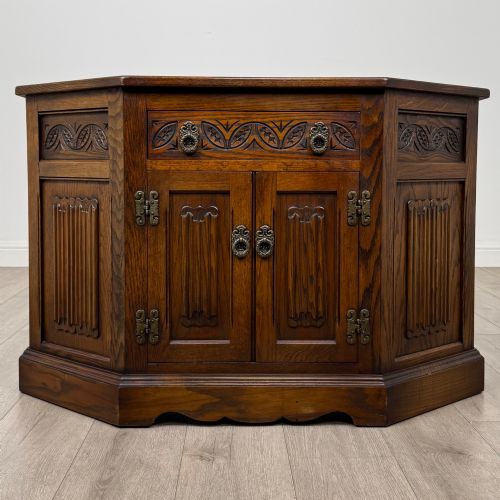
These pieces of tudor revival dresser bring robust architectural presence and dark wood grain into a room, offering both display space and deep storage.
Tudor Revival Dresser
A tudor revival dresser draws upon earlier centuries of British cabinet-making, bringing heavy timber forms and architectural detailing into domestic spaces. These pieces emerge across the mid-nineteenth century, the Edwardian era, and the interwar decades of nineteen-twenty and nineteen-thirty.
Buyers meet court cupboards, side cabinets, display cabinets, and linenfold chests of drawers within this category. The Edwardian period supplies several examples, alongside pieces dated to eighteen-fifty, eighteen-eighty, and nineteen-twenty.
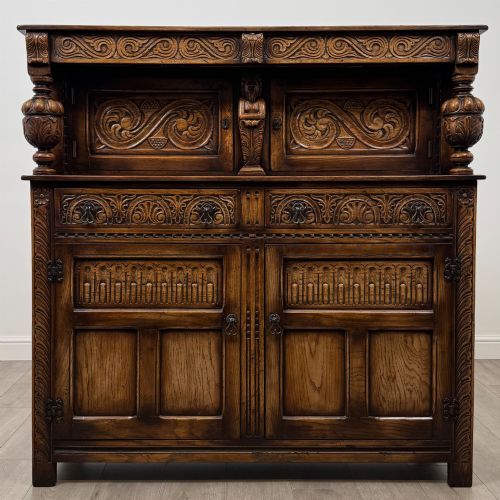
The dominant form is the court cupboard, which combines enclosed lower cabinetry with a recessed upper tier supported on turned columns. Sideboards, dressers, and tall cupboards also appear, offering varied storage formats for dining rooms and halls.
How they were made
Solid oak provides the primary structural timber across these items, often finished in rich golden tones or dark wax polishes. Joiners constructed the carcases using traditional framing methods to support heavy carved panels and projecting cornices.
Listings span the Edwardian period, eighteen-fifty, eighteen-eighty, nineteen-twenty, and nineteen-thirty, utilising solid oak alongside brass, iron, and glass.
What varies in quality
The depth and crispness of the carved ornamentation separate standard production from superior work. Crisp linenfold panels and deeply undercut foliage demonstrate the skill of the carver rather than mechanical replication.
The selection of solid oak timbers and the integrity of the joinery dictate the longevity of each piece. Heavier court cupboards rely on sturdy proportions and balanced cornices to hold their architectural weight.
The Tudor Revival Dresser Glossary
- Court cupboard
- A traditional enclosed piece of furniture featuring a recessed upper section supported by columns above a larger base. These items provide prominent storage and display surfaces.
- Linenfold
- A carved wooden panel motif resembling folded fabric or parchment. This decorative technique is frequently found on cabinet doors and drawer fronts from this tradition.
- Jacobean revival
- A nineteenth and twentieth century design style imitating seventeenth century British furniture forms. It relies on heavy proportions, geometric moulding, and turned woodwork.
- Escutcheon
- A protective plate surrounding a keyhole, usually fashioned from brass or iron. It serves both a functional purpose and a decorative role on cupboard doors.
Tudor Revival Dresser: Frequently Asked Questions
What is a tudor revival dresser?
A tudor revival dresser is a heavy oak storage piece inspired by historic British furniture forms. These items were produced from the Victorian era through the nineteen-thirties.
They combine practical shelving and cupboards with traditional architectural carving, linenfold panels, and turned wooden supports.
How do I date a court cupboard?
Dating relies on examining the timber preparation, the style of the hardware, and the specific revival movement reflected in the carving. Edwardian and interwar pieces often show lighter golden oak finishes.
Earlier examples from eighteen-eighty or eighteen-fifty display heavier patination and hand-tooled joinery marks developed over decades of use.
Where were these cupboards used?
These cabinets served primarily in dining rooms, grand hallways, and reception spaces to store tableware and display prized household goods. The upper tiers held ceramics whilst enclosed lower cupboards concealed linens.
Today they function effectively as standalone storage units in living spaces and kitchens requiring substantial character.
What wood was used?
Solid oak forms the foundation of nearly every piece in this category, valued for its strength and prominent grain pattern. Metal fittings in brass and iron provide structural support and operational hardware.
Glass panels appear in specific display cabinet variants to protect fragile contents while keeping them visible.