



Dark Oak Step Stool
These dark oak step stool pieces combine domestic seating with practical climbing height, offering sturdy utility and rich nineteenth-century character for the home.
Dark Oak Step Stool
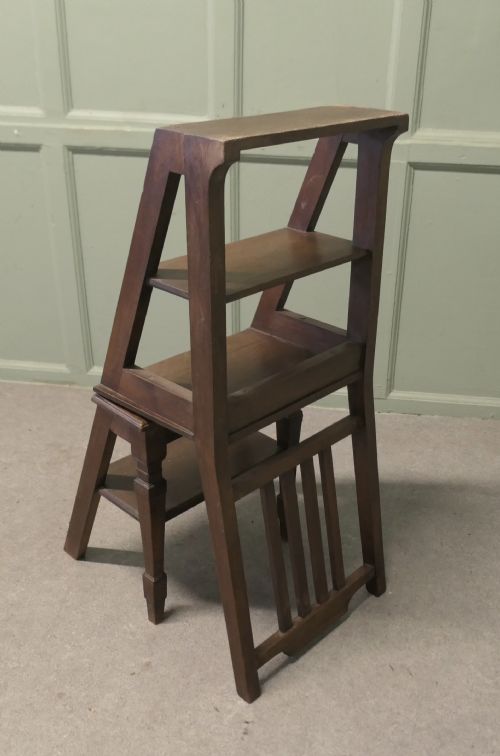
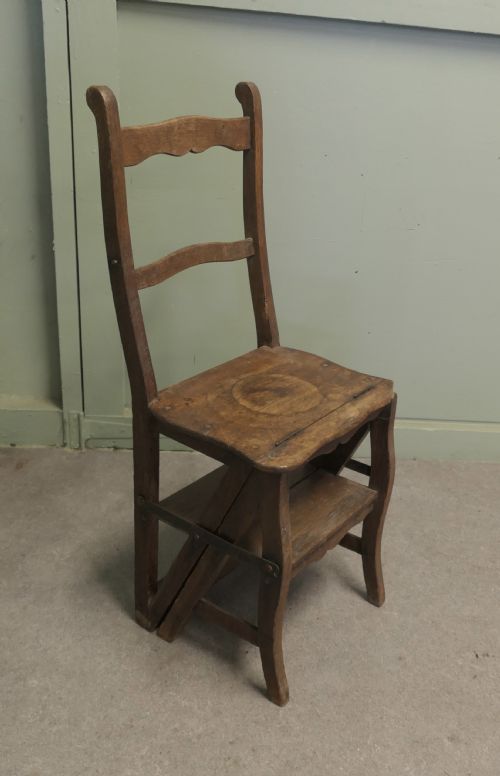
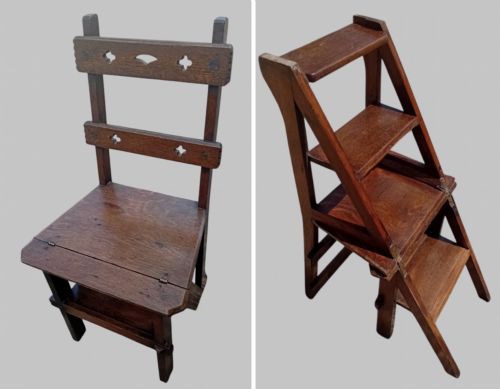
When you search for a dark oak step stool, you encounter robust functional timber furniture designed for reaching high shelves and domestic tasks. These pieces often serve dual purposes, transitioning between a simple seat and a functional set of stairs.
The versions most commonly found here date from the nineteenth century, including Edwardian examples, 1890 pieces, and 1880 creations. They take forms such as library steps, metamorphic chairs, and country stools.
Stylistic influences span Gothic Revival, Arts and Crafts, Victorian Gothic Revival, and French Country traditions. They reflect utilitarian origins combined with considered craftsmanship suited to libraries and homes.
What varies in quality
The distinction between standard utility items and finer examples lies in the ambition of the design, such as Pugin-influenced Gothic detailing or sophisticated metamorphic mechanisms. Finer pieces demonstrate careful proportion and integrated movement.
Timber selection and surface patination also divide the range, with dense oak grains and untouched historical finishes commanding greater interest. Simpler country stools rely on honest construction rather than ornamental flourishes.
Listings feature items spanning the nineteenth century, including Edwardian examples, 1890 pieces, and 1880 designs.
The Dark Oak Step Stool Glossary
- Metamorphic
- Furniture designed to transform from one object into another, such as a chair that unfolds into library steps. This clever dual-purpose engineering was particularly popular in nineteenth-century domestic and library settings.
- Gothic Revival
- An architectural and decorative style drawing on medieval forms, featuring pointed arches, heavy timbers, and religious motifs. In these listings, it appears through architectural framing and solemn dark wood.
- Arts and Crafts
- A design movement valuing traditional craftsmanship, simple forms, and visible construction methods over mass production. Pieces from this tradition display honest joinery and practical utility.
- Library Steps
- Freestanding stair structures created to access high bookshelves in domestic or institutional libraries. They range from simple sets of stairs to folding ladder combinations.
Dark Oak Step Stool: Frequently Asked Questions
What is a metamorphic library chair?
A metamorphic library chair is a piece of dual-purpose furniture that pivots or folds from a standard seat into a functional set of steps. This ingenious design allowed owners to reach high bookshelves without keeping separate ladders in the room.
Such items were widely used in nineteenth-century homes and libraries where space efficiency and practicality mattered. They combined comfortable seating with robust climbing ability.
How do I date a dark oak step stool?
Dating these pieces relies on examining the construction methods, hardware materials like brass or iron, and stylistic indicators such as Gothic Revival or Arts and Crafts motifs. Nineteenth-century examples often feature solid oak framing combined with secondary timbers like elm and beech.
Makers working in the 1880s and Edwardian periods utilised specific mechanical pivots and turning styles that help place the object in time. Comparing the joinery against known period pieces clarifies the decade of origin.
Are these steps strong enough for daily use?
Most pieces were originally built for practical domestic or library work, utilising solid oak and sturdy hardwood to bear weight reliably. Their construction is inherently functional, designed to support an adult climbing to high shelves.
However, the age of the timber and the condition of any pivoting joints mean that modern users often test metamorphic mechanisms gently. Regular maintenance of iron and brass fittings keeps the structure secure.
Where were these pieces used originally?
They found their places primarily in domestic libraries, studies, and grand sitting rooms where high bookshelves required physical access. Country homes also utilised simpler stools for everyday household reach and seating tasks.
The dual nature of a stool or chair combined with steps made them ideal for rooms where a bulky ladder would look out of place. They offered ready assistance while maintaining a dignified appearance.