
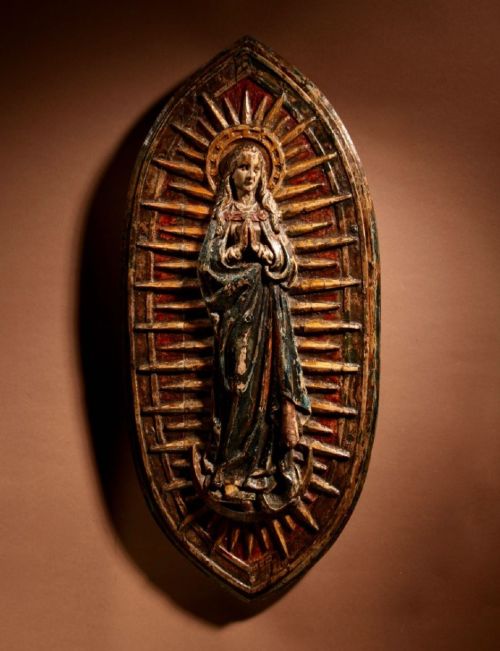
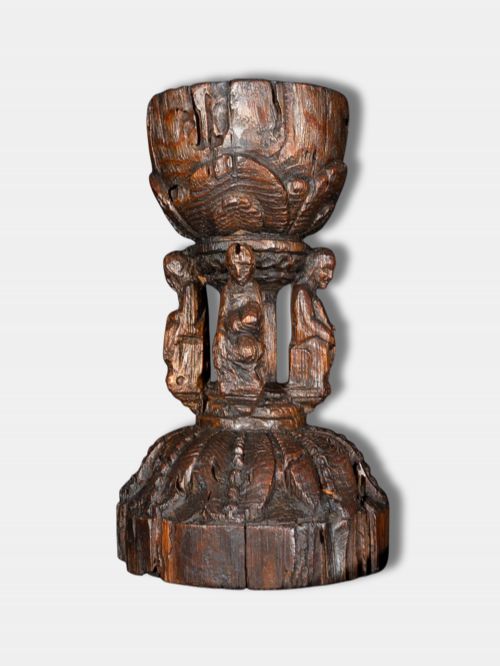
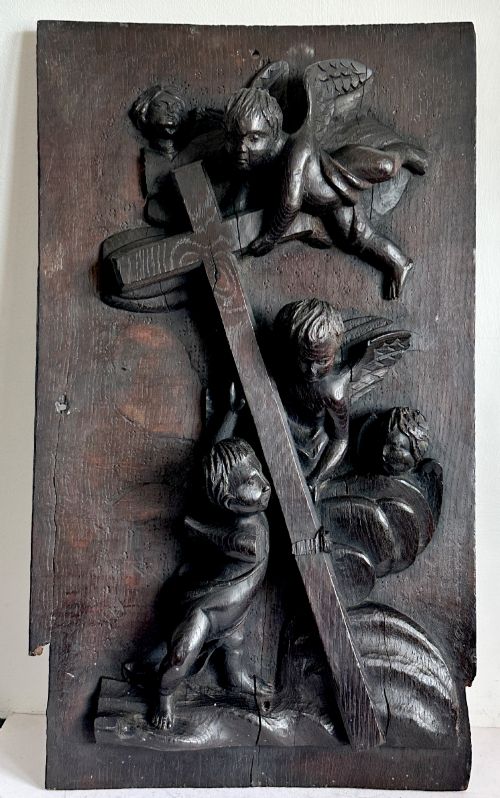

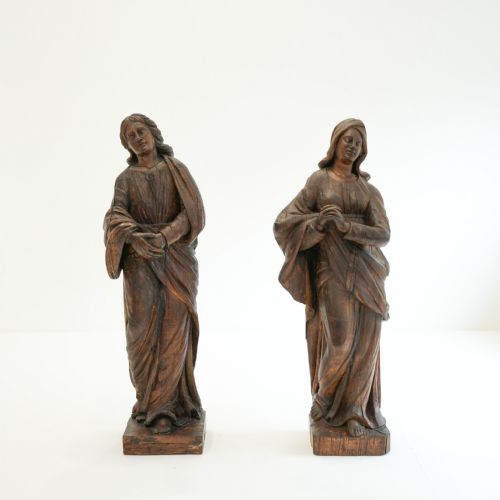


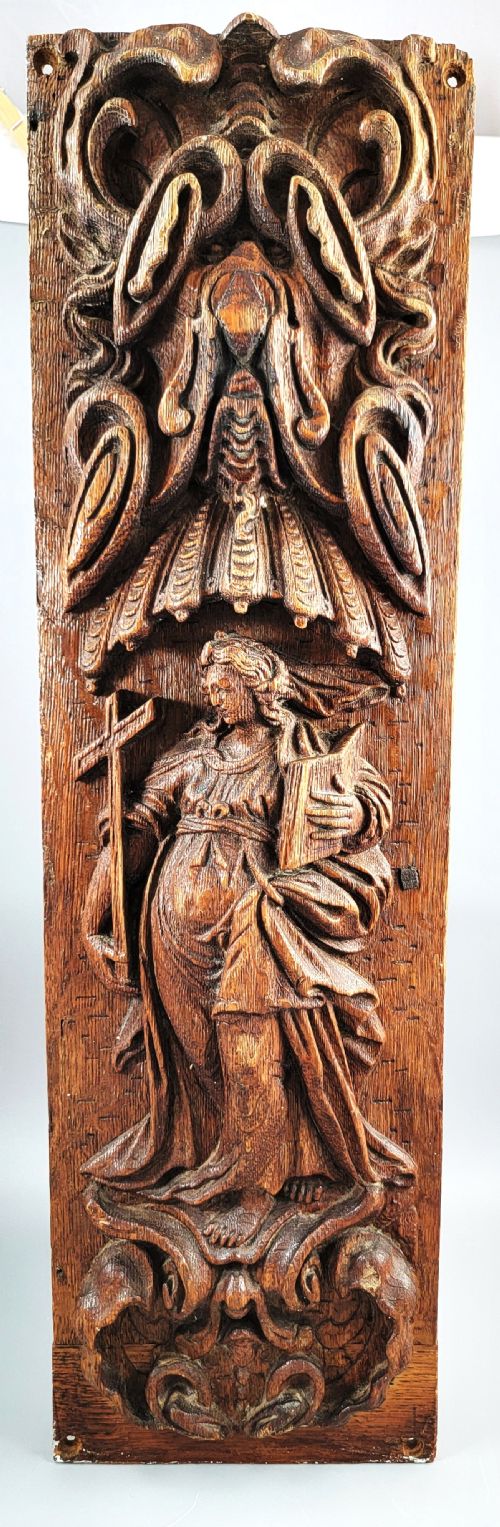


Dark Oak Religious Sculpture
Dark oak religious sculpture encompasses centuries of devotional art, spanning medieval saints to baroque panels carved from durable timber.
Dark Oak Religious Sculpture
Dark oak religious sculpture includes figures of saints, panels depicting biblical scenes, and architectural elements originating from churches and private altarpieces. When exploring dark oak religious sculpture, buyers encounter works ranging from pre-sixteenth century Gothic carvings to later revival pieces.
How they were made
Carvers shaped these objects primarily from oak and other hardwoods, utilising hand chisels and gouges to build deep relief and three-dimensional form. Certain surfaces received supplementary layers of gesso, polychrome paint, or gilding to enhance visual drama.
The working of the timber relies on traditional joinery and carving techniques appropriate to periods spanning the medieval era through the baroque. Grain direction and timber density dictated the depth of undercut details in figures and panels.
Among the celestial choir of figures, a solitary stone-carver's model of Ely Cathedral stands quietly beside the saints.
What varies in quality
Quality rests upon the sculptural depth and anatomical expression achieved by the carver, separating rigid folk interpretations from masterworks of the Gothic or baroque eras. The sensitivity of the drapery folds and the preservation of original surface treatments dictate the standing of a piece.
Proportion and the handling of the timber grain influence the overall impact, alongside the clarity of regional style indicators.
The Dark Oak Religious Sculpture Glossary
- Polychrome
- Painted decoration applied to wood sculpture. This technique brought realistic colour to saints and biblical figures.
- Gesso
- A plaster mixture applied to wood surfaces as a preparation for paint or gilding. It provides a smooth ground for fine detail.
- Pieta
- A representation of the Virgin Mary holding the dead body of Christ. This subject appears frequently in medieval devotional art.
- Relief
- Sculpture carved from a flat background panel rather than rendered in the round. High relief projects boldly from the surface.
Dark Oak Religious Sculpture: Frequently Asked Questions
How do I date an oak religious carving?
Dating relies on stylistic clues, tool marks left by the carver, and the evolution of period aesthetics from Gothic to baroque.
Examining the construction methods and the wear on the timber provides further context for the age of the sculpture.
Were these sculptures kept in homes?
While many originated in churches, altarpieces, and monastic settings, smaller figures and panels served private devotion.
Wealthy patrons commissioned devotional pieces for domestic chapels and private reflection.
How should I care for dark oak sculpture?
Keep wooden sculptures away from direct sunlight and sudden humidity changes to prevent the timber from splitting.
Dust gently with a dry, soft brush and avoid applying modern polishes or oils to old surfaces.
What is a wall relief carving?
A wall relief carving depicts a narrative scene where figures project from a flat wooden backing board.
These panels often formed parts of larger altarpieces or church wall decorations.