


Carved Oak Virgin Mary
These carved oak virgin mary figures bring medieval devotion straight into a modern room through deep chisel work and rich timber.
Carved Oak Virgin Mary
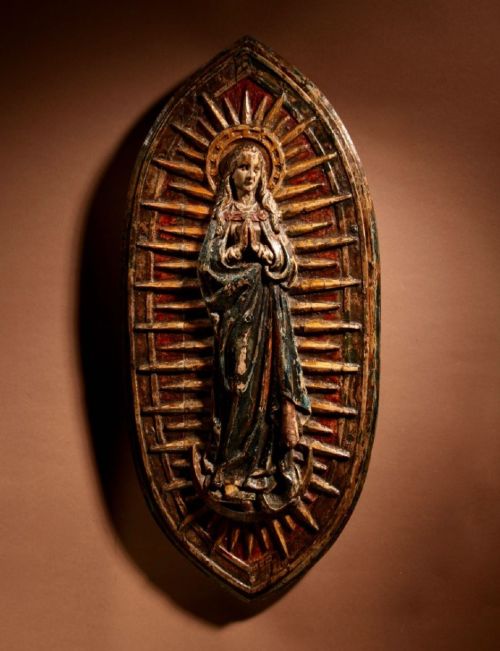
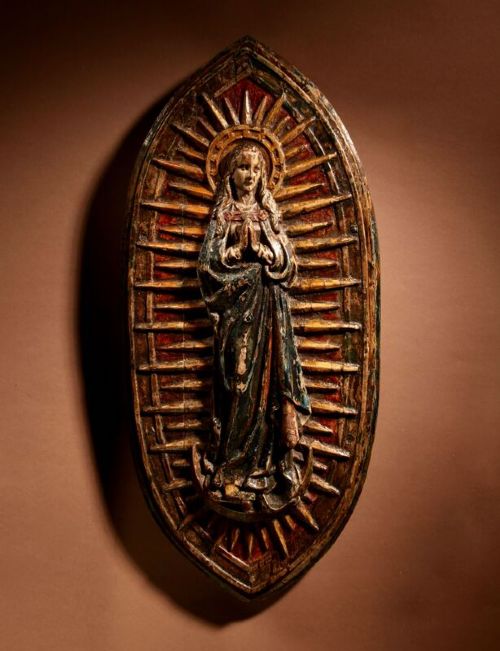
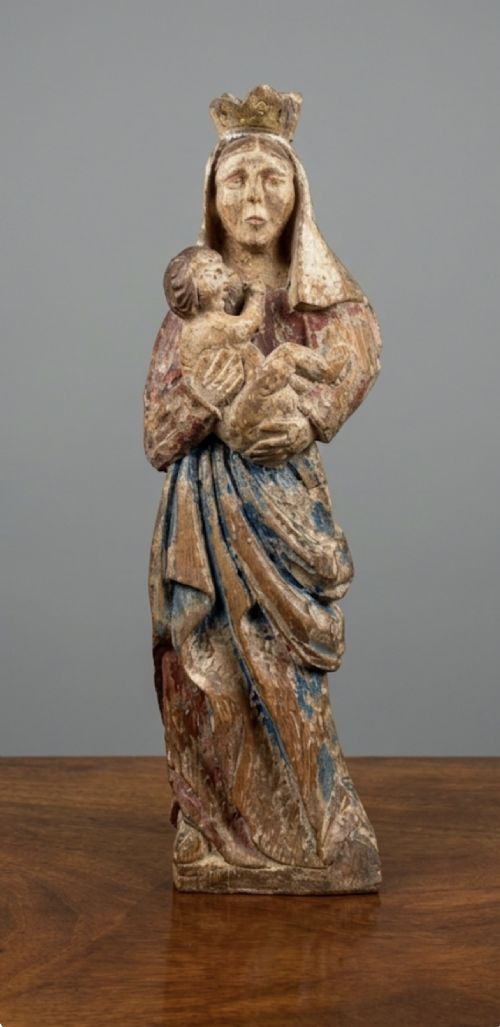
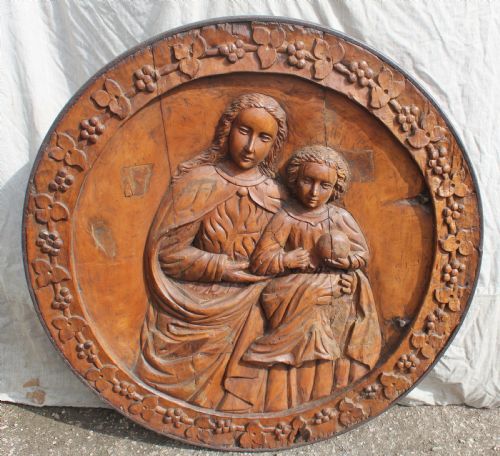
A carved oak virgin mary brings devotional art directly into domestic spaces, appearing across centuries from the medieval period through to the nineteenth century. These sculptures take the form of central altarpiece panels, wall plaques, and free-standing statues depicting figures such as the Madonna and child or the Pietà. Most examples span the Gothic and Renaissance traditions, reflecting the changing religious life of their makers across Europe.
The pieces found here range from early pre-sixteenth century liturgical fragments to later nineteenth-century Gothic revival interpretations. Buyers frequently encounter representations of the Virgin standing on the half-moon with the snake or holding the infant Jesus. Each format reveals how carvers adapted sacred imagery for altars, domestic shrines, and private contemplation.
Materials and construction
Makers shaped these sculptures primarily from solid oak, carving directly into the dense grain to achieve deep relief and expressive drapery. Many surfaces retain traces of early gesso, polychrome paint, and gold leaf that originally heightened the visual drama of the sacred figures. Carvers utilised chisels and gouges to build complex compositions like altarpiece panels and wall sculptures from single blocks of timber.
The physical survival of these works depends heavily on the durability of oak combined with protective layers of paint and gesso. Over centuries, wood movement and changing indoor climates created natural shrinkage and splits that mark the genuine age of each piece. Surviving polychrome and gilding offer a direct view of the workshop practices employed by medieval and later artisans.
Materials recorded across these sculptures include solid oak, gesso, gold leaf, and surviving layers of historic polychrome paint.
Assessing craftsmanship and condition
Depth of carving and the preservation of original timber surfaces distinguish finer examples from plainer nineteenth-century revivals. Pieces retaining early gesso and paint layers demonstrate greater historical integrity than heavily stripped or later altered surfaces. The integration of the figure within architectural elements, such as altarpiece panels, points directly to workshop skill.
The Carved Oak Virgin Mary Glossary
- Polychrome
- Painted in several colours. This surface treatment was widely applied to wood sculptures to enhance their realism and devotional power.
- Gesso
- A plaster-like mixture applied to wood as a base for paint and gold leaf. It provided a smooth ground for delicate polychrome decoration.
- Gothic
- A medieval art and architecture style prevalent from the twelfth to the sixteenth century. It is characterised by pointed arches and elongated, expressive figures.
- Pietà
- A subject depicting the Virgin Mary supporting the dead body of Jesus. This poignant theme appears frequently in medieval religious wood sculpture.
- Relief
- Sculpture carved from a flat background panel rather than rendered in the round. High relief figures project significantly from their wooden base.
Carved Oak Virgin Mary: Frequently Asked Questions
How do I date a carved oak virgin mary?
Dating relies on stylistic markers such as Gothic drapery folds, tool marks left by medieval chisels, and the integration of period paint or gesso layers. Comparing the form against dated architectural fragments or altarpiece panels helps narrow the decade.
Examining the grain of the oak and the nature of any shrinkage splits provides further physical evidence of age. Later revival pieces often display machine-assisted cuts or softer wood preparation that differs from older hand-carved surfaces.
Where were these sculptures originally displayed?
Many of these pieces originated as central panels in church altarpieces, side chapels, or monastic shrines across Europe. They formed the focal point for communal worship and private prayer.
Later examples were created for domestic devotional spaces or as wall sculptures within grand houses. Their transition from ecclesiastical settings to private collections reflects changing patterns of patronage over the centuries.
How should I care for an antique wood sculpture?
Keep the sculpture away from direct sunlight, heating vents, and rapid humidity fluctuations to prevent the oak from splitting. Stable indoor conditions protect fragile historical surfaces like gesso and polychrome paint.
Dust the surface gently with a dry, soft brush rather than using chemical cleaners, damp cloths, or polishes. Preserving the natural dry state of the ancient wood ensures the longevity of the piece.
What does polychrome mean on these figures?
Polychrome refers to the application of multiple colours of paint directly onto the carved oak surface. Artisans used this technique to bring realism and symbolic meaning to religious sculptures.
Over the centuries, much of this paint wore away or was stripped, making surviving traces particularly valuable. Genuine remnants of early polychrome provide insight into the original appearance of medieval church art.