




Antique Madonna Child Statue
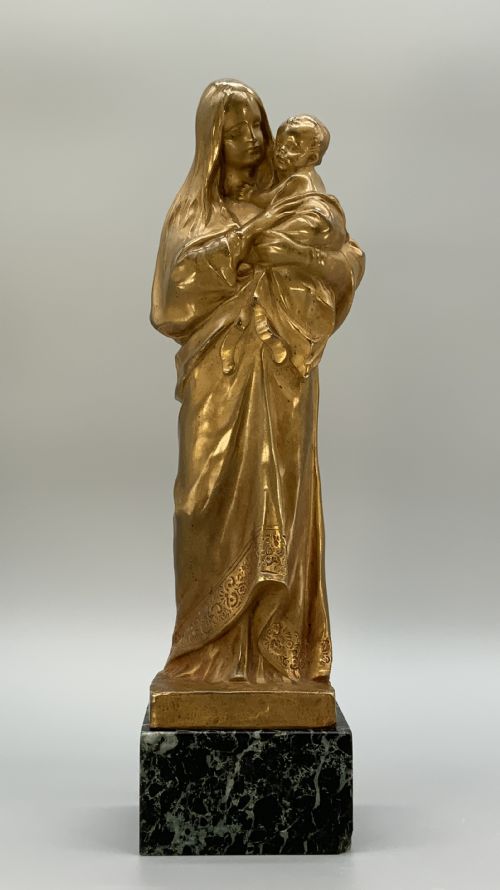
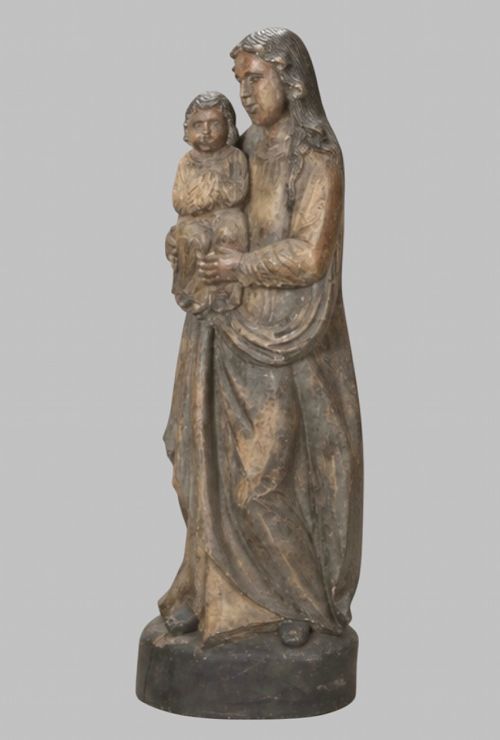
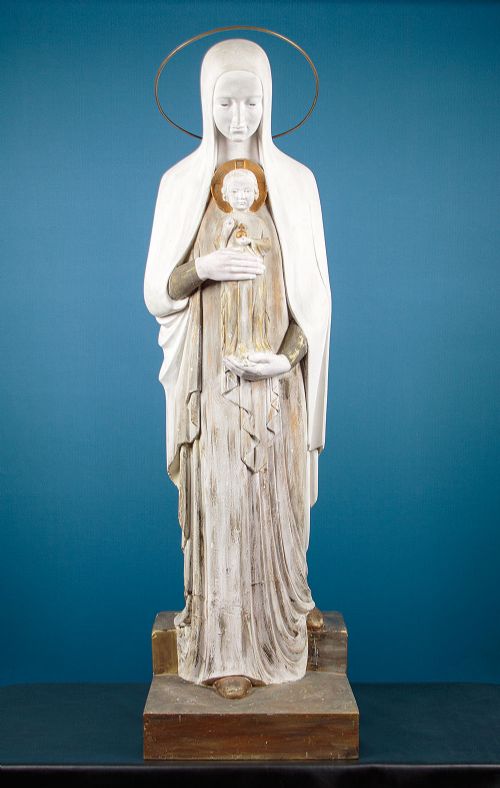
An antique madonna child statue brings centuries of devotion into a room, offering tactile connection to sacred history through carved wood, bronze, and marble.
Antique Madonna Child Statue
The objects derive from diverse aesthetic traditions, including Gothic, Renaissance, Gothic Revival, Art Nouveau, Victorian, and Spanish Colonial styles. Formats range from large carved figures and enthroned madonna compositions with musical putti to parianware figures and hardwood carvings. Each piece reflects the liturgical or domestic devotional practices of its period and origin.
Materials and Construction
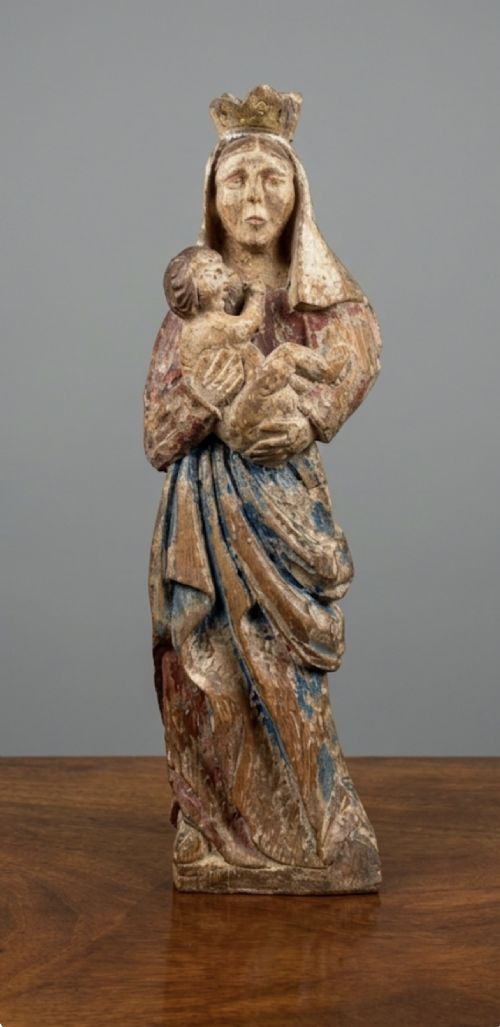
Carved wood forms the foundation of most pieces, utilising oak and hardwood shaped by hand and frequently enhanced with gesso, polychrome paint, and gold leaf. Sculptors relied on traditional joinery and relief carving techniques to create wall sculptures and three-dimensional devotional figures.
Metalwork pieces employ gilt bronze, utilising precision casting and careful gilding to achieve detailed surfaces. Ceramic works utilise parianware, capturing fine sculptural lines through specialised porcelain casting methods.
Musical putti hover near the enthroned madonna, bringing celestial jam sessions directly to nineteenth-century devotional art.
Evaluating Quality
Quality rests in the sculptural depth and the expressive fidelity of the carving, distinguishing masterwork execution from standard workshop output. Surface treatment also defines the tier, where original polychrome, gesso, and gold leaf survive with integrity rather than heavy modern restoration.
Hans Müller·George Kemper
The Antique Madonna Child Statue Glossary
- Santos figure
- A devotional statue representing a saint or holy figure, typically carved from wood and dressed in textiles or painted directly. These figures served central roles in domestic and processional worship.
- Polychrome
- Painted in several colours, a technique applied to wood or gesso sculptures to bring realism and devotional vibrancy to religious figures. This finish often shows natural ageing and wear.
- Gesso
- A plaster-like mixture applied to wood surfaces as a smooth base for gilding and paint. It provides the foundation for delicate surface detailing.
- Parianware
- A fine-grained white porcelain resembling marble, developed in the nineteenth century for statuary and decorative figures. It creates a smooth, matte finish ideal for classical forms.
- Putti
- Depictions of small winged infants, frequently incorporated into religious art as angelic attendants. In sculpture, they add dynamic movement and compositional richness.
Antique Madonna Child Statue: Frequently Asked Questions
What periods do these statues come from?
The available pieces span multiple centuries, ranging from early sixteenth-century examples to nineteenth-century interpretations. Each period brings distinct stylistic traits tied to its contemporary aesthetic.
Nineteenth-century works often reflect Gothic Revival or Victorian sensibilities, while sixteenth-century pieces display Renaissance or Gothic characteristics rooted in earlier devotional traditions.
How were these figures used originally?
These sculptures served as focal points for prayer and meditation, placed in churches, domestic shrines, or private chapels. They helped practitioners visualize sacred narratives.
Santos figures and wall sculptures were integrated into daily religious life, sometimes dressed in real garments or carried in processions during feast days.
Where should I display a wooden sculpture?
Display wooden pieces in stable environments away from direct sunlight and rapid temperature fluctuations. Wall sculptures require secure fixings suited to their weight.
Keeping statues clear of radiators protects the wood and any historic gesso or polychrome layers from cracking or drying out over time.
How do I distinguish oak from other woods?
Oak displays a visible grain pattern with characteristic medullary rays, giving the wood a textured appearance. It feels dense and heavy compared to softer timbers.
Earlier pieces utilising oak often show deep patination and hand-carved tool marks that reveal the historical working method.