
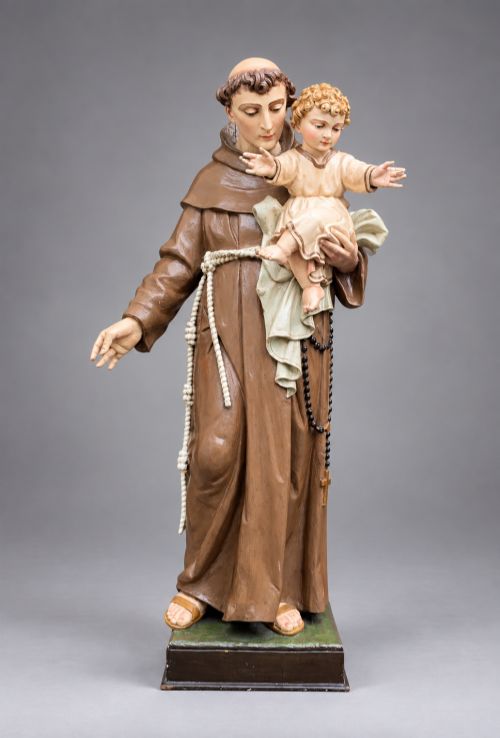

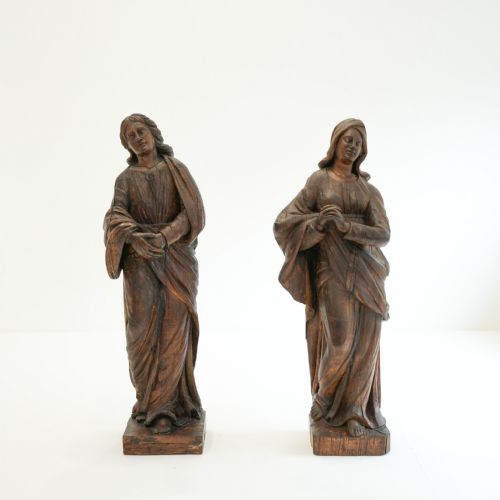


Hand Carved Church Sculpture
Hand carved church sculpture brings devotional history into a room, offering tactile timber figures and architectural models shaped by centuries of religious life.
Hand Carved Church Sculpture
Hand carved church sculpture encompasses wooden figures, saints, crucifixes, and architectural models originating from devotional settings across Europe. These pieces span periods from pre-sixteenth century fragments to nineteenth-century Gothic revival works and later interpretations.
Buyers encounter subjects such as Saint Anthony of Padua, processional figures, and pairs of saints alongside architectural models like Ely Cathedral. The forms range from Italian folk art to German Gothic creations and late medieval representations.
Oak and general carved wood dominate the material record, frequently enriched with gesso, polychrome paint, and gold leaf. The survival of these sacred objects reveals the enduring demand for ecclesiastical art within domestic and institutional spaces.
Materials and construction
Surfaces were frequently finished with gesso to create a smooth ground for polychrome paint and gold leaf applications. This layering of pigment and metal added luminance and naturalism to liturgical figures intended for dim sanctuaries.
Listings feature oak, gesso, polychrome, and gold leaf across periods spanning from pre-sixteenth century to the twentieth century.
Judging the work
Quality rests upon the confidence of the carving and the preservation of original surface treatments such as polychrome and gold leaf. Direct, assured tool work separates expressive master carvings from mechanical repetition.
The integrity of the timber and the survival of early finishes dictate the historical weight of a piece. Retained traces of historic paint and gesso layers elevate pieces originating from Italian folk art or German Gothic workshops.
The Hand Carved Church Sculpture Glossary
- Polychrome
- Decoration in multiple colours applied to the surface of wood or gesso. This technique brought devotional statues to life within dimly lit ecclesiastical interiors.
- Gesso
- A plaster mix applied to wood as a preparatory layer for paint and gilding. It provided a brilliant white ground that enhanced the lustre of gold leaf.
- Santos
- A carved figure representing a saint, frequently used in processions or domestic shrines. These statues embody regional devotional traditions from Italy and beyond.
- Gothic Revival
- An architectural and artistic style popular in the nineteenth century that revived medieval forms. Pieces from this movement adapt earlier ecclesiastical aesthetics for modern patrons.
- Architectural Model
- A scaled representation of a building constructed for design or display. Examples include detailed timber models of notable cathedrals.
Hand Carved Church Sculpture: Frequently Asked Questions
What periods do these sculptures cover?
These pieces range from pre-sixteenth century medieval fragments through sixteenth and eighteenth-century works to nineteenth-century interpretations and later twentieth-century creations.
Material evidence shows styles shifting from late medieval and Gothic traditions toward Italian folk art and Gothic revival expressions.
How were polychrome surfaces applied?
Artisans applied gesso directly to the carved timber base to create a smooth, sealed ground before adding layers of pigment and gold leaf.
This method added depth and colour to religious figures intended for ceremonial or architectural display.
What woods were commonly used?
Oak is the predominant timber found in these ecclesiastical works, alongside general carved wood suited to detailed figural representation.
Makers selected these dense timbers to ensure durability and stability over centuries of handling and environmental change.
How do I distinguish processional figures?
Processional figures, such as Italian santos, were designed to be carried during religious festivals and often feature specific mountings or lighter construction.
Their stance and wear patterns reflect active ceremonial use rather than stationary placement within a church interior.