


Carved Oak Mary Sculpture
A carved oak mary sculpture is a devotional figure embodying centuries of European religious devotion, sought after for its solemn presence and material warmth.
Carved Oak Mary Sculpture
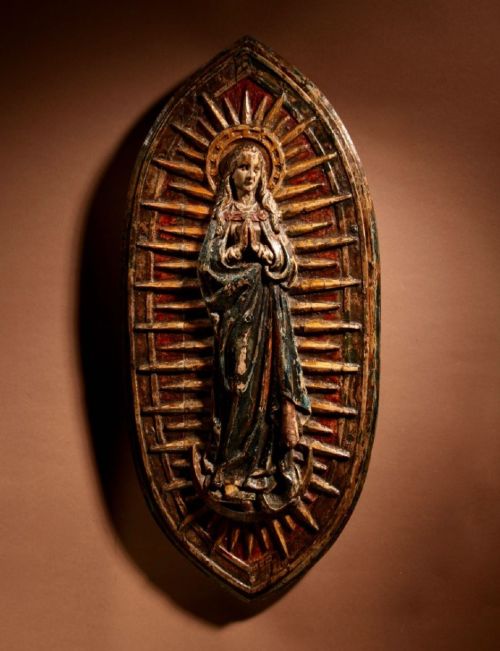
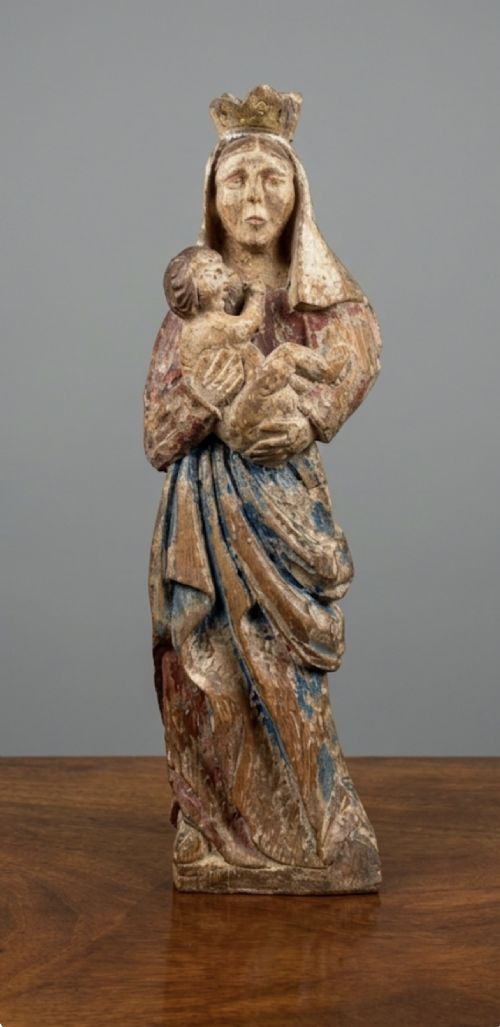
When someone hunts for a carved oak mary sculpture, they encounter devotional images ranging from medieval altarpiece panels to later figures of the Madonna and Child, the Pieta, or the Virgin of the Annunciation. These religious sculptures take the form of freestanding statues, wall sculptures, and figures originating across periods spanning from the pre-sixteenth century through to the nineteenth century and nineteen hundred.
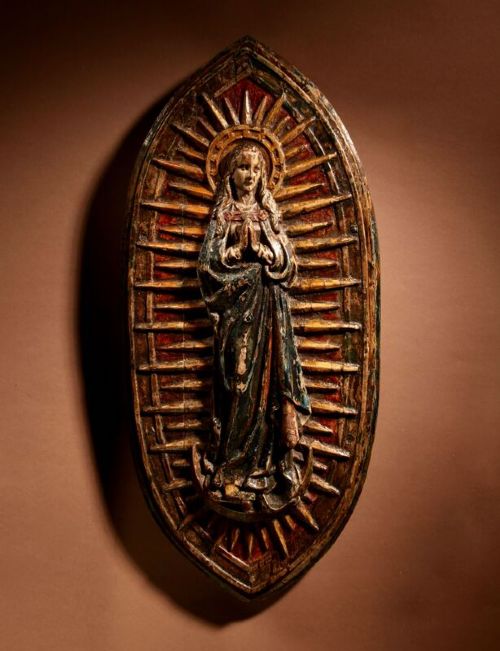
The versions most commonly met on this page include medieval Gothic panels and statues, alongside eighteenth-century painted wooden figures and nineteenth-century interpretations. Their forms encompass central panels depicting the praying Virgin standing on the half moon with the snake, as well as expressive Pieta groups carved in oak.
How they were made
Many of these sculptures utilise polychrome paint and gold leaf applied over the wood and gesso foundation, adding rich colour and luminosity to the carved garments and halos.
Several figures of the Virgin stand directly upon the half moon accompanied by a discreet serpent beneath her feet.
What varies in quality
The distinction between pieces rests upon the crispness of the chisel work and the depth of relief within the oak, where master carvers achieved fluid drapery folds and lifelike hands. Early medieval works demonstrate a sculptural intensity in facial expression and anatomical proportion that marks them apart from later revival pieces.
The survival of original surface treatments such as polychrome paint, gesso, and gold leaf significantly influences the character of a piece. Traces of ancient pigment impart an authentic visual depth that heavily restored or stripped surfaces lack.
The Carved Oak Mary Sculpture Glossary
- Gesso
- A plaster-like mixture applied to wood to create a smooth surface for painting and gilding. It provides the foundation for polychrome decoration on historic sculptures.
- Polychrome
- The practice of decorating architectural elements, sculpture, or pottery in a variety of colours. This surface treatment brings depth and realism to carved wooden figures.
- Pieta
- A subject in Christian art depicting the Virgin Mary supporting the dead body of Christ. These emotional compositions are central to medieval religious sculpture.
- Altarpiece
- A structure depicting a religious subject that is set behind or on an altar. Central panels often featured figures of the Virgin Mary standing in devotion.
- Gothic
- A style of European architecture and art spanning the medieval period, characterised by vertical lines and naturalistic representation. Sculptures from this tradition display distinct emotional expression and stylised drapery.
Carved Oak Mary Sculpture: Frequently Asked Questions
What periods do these sculptures date from?
The listings span several centuries, starting from the pre-sixteenth century and the medieval era, moving through the sixteenth, eighteenth, and nineteenth centuries, up to nineteen hundred.
Earlier pieces often display Gothic or Renaissance characteristics, while later works include nineteenth-century revivals and figures.
How were these figures originally used?
These sculptures served as focal points for private prayer and public worship within churches, domestic shrines, and larger altarpieces.
Many functioned as wall sculptures or central altarpiece panels designed to inspire devotion through narrative scenes like the Annunciation or the Pieta.
How do I live with an oak sculpture?
Displaying a historic wooden figure requires stable indoor humidity and protection from direct sunlight to preserve the dry oak and any fragile painted surfaces.
Mounting wall sculptures securely or placing freestanding figures on stable surfaces ensures these heavy pieces remain safe in a modern room.
How can I tell medieval from later pieces?
Examining the tool marks, the density and ageing of the oak, and the integration of gesso layers helps distinguish medieval carving techniques from later revival work.
Stylistic cues such as the treatment of drapery folds and facial expressions also provide clear indicators of period origin.