
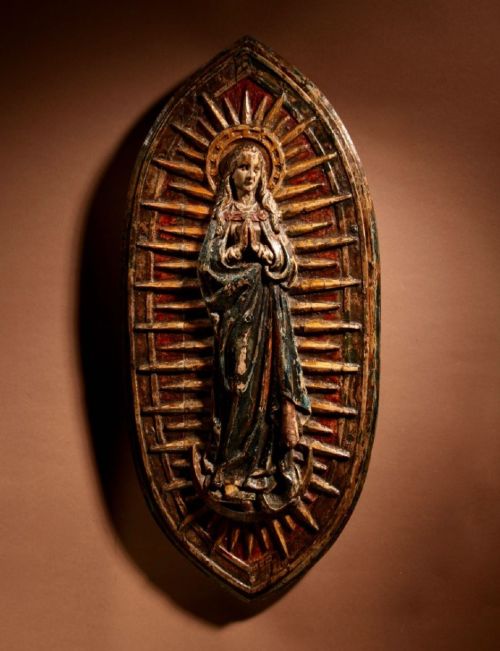


Medieval Oak Statue
A medieval oak statue brings centuries of devotion into a room, carved from sturdy timber to capture saints and holy figures.
Medieval Oak Statue
When you search for a medieval oak statue, you encounter figures carved for churches, chapels and private shrines during the late medieval and Renaissance periods. The pieces on this page span from the fourteenth century through to sixteenth-century works from Germany, France and the Low Countries, alongside later revival pieces.
Most examples represent religious subjects, including the Madonna and child, individual saints such as St Catherine, donors and altarpiece panels. They take the form of freestanding sculptures, wall sculptures and fragments from larger architectural settings.
Regional styles range from late Gothic severity to the more expressive turns of Flemish and French Renaissance carving. A buyer meets both whole devotional figures and the surviving central panels or groups from dismantled altarpieces.
How they were made
Many surfaces carry traces of gesso, polychrome paint and gilded wood, showing that these statues originally appeared in vivid colour rather than bare timber. Over the centuries, much of this pigment has worn away to reveal the grain beneath.
The listings span the sixteenth century, pre-sixteenth century works, and a nineteenth-century revival example from nineteen hundred.
What varies in quality
Quality rests in the sculptural confidence of the carving, particularly in the handling of facial expression, hand gestures and the fall of heavy drapery. Pieces that retain original gesso and polychrome paint show a greater degree of their original finish.
The integrity of the timber and the depth of survival from altarpiece fragments or whole figures dictate the historical weight of the piece. Later revival pieces from nineteen hundred differ in touch and tool work from authentic medieval carvings.
The Medieval Oak Statue Glossary
- Polychrome
- Painted in several colours. This surface finish was standard for medieval church sculptures before centuries of wear left many pieces as bare wood.
- Gesso
- A plaster mix applied to wood as a base for gilding and paint. It fills grain and creates a smooth ground for surface decoration.
- Gilded Wood
- Wood covered with a thin layer of gold leaf. This technique highlighted important figures and halos in sacred art.
- Altarpiece
- A structured artwork placed behind an altar. Central panels and figures from these large assemblies often survive as independent sculptures.
- Gothic
- A European art style spanning the twelfth to sixteenth centuries. It is characterised in sculpture by vertical emphasis and naturalistic drapery.
Medieval Oak Statue: Frequently Asked Questions
How do I date a medieval oak statue?
Dating relies on stylistic markers within the carving, such as the cut of the drapery, regional workshop habits and the treatment of hair and faces. Comparing pieces to known church inventories and dated panels helps establish a period.
Material analysis of the oak grain and any surviving gesso or polychrome remnants also guide the assessment. Later revival pieces often reveal different tool marks and fresher timber beneath the surface.
Where were these statues originally placed?
Most of these figures stood within churches, abbeys or private chapels as objects of veneration and focal points for prayer. Some formed part of large altarpieces, while others stood in niches along church walls.
Smaller groups and single saints were also commissioned for domestic devotional spaces by wealthy patrons. Their original placement dictated whether they were carved in the round or designed to be viewed from the front only.
How should I care for an antique oak carving?
Keep wooden sculptures away from direct heat sources, radiators and strong sunlight to prevent the timber from drying out and splitting. Stable room temperatures and moderate humidity protect both the oak and any surviving surface finishes.
Dust the surface gently with a dry, soft brush rather than using wet cloths or polishes. Allowing the piece to acclimatise to a stable indoor environment ensures it remains preserved for the future.