




Dark Oak Reading Desk
These dark oak reading desk options span centuries of craftsmanship, offering sturdy timber surfaces and carved stands built to hold heavy volumes.
Dark Oak Reading Desk
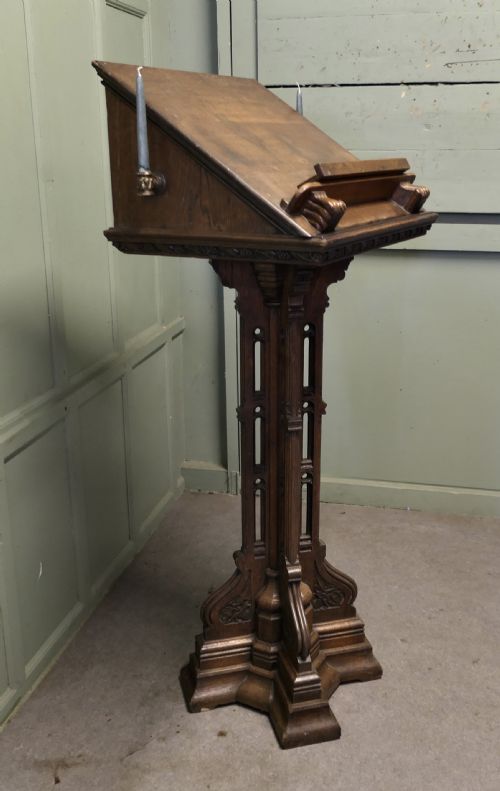
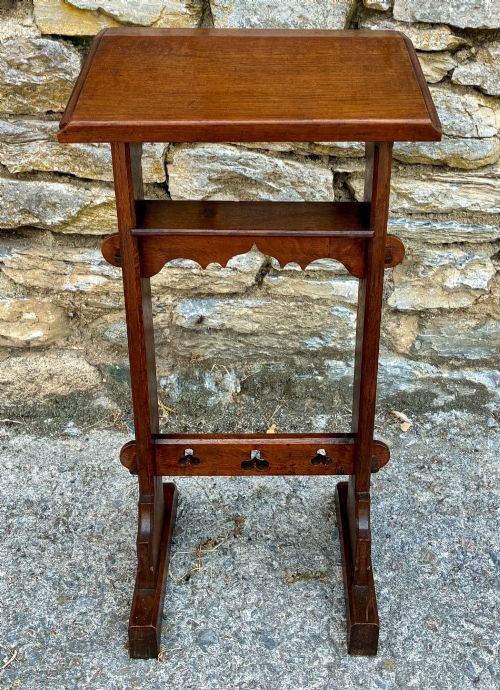
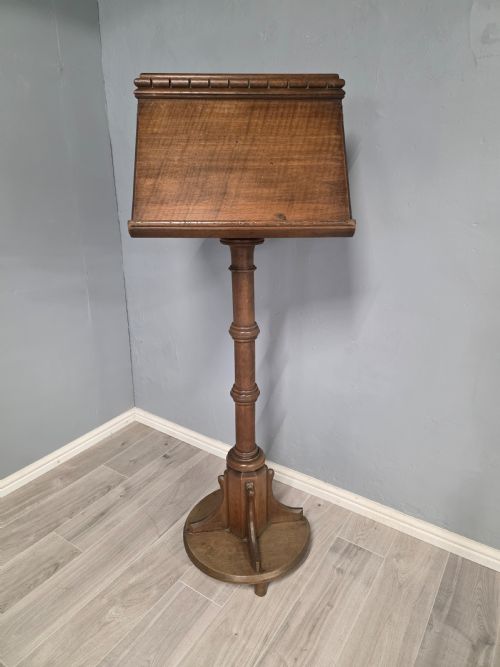
A dark oak reading desk provides a dedicated workspace or platform for books, featuring the robust timber and deep patination characteristic of pieces from the eighteenth, nineteenth, and early twentieth centuries. These items encompass church lecterns, library armchairs with writing surfaces, and architectural desks designed for study.
The selection on this page leans heavily toward nineteenth-century Gothic Revival and Victorian church lecterns alongside Georgian and Edwardian seating furniture. Buyers frequently encounter carved podiums, book stands, and solid oak frames fitted with leather inserts or brass details.
Materials and construction methods
Makers utilised solid oak alongside secondary timbers like elm, shaping heavy planks through traditional joinery and carving detailed panels. Surfaces often received a dark polish or wax finish to highlight the natural grain.
Hardware elements such as brass hinges, iron brackets, and inset leather or fabric writing surfaces complete the construction of these functional pieces.
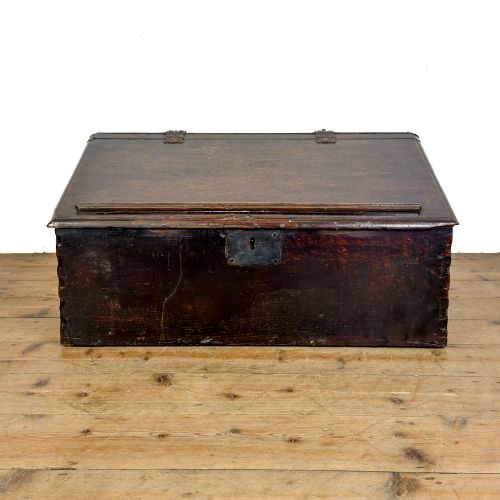
Object types range from church lecterns and architect desks to Windsor wheel back armchairs and Bible boxes.
Assessing quality in dark oak furniture
The degree of hand-carving defines the visual merit of these pieces, distinguishing simple vernacular items from elaborate Gothic Revival or Neo-Jacobean examples. Deeply articulated relief work on podiums and lecterns requires superior skill compared to plain chamfered edges.
Proportion and structural integrity separate robust examples from lesser items, where the natural shrinkage of timber or heavy daily use may have altered the original joints over the centuries.
The Dark Oak Reading Desk Glossary
- Gothic Revival
- A nineteenth-century design movement drawing inspiration from medieval architecture, featuring pointed arches, tracery, and heavy carved details.
- Lectern
- A slanted reading stand or podium designed to support books or notes for a speaker standing upright.
- Neo-Jacobean
- A revival style popular in the nineteenth century mimicking the strapwork, turned legs, and dark finishes of early seventeenth-century English furniture.
- Bible Box
- A small wooden chest historically used to store scriptures and writing implements, often placed on tables for reading.
Dark Oak Reading Desk: Frequently Asked Questions
What is a dark oak reading desk used for?
These pieces serve primarily as functional stands for heavy volumes, architectural plans, or daily study. They provide an angled surface designed to support books comfortably during prolonged reading.
Historically, church lecterns and library desks held liturgical texts or reference volumes, while smaller boxes rested on tables to secure personal papers.
How do I date a dark oak reading desk?
Dating relies on stylistic markers such as Gothic Revival motifs, Neo-Jacobean turning, or Victorian proportions. The construction methods, tool marks on the timber, and types of hardware also provide clues to the era of manufacture.
Examining the depth of the oak patination and the wear patterns on the wood helps confirm whether a piece originates from the eighteenth, nineteenth, or early twentieth century.
Where should I place a reading desk at home?
These substantial oak items suit studies, libraries, or living rooms where their dark timber tones anchor the surrounding decor. Placing them near natural light enhances the carved details on the woodwork.
Ensure the room humidity remains stable to protect the antique oak and any inset leather surfaces from drying out or warping over time.
What materials are used besides oak?
While oak forms the primary structural timber, secondary materials frequently include elm for framing or seating components. Metal elements such as brass and iron appear in hinges, brackets, and decorative fittings.
Some pieces incorporate leather, fabric, or fabric flex for writing surfaces and upholstery, adding texture and contrast to the dark wood.