







Dark Oak Potboard Server
These dark oak potboard server pieces bring sturdy historic utility to modern rooms through open lower shelves and robust timber frames.
Dark Oak Potboard Server
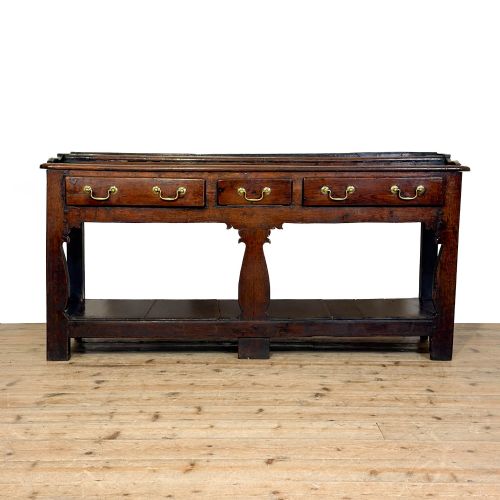
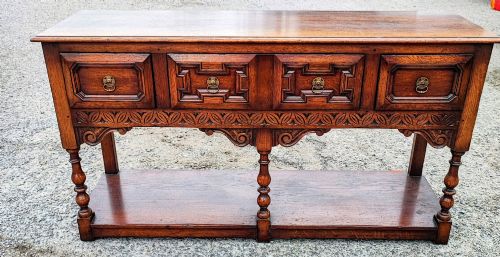
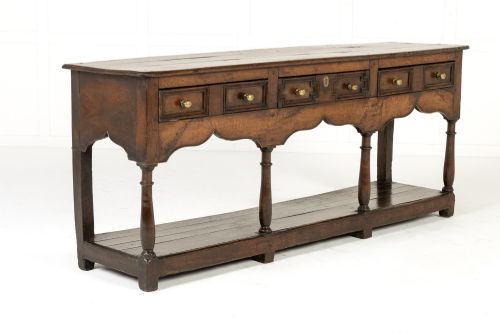
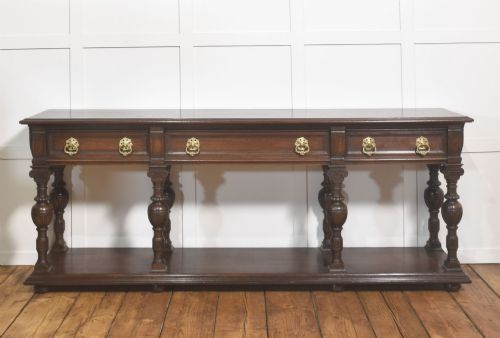
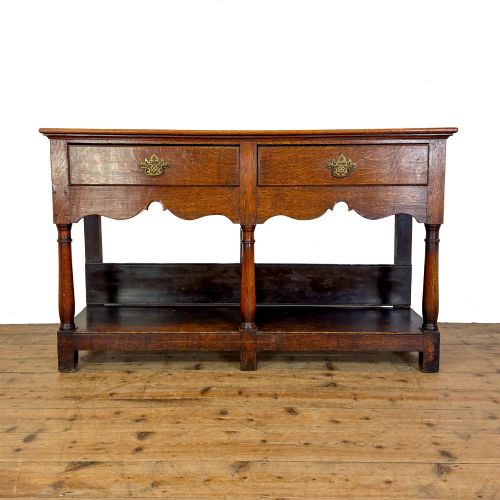
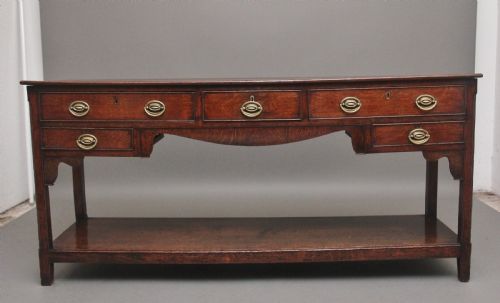
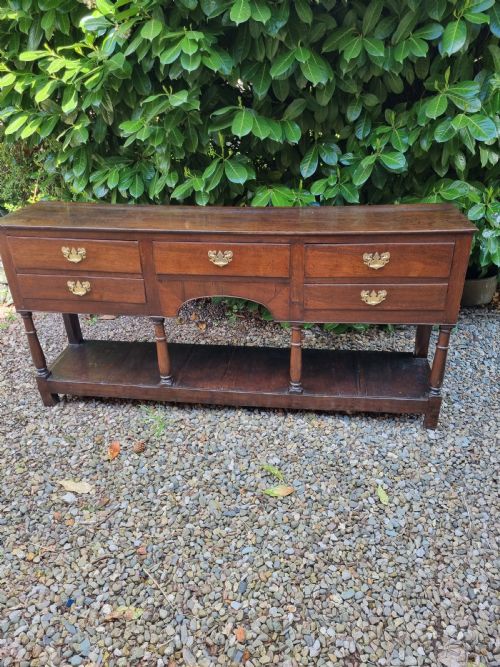
A dark oak potboard server forms part of a traditional family of dining and kitchen furniture designed with a low open shelf beneath the main surface. The selections here include regional examples from Wales and Lancashire alongside later revival interpretations.
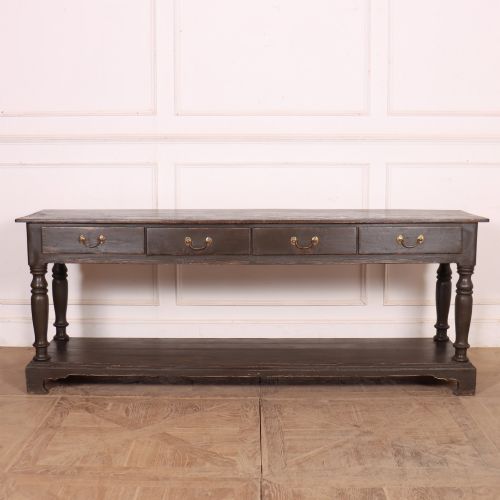
The most common form on this page is the dresser base, typically fitted with rows of drawers above the signature potboard. Periods span from the eighteenth century through nineteenth century iterations and into twentieth century revivals.
Regional variations appear in timber selection and drawer arrangements, connecting everyday domestic storage from past centuries with contemporary interiors.
How they were made
Construction relies heavily on solid oak timbers, chosen for strength and longevity in daily household use. Selected pieces incorporate fruitwood marquetry inlay or painted wood details to accentuate the primary structure.
Metalwork is largely restricted to functional brass hardware for drawer pulls and handles, complementing the warm tones of aged timber. Surfaces display hand-carved geometric motifs and traditional joinery methods appropriate to each period.
Dark Oak Potboard Server Retail Price Guide 2026
Typical asking prices for dark oak potboard server among the pieces listed under this phrase on Sellingantiques today, from the lower quarter to the upper quarter. They describe what is for sale here now, not the wider market.
Materials across the selection range from solid oak and brass to painted wood and fruitwood marquetry inlay.
What varies in quality
Quality rests upon the integrity of the original timber and the crispness of any hand-carved details. Period pieces with untouched surfaces and genuine patination hold distinct character compared to later revival items.
Structural proportion dictates visual balance, with smaller country proportions commanding particular attention from collectors. The proportion of drawer tiers relative to the open potboard defines the overall architectural presence.
The Dark Oak Potboard Server Glossary
- Potboard
- The lower open shelf of a dresser base, historically used for storing pots and pans. It sits just above the floor on sturdy stretchers.
- Dresser base
- A low sideboard fitted with drawers and sometimes cupboards, functioning independently without upper shelving. This form serves as the primary base structure for potboard designs.
- Marquetry
- Decorative inlay work using various coloured woods to create pictorial or geometric patterns. Fruitwood is frequently employed for these contrasting details.
- Jacobean style
- A heavy, formal aesthetic drawing on seventeenth-century English design principles, often characterised by geometric mouldings and carved panels.
- Geometric carvings
- Surface ornamentation created by incising repeating shapes like squares, lozenges, and triangles directly into the oak timber.
Dark Oak Potboard Server: Frequently Asked Questions
What is a potboard base?
A potboard base is a low kitchen or dining table featuring drawers above an open bottom shelf. This lower platform provided practical storage for heavy earthenware vessels in traditional homes.
Today, the open shelf functions well for displaying ceramics or books in living spaces.
How do I date an oak server?
Dating relies on examining construction methods, timber movement, and hardware fixings. Eighteenth-century examples often display hand-cut joinery and deeper patination.
Revival pieces from the twentieth century show different tool marks and more uniform timber ageing.
Are these pieces strictly for kitchens?
While originally built for culinary and dining duties, these servers adapt easily to modern hallways and sitting rooms. Their narrow proportions suit circulation spaces.
The surface provides a stable platform for lamps or decorative objects.
What distinguishes Welsh dressers?
Welsh regional examples frequently exhibit specific local cabinetmaking traits in their drawer layouts and timber selection. Pieces originating from mid Wales often display distinct regional proportions.
These variations help historians trace geographic workshops from past centuries.