






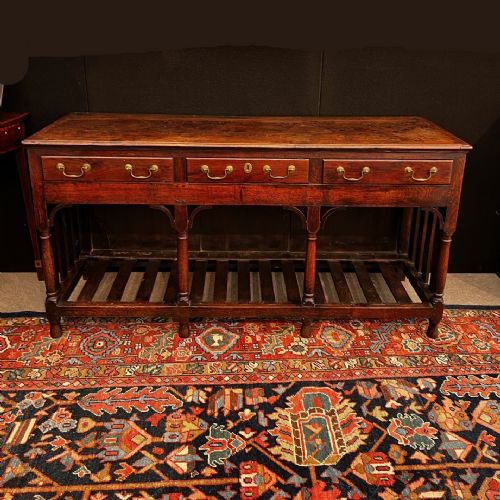

Oak Potboard Server
An oak potboard server is a sturdy low board with an open lower shelf, offering practical storage and distinct regional character for a traditional interior.
Oak Potboard Server
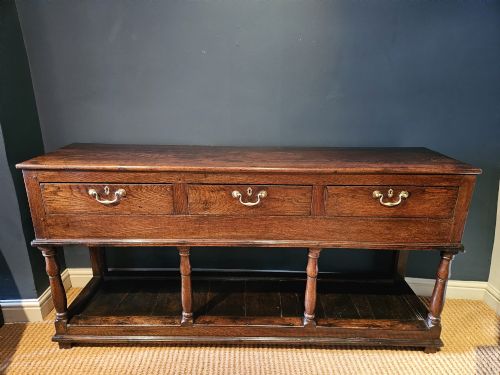
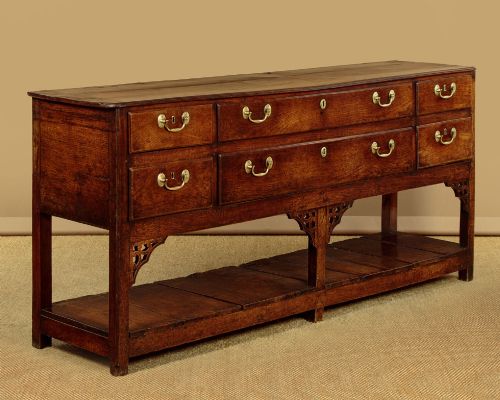
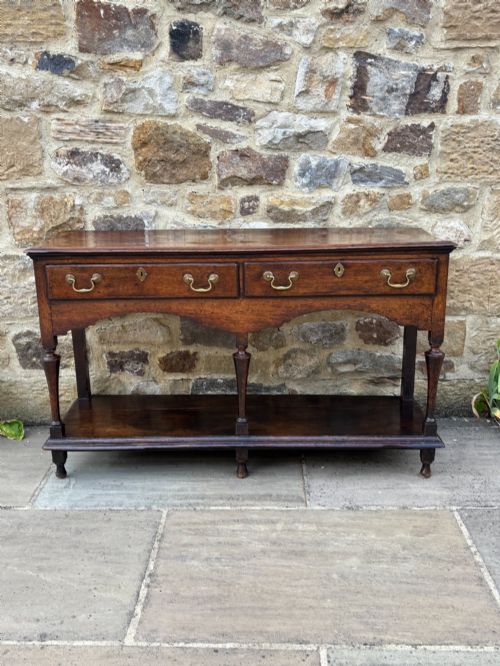
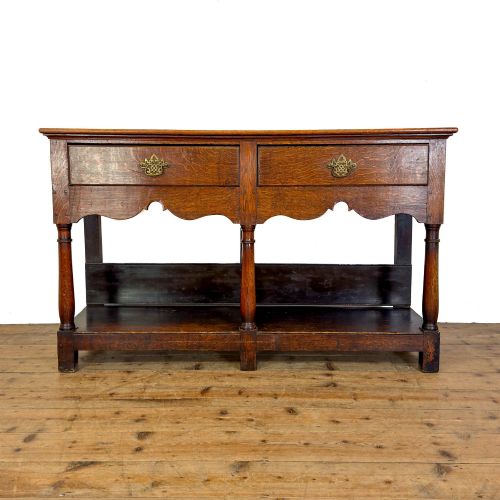
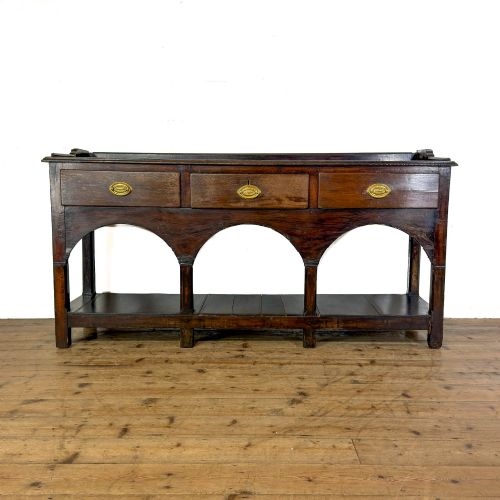
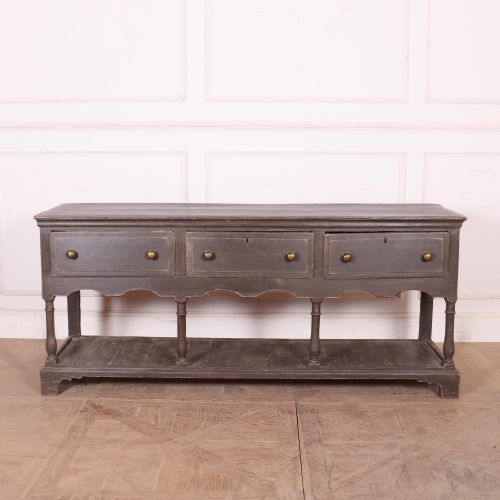
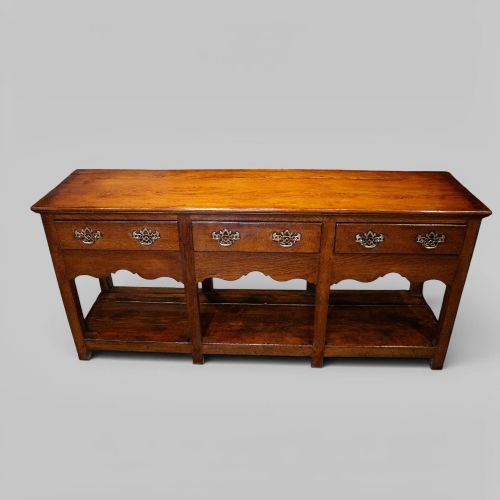
When you search for an oak potboard server, you are looking at utilitarian low furniture designed for domestic storage and food preparation. These pieces combine a solid timber top surface with drawers and an open lower tier known as a potboard.
The versions you will most commonly encounter here date primarily from the eighteenth and nineteenth centuries, alongside later revival pieces. They originate mainly from English and Welsh rural workshops, carrying regional proportions and construction traits.
How they were made
Maker workshops relied heavily on solid oak, occasionally combining it with secondary timbers such as elm and fruitwood for secondary framing or internal elements. Surfaces were frequently left with natural finishes, though some examples feature painted timber or applied geometric carvings.
Construction methods prioritised durability, joining thick timber tops to sturdy legs and uprights that supported the heavy lower potboard shelf. Brass fittings appeared on later pieces, while earlier examples utilised traditional pegged joints and drawer linings.
What varies in quality
The timber selection defines the upper tier of quality, with dense, well-figured oak boards showing superior age and depth of colour. Lesser examples utilise plainer timber or heavier later alterations that obscure the original proportions.
Proportion and scale dictate the desirability of a piece, particularly in smaller formats suited to modern spaces. Refined execution of drawer fronts, edge moulding, and structural integration of the potboard separate standard utility pieces from finer country workshop production.
The Oak Potboard Server Glossary
- Potboard
- An open lower shelf built into a dresser base or server, traditionally used for storing pots and pans off the damp floor. It forms the defining structural feature of these low servers.
- Dresser base
- A low rectangular cabinet fitted with drawers across the upper section and standing on legs or stiles, functioning as a sideboard without the upper shelving rack.
- Fruitwood marquetry
- Decorative inlaid work utilising timber from fruit-bearing trees such as pear or apple to create contrasting patterns. It appears on select decorative panels and drawer fronts.
- Jacobean revival
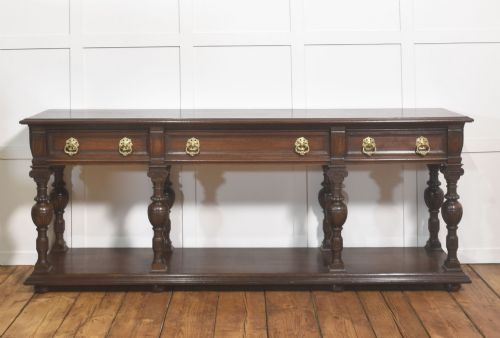
- A nineteenth and early twentieth century style mimicking seventeenth century British woodwork. Pieces in this idiom display heavy turned legs and geometric relief carvings.
Oak Potboard Server: Frequently Asked Questions
What was a potboard used for?
The lower board served as an open storage shelf in domestic kitchens and sculleries. It kept heavy earthenware pots and utensils off stone floors.
Over time, these sturdy low boards transitioned into principal dining rooms and hallways as display and serving surfaces.
How do I tell an 18th century base from a revival piece?
Eighteenth century examples show natural timber wear, hand-cut joinery marks, and patination accumulated through generations of use. Revival pieces made around the late nineteenth or early twentieth century often display machine tooling and uniform surface treatments.
Construction details inside the drawer boxes and the method of timber shrinkage offer further clues to true period age.
Where were these servers made?
Many examples originate from regional English counties and Welsh rural workshops. Local cabinet makers built them using accessible native hardwoods suited to domestic service.
French country workshops also produced comparable low serving tables using local oak and pine.
Can I use one as a sideboard?
Their long rectangular proportions and sturdy top surfaces make them well suited for modern dining rooms and hallways. The combination of drawer storage and surface area matches the function of a traditional sideboard.
Measuring the height and depth against your available wall space ensures the piece fits comfortably in a modern room.