


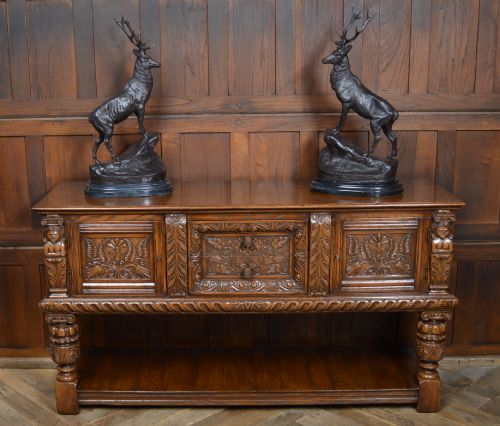

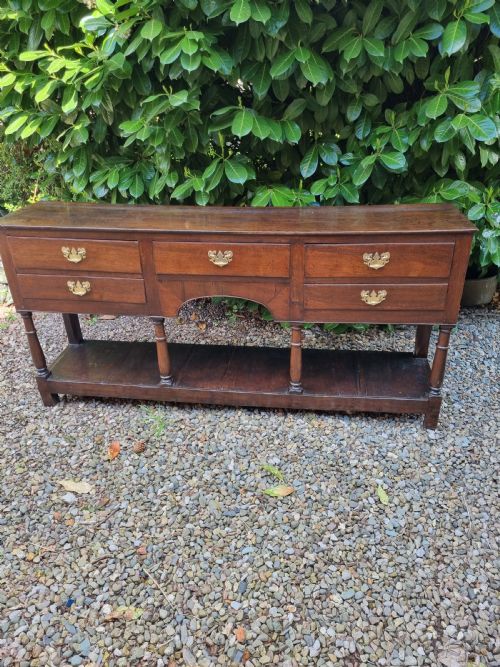
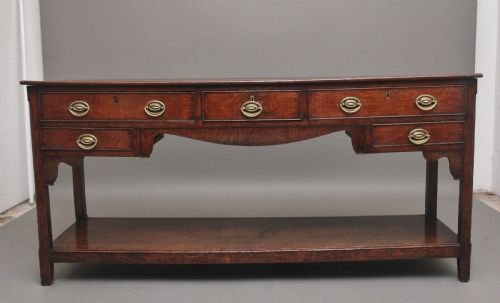


Dark Oak Pot Board Dresser
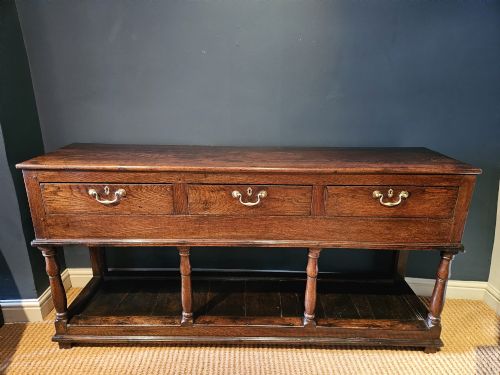
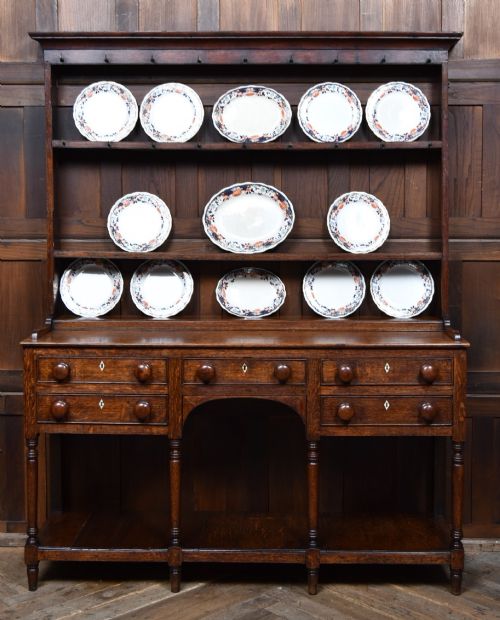
A dark oak pot board dresser brings weight and utility to a room, offering display shelves above a lower open shelf.
Dark Oak Pot Board Dresser
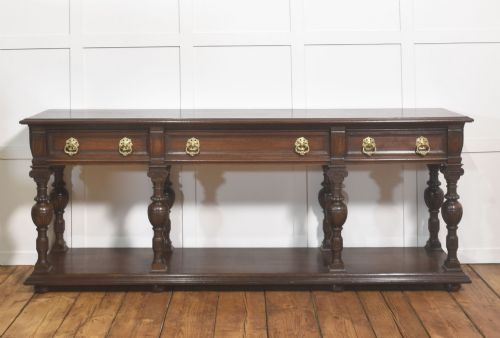
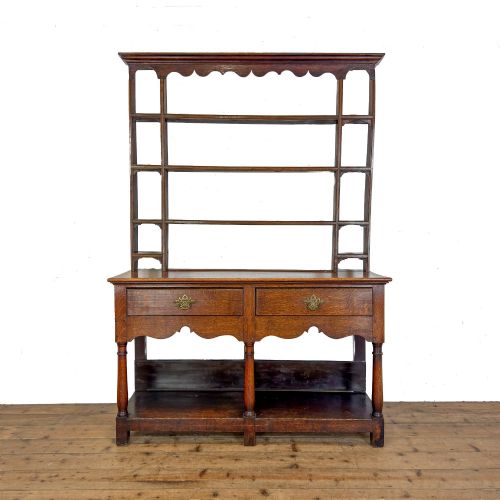
A dark oak pot board dresser is a substantial storage piece featuring a lower open platform, known as a pot board, positioned near the floor between the legs. These pieces emerge in formats ranging from simple dresser bases to tall Welsh dressers complete with plate racks.
The versions most commonly met on this page span the eighteenth and nineteenth centuries, alongside revival pieces from the early twentieth century. Regional vernacular examples from Wales sit alongside formal Georgian pieces and country oak variations.
How they were made
Makers built these pieces primarily from solid oak, utilising iron and brass hardware for hinges, pulls and drawer construction. Secondary woods such as pine occasionally appear in concealed structural areas or interior drawer linings.
Construction techniques rely on traditional joinery, with certain examples incorporating carved ornamentation, panelled doors, and painted finishes applied over the timber surface.
Formats range from low dresser bases and sideboards to tall Welsh dressers complete with plate racks.
What varies in quality
Quality rests upon the integrity of the timber, the crispness of any carved detailing, and the proportion of the base relative to the rack. Pieces retaining original surface patination and structural elements command greater regard among collectors.
Subtle differences in regional design, from Carmarthenshire origins to broader English country workshops, dictate the visual weight and sophistication of the finished piece.
The Dark Oak Pot Board Dresser Glossary
- Pot board
- A low open shelf positioned near the floor between the legs of a dresser base, originally designed for storing pots and pans. This lower tier defines the primary architectural feature of the form.
- Welsh dresser
- A large kitchen or dining room storage unit comprising a base of drawers and cupboards surmounted by a wooden plate rack. These pieces often display regional vernacular characteristics.
- Dresser base
- The lower section of a dresser configuration, functioning independently as a sideboard or low serving table. Many examples survive without their original upper plate racks.
- Vernacular
- Furniture made by local craftsmen for everyday domestic use rather than following strict metropolitan design books. These regional pieces often utilise local timber species and traditional construction methods.
- Plate rack
- The upper shelving unit attached to the back of a dresser, featuring grooves or wooden rails to display ceramic plates upright. Original racks matching the age of the base are prized by collectors.
Dark Oak Pot Board Dresser: Frequently Asked Questions
What is a pot board on a dresser?
The pot board is the low, open shelf situated near the floor between the lower legs of the dresser base. It provided practical storage for heavy kitchen pottery and metalware in traditional domestic settings.
Over time, this lower tier evolved from a purely utilitarian space into a characteristic design element of country furniture.
How do I tell an 18th century dresser from a later revival?
Eighteenth-century examples display natural timber patination, hand-cut joinery, and wear patterns consistent with centuries of domestic use. Construction details often reflect regional vernacular traditions unique to specific maker communities.
Later revival pieces from the twentieth century frequently show uniform machine finishing and standardised timber selection without the accumulated surface depth of early periods.
Did all dressers come with plate racks?
Many pieces on this page survive as dresser bases without their original upper plate racks. These lower sections functioned independently as sideboards or serving tables in dining spaces.
Complete examples featuring their original matching racks are less common and provide a unified display surface for ceramics.
Where were regional Welsh dressers made?
Regional pieces originated in various Welsh counties, with specific workshops operating in areas such as Carmarthenshire and mid Wales. Local makers incorporated distinct drawer configurations and moulding profiles into their regional output.
These pieces reflect the domestic requirements and stylistic preferences of rural Welsh households during the Georgian period.
How do I care for antique oak furniture?
Keep oak furniture away from direct heat sources and dramatic humidity fluctuations to prevent timber movement. Regular dusting with a dry cloth maintains the surface without the need for heavy chemical polishes.
Applying a traditional beeswax polish occasionally helps nourish the wood and preserves the natural finish accumulated over generations.