

Dark Oak Low Dresser
A dark oak low dresser provides substantial surface space and deep drawers while keeping living areas feeling open and uncluttered.
Dark Oak Low Dresser
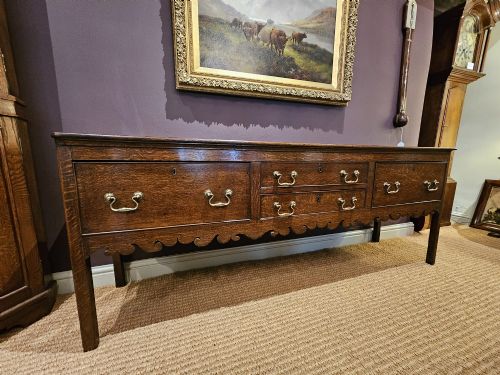
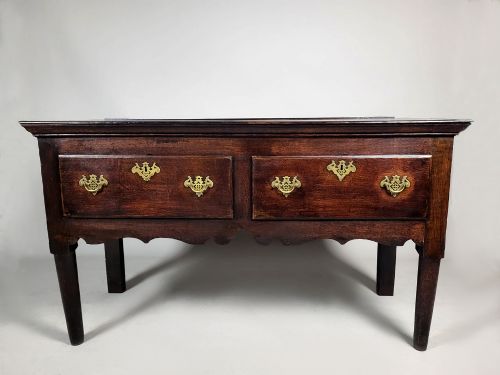
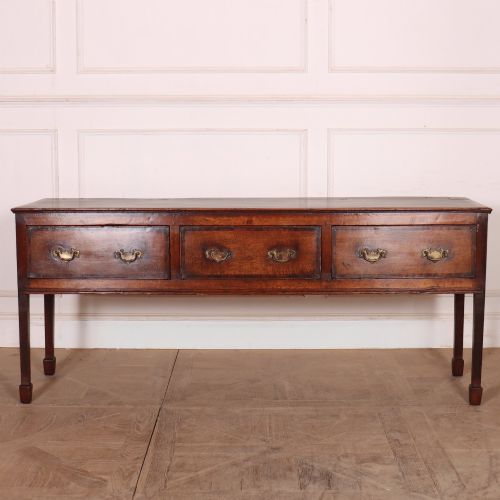
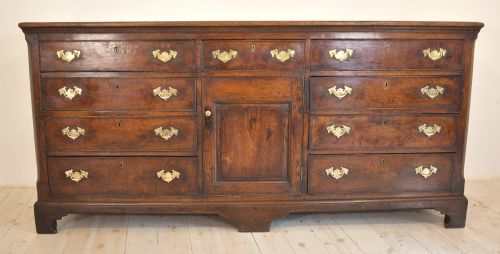
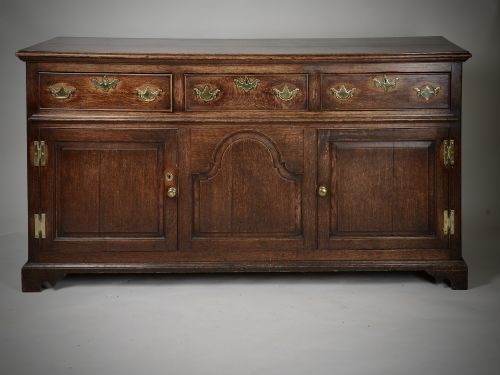
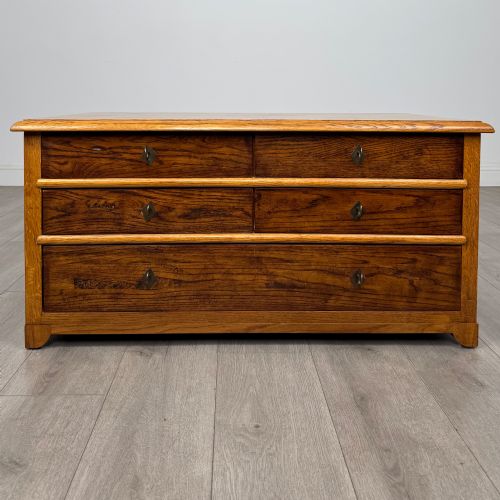
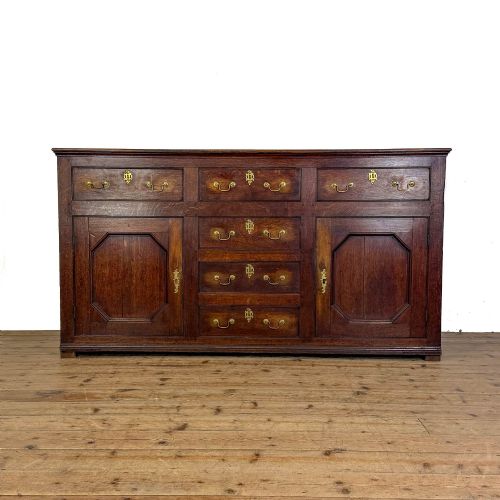
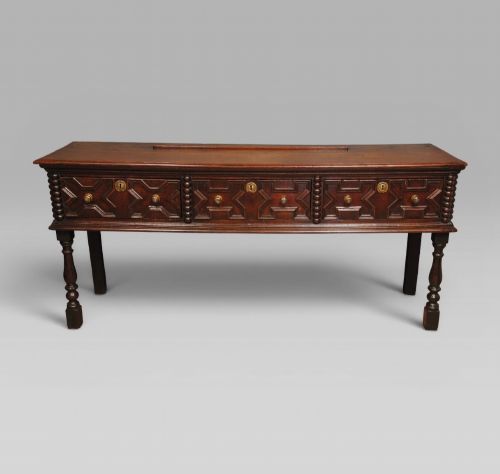
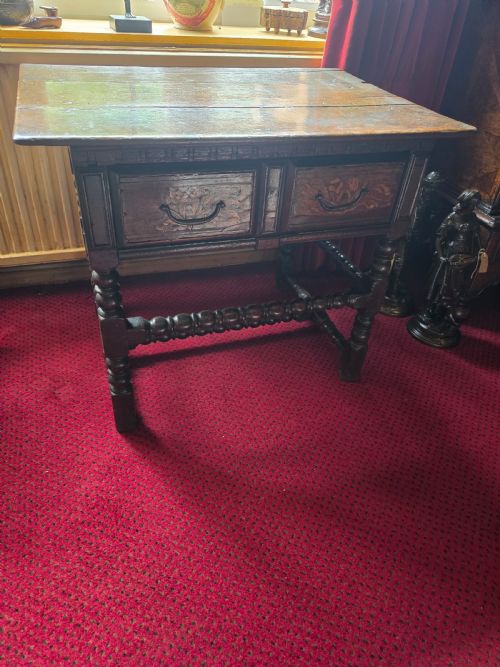
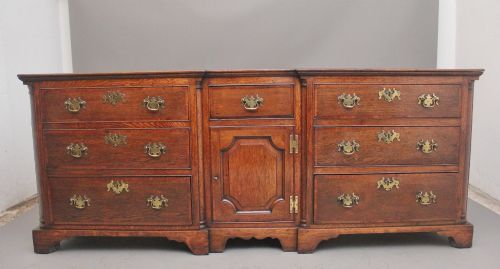
A dark oak low dresser is a functional storage item designed with a low profile, combining a wide top surface with lower drawers and cupboards. When searching this phrase, buyers encounter practical pieces meant for everyday domestic use rather than towering display furniture.
Most examples found here date from the seventeenth, eighteenth and nineteenth centuries, alongside later revival pieces. These items serve equally well as sideboards, serving tables or console units in modern dining rooms and hallways.
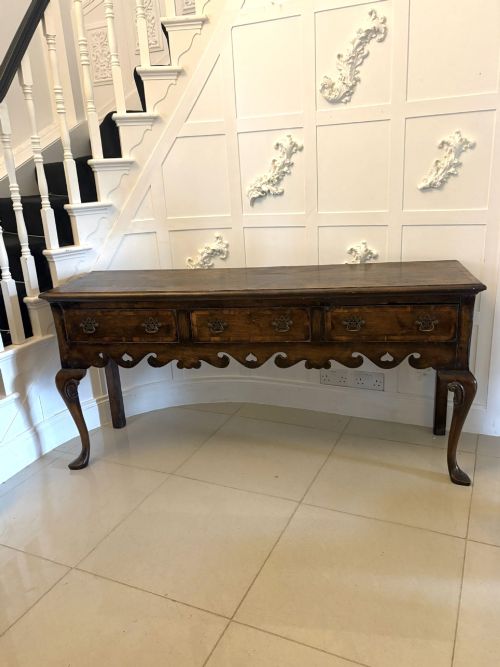
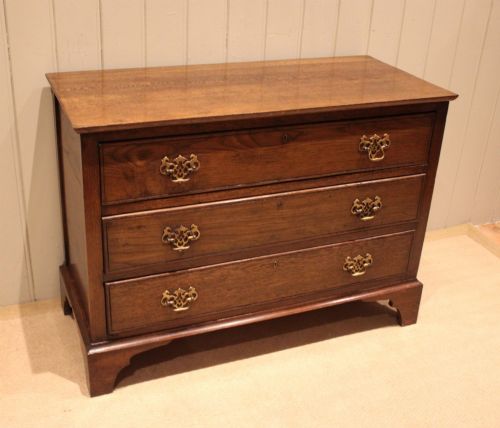
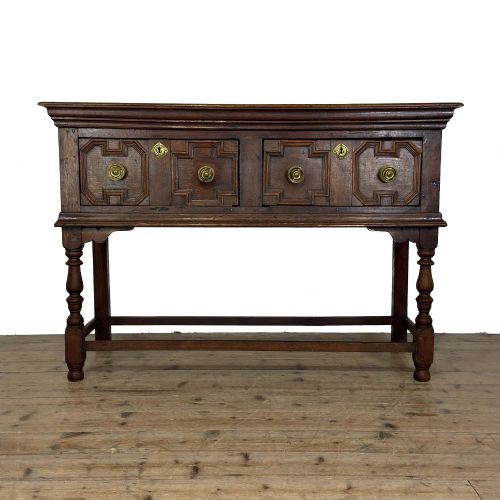
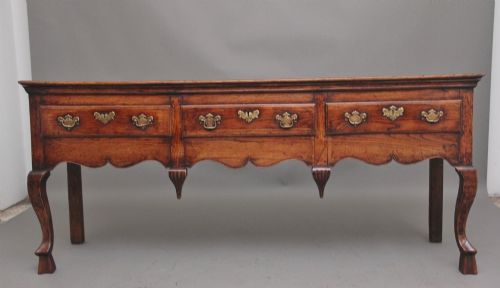
The form typically rests close to the floor, often featuring an open potboard beneath the main body or a series of graduated drawers across the front. Construction origins span English regions like Lancashire and Wales, alongside continental workshops.
How they were made
Cabinet makers relied primarily on solid timber, constructing the main frames and drawer fronts from sturdy oak supplemented by secondary woods such as elm and pine. Panels were frequently joined using traditional methods that allowed for natural wood movement over centuries.
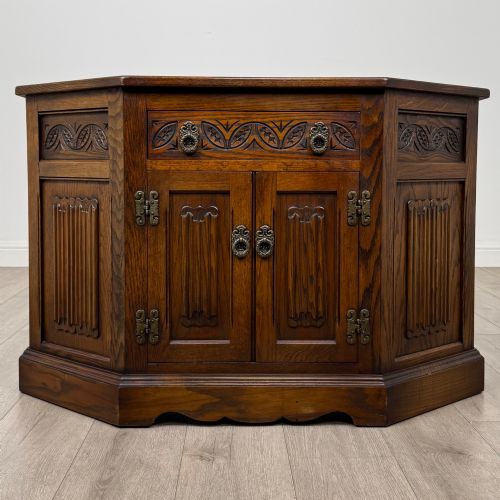
Hardware details such as brass drop handles, escutcheons and iron fittings were incorporated to secure doors and drawers. Surface decoration ranges from plain boards to geometrically moulded fronts, linenfold panels and subtle wood inlay.
Listings feature oak alongside elm and pine, spanning the seventeenth to the early twentieth century with styles from Jacobean to Georgian.
What varies in quality
The standard of a dark oak low dresser is determined by the crispness of its original mouldings, the integrity of the timber and the survival of period brassware. Early examples with untouched surface patination and tight joinery stand apart from heavily restored or later altered pieces.
Proportion and balance also define the hierarchy of these items, as pieces with well-balanced drawer arrangements and sturdy potboards demonstrate superior craftsmanship. The depth of colour in the wood develops naturally through age and exposure, influencing visual appeal.
The Dark Oak Low Dresser Glossary
- Potboard
- An open lower shelf beneath a dresser base originally designed for storing heavy pots and serving dishes. This feature creates an airy base while adding structural stability to the legs.
- Geometrical moulding
- Raised geometric patterns applied to drawer fronts using mitred strips of wood. This technique created architectural depth on seventeenth-century cabinetry.
- Linenfold
- A style of wood carving that imitates folded fabric, frequently seen on panelled cupboard doors. It provides a tactile texture across flat wooden surfaces.
- Cabriole leg
- A furniture leg that curves outward in a convex arc and then tapers inward in a concave arc, often ending in a pad foot. This design became popular during the Georgian period.
Dark Oak Low Dresser: Frequently Asked Questions
How do I style a low dresser?
Place a low dresser against a dining room or hallway wall to act as a surface for lamps, ceramics or books. The wide top offers ample space for daily items while keeping sightlines clear across the room.
Use the interior drawers and lower shelves to organise tableware, linens or household objects out of sight. This balances display space with practical concealed storage.
Are these dressers suitable for small rooms?
Their reduced height prevents them from dominating a room, making them ideal for narrower spaces where tall furniture would feel oppressive. The low profile maintains a sense of light and openness.
Positioning one in a hallway or compact dining area provides substantial storage without crowding the floor plan. The horizontal proportions help to ground the surrounding interior.
How do I date an oak dresser?
Examine the construction methods, drawer linings and hardware holes to understand the period of manufacture. Hand-cut joints, timber grain variations and original tool marks provide clues to the age.
Stylistic cues such as geometric mouldings point to seventeenth-century work, while cleaner lines and cabriole legs indicate eighteenth-century Georgian origins. Later revival pieces often exhibit uniform machine-cut elements.
What is the difference between a sideboard and a dresser base?
A dresser base historically served as the lower part of a two-tier kitchen dresser used for food preparation and storage. Over time, many lost their upper plate racks to function independently as low sideboards.
Sideboards were designed primarily for dining rooms to store serving dishes and cutlery. In modern usage, the terms often overlap for low wooden storage furniture.